• United States desplegó un tercer aircraft carrier strike group con miles de tropas de élite en Middle East el 24 de abril, marcando el mayor despliegue militar desde la invasión de Iraq en 2003, a medida que el conflicto de dos meses en Iran se intensifica a pesar de un acuerdo de cese al fuego.
• El President Trump advirtió que el ejército de US estaba "ready to go" si los esfuerzos de paz fallan, afirmando que US utilizó el cese al fuego del 8 de abril para "restock" sus capacidades militares mientras Washington y Tehran se acusan mutuamente de violaciones.
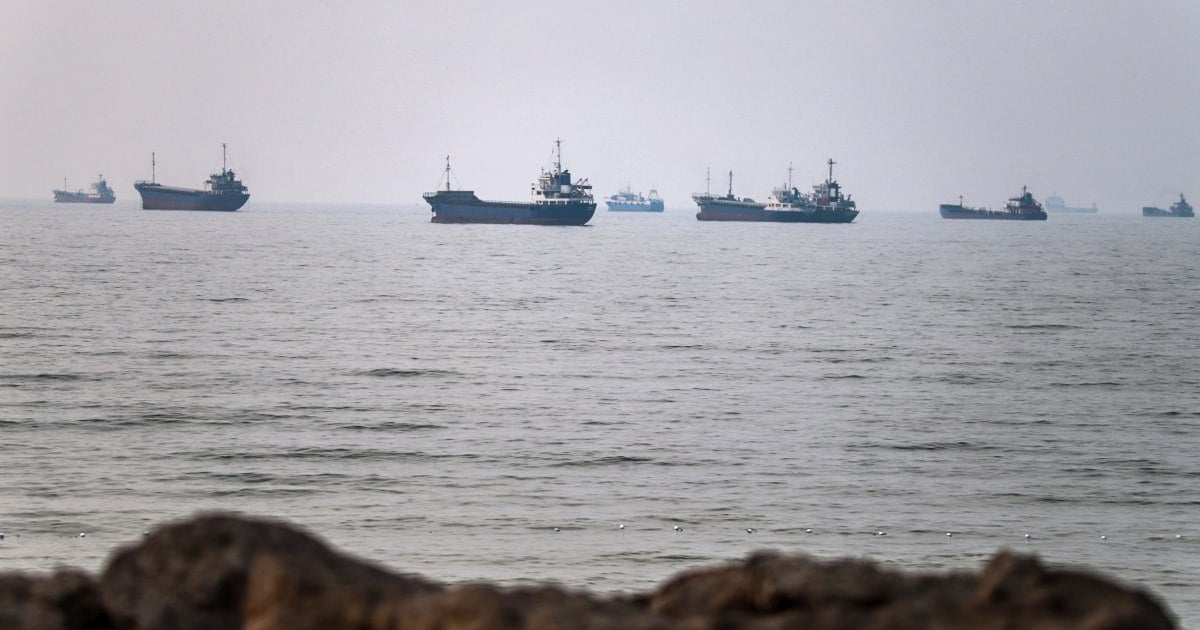
• La campaña de bombardeos de US lanzada el 28 de febrero ha devastado la infraestructura militar y el liderazgo de Iran, pero Tehran mantiene el control del Strait of Hormuz, una ruta crítica de suministro global de petróleo y gas, lo que provocó un bloqueo naval de US impuesto el 13 de abril.
El presidente ruso celebró la decisión de prorrogar el alto el fuego en Irán en lo que el presidente de EE. UU. calificó como una «conversación muy buena». Vladimir Putin y Donald Trump analizaron la guerra en Irán y plantearon un alto el fuego temporal en Ucrania en una llamada telefónica mantenida el miércoles. En la llamada, que duró más de 90 minutos, el presidente ruso afirmó que Moscú considera peligrosa la posibilidad de una operación terrestre de EE. UU. en Irán, al tiempo que acogió con agrado la decisión de Trump de prorrogar el alto el fuego en la región, según Yuri Ushakov, asesor de política exterior de Putin. Continuar leyendo...
• Iranian Foreign Minister Abbas Araghchi returned to Islamabad on April 27, 2026, to push a new proposal through Pakistani mediators aimed at ending the US-Iran war and reopening the Strait of Hormuz.
• The proposal reached the White House, but President Trump canceled planned envoy visits by Steve Witkoff and Jared Kushner, citing lack of progress, while indirect talks continue.
• Araghchi headed to Moscow for talks with President Putin after blaming the US for failed peace efforts; Russia urged Washington to abandon ultimatums in Vienna negotiations.
Steve Witkoff and Jared Kushner were to travel to Islamabad to attempt to revive ceasefire negotiationsDonald Trump said he has told US envoys not to go to Pakistan for more talks with Iran, shortly after Tehran’s top diplomat left Islamabad late on Saturday.Trump added to Fox News: “They can call us anytime they want.” The White House on Friday said Steve Witkoff and Jared Kushner would travel to Pakistan’s capital to attempt to revive ceasefire negotiations. Continue reading...
Iran seizes two ships in critical waterway as Washington and Tehran maintain separate blockades. Plus, Jodi Kantor on how to find a career you loveGood morning.Iranian forces have seized two ships in the strait of Hormuz as the US and Iran doubled down on imposing separate blockades of the shipping waterway.What has Donald Trump said? The US president announced that the US would extend the ceasefire with Iran until the country’s leaders came up with a “unified proposal” to US negotiating positions amid Tehran’s “seriously fractured” government. He had earlier threatened to renew bombing. White House press secretary, Karoline Leavitt, said Trump was “satisfied” with the US naval blockade of Iranian ports and “understands Iran is in a very weak position”.This is a developing story. Follow the liveblog here.Who took part in the debate? The primetime showdown, hosted by Nexstar Media Group, featured two Republicans – Steve Hilton, the former Fox News host and director of strategy to the former UK prime minister David Cameron, and Chad Bianco, the sheriff of Riverside County – and the four leading Democrats: the billionaire Tom Steyer, the former health secretary Xavier Becerra, the former congresswoman Katie Porter and the San Jose mayor, Matt Mahan. Continue reading...
U-turn comes after Trump said the US military was ‘raring to go’. Plus, Virginia voters pass new congressional maps in blow to presidentDon’t already get First Thing in your inbox? Sign up hereGood morning.Donald Trump unilaterally announced an extension of the two-week ceasefire with Iran on Tuesday amid frantic efforts to bring the two sides back to the negotiating table.How are Trump’s negotiating tactics being received? The president’s impatience and rough-house diplomatic style, including his frequent online posting, has been a key stumbling block to restarting peace talks, writes the Guardian’s diplomatic editor, Patrick Wintour.Is Tehran united on how to deal with Washington? Analysts say it is not, with fierce disagreement among Iranian leaders over how to respond to US pressure and whether to risk a new wave of bombing.Follow the latest updates with our liveblog.How much of a boost for the Democrats is Virginia’s referendum result? It could help them win four additional House seats in November’s midterms, which could prove pivotal in an evenly divided Congress. Continue reading...
US Treasury secretary Scott Bessent says Iran’s Kharg Island storage facilities will be full and their ‘fragile’ oil wells shut in mere days because of the blockade; oil prices rise amid ongoing uncertaintyTrump announces extension of Iran ceasefire until ‘discussion concluded’Shares have been mixed in early trading across Asia, while oil prices have eased on hopes the US and Iran may resume talks to end their war.The price of Brent crude edged 0.2% lower but was still above $98 a barrel. US benchmark crude fell 0.4% to $89.29 a barrel. Continue reading...
Donald Trump says US ready to renew attacks but Iran appears unwilling to bend to US president’s threatsIntense efforts were under way on Tuesday to bring Iran and the US together in Pakistan for a new round of talks, a day before the end of the two-week ceasefire that has paused the conflict in the Middle East.Donald Trump said on Tuesday he is ready to renew attacks against Iran if progress is not made at any talks, with the US military “raring to go”. Continue reading...
The US has deployed more forces since the truce and senior Iranians seem to be relishing the prospect of the fightIt is the doomsday scenario that Donald Trump repeatedly swore he would never countenance: putting boots on the ground in a deployment that could embroil the US in a Middle East “forever war”.Now, with a two-week ceasefire in the war with Iran coming to an end and prospects for renewed negotiations hanging by a thread, the chances of the president breaking that pledge and ordering some kind of ground incursion seem to be rising. Continue reading...
The US president rejects extending truce as Tehran warns of response and negotiators head to IslamabadSign up for the Breaking News US email to get newsletter alerts in your inboxDonald Trump said on Tuesday that he expects to resume bombing Iran, as a fragile 14-day ceasefire approaches its deadline Wednesday with no deal in sight.“I expect to be bombing because I think that’s a better attitude to go in with,” Trump told CNBC’s Squawk Box. “We’re ready to go. The military is raring to go.” Continue reading...
• US-Iran ceasefire talks collapsed in Pakistan, raising doubts over Army Chief Asim Munir's role as mediator despite Trump's prior praise.
• Concerns in US national security circles focus on Munir's alleged IRGC ties, questioning his neutrality.
• Tehran refuses further Islamabad-hosted talks, pressuring Pakistan's diplomatic standing.
Donald Trump said on Sunday that US marines had taken custody of a vessel that tried to get past the American blockade on Iranian portsTehran has ‘no plans to participate’ in new talks, state media reports, as it accuses US of violating ceasefireJust to recap the latest peace talks news, and whether or not Iran will attend negotiations in Pakistan.State broadcaster IRIB on Sunday cited Iranian sources as saying “there are currently no plans to participate in the next round of Iran-US talks”.Iran has reportedly rejected participation in a second round of peace talks with the US in Pakistan, citing “Washington’s excessive demands, unrealistic expectations, constant shifts in stance, repeated contradictions, and the ongoing naval blockade, which it considers a breach of the ceasefire”, according to the official IRNA news agency.Hours before Iran’s statement, Trump said his negotiators would arrive in Islamabad on Monday evening. A White House official said the delegation would be led by vice-president JD Vance and include Middle East envoy Steve Witkoff and Trump’s son-in-law Jared Kushner.Donald Trump said in a post on Sunday that the US marines have taken custody of a vessel that tried to get past the American blockade on Iranian ports, adding that US forces stopped the ship by blowing a hole in its engine room.The US military confirmed that the US destroyer fired “several rounds” towards an Iranian-flagged ship that was attempting to pass through its naval blockade. In a statement released on Sunday, US Central Command said the USS Spruance intercepted the Iranian-flagged Touska ship as it travelled towards an Iranian port “in violation of the US blockade.”The US blockade of Iran’s ports is a violation of the ceasefire agreement and is “both unlawful and criminal”, Esmaeil Baqaei, a spokesperson for Iran’s foreign ministry, said on Sunday.Oil prices jumped, the US dollar rose and stock futures fell on Monday as investors dealt with conflicting messages about the Iran war and news that the strait of Hormuz was closed again. In early Asian trading Brent crude futures jumped about 7% to $96.85 a barrel and S+P 500 futures fell about 0.9%. The euro was down 0.3% at $1.1735 and the yen eased about 0.2% to 158.95 per dollar. Continue reading...
• President Trump signals he will not extend Iran's ceasefire deadline if a comprehensive deal is not reached by Wednesday, warning of renewed military action including 'dropping bombs' if negotiations fail.
• Trump declares the Strait of Hormuz now open due to a U.S. Navy blockade and pointedly rejects NATO's offer of assistance, highlighting America's unilateral stance in Middle East tensions.
• The escalating pressure on Iran represents a significant shift in Trump administration foreign policy and challenges traditional alliance structures in addressing regional security threats.
• President Trump expressed optimism that an Iran peace deal is 'looking very good,' signaling potential near-term resolution to the US-Iran conflict that has destabilized financial markets.
• Investors are actively weighing the likelihood and terms of a potential Iran truce as a key variable influencing near-term market direction and energy price trajectories.
• Geopolitical risk premiums embedded in oil prices and equity valuations could face significant repricing if a comprehensive ceasefire agreement is formally announced.
• The United States and Iran agreed to a two-week ceasefire contingent on reopening the Strait of Hormuz, prompting President Donald Trump to withdraw threats of devastating strikes.
• Iran's Supreme National Security Council confirmed acceptance of the ceasefire and announced negotiations with the US will commence in Pakistan on Friday.
• The deal follows US strikes on over ninety targets on Kharg Island, described by officials as 'restrikes' to further damage prior sites, amid heightened tensions.
• Donald Trump announced a major ceasefire between Israel and Lebanon while signaling progress toward a potential nuclear deal with Iran.
• The development represents a significant diplomatic initiative amid broader Middle East tensions and ongoing US-Iran negotiations.
• The ceasefire comes as regional dynamics continue to shift with multiple diplomatic channels active simultaneously.
• A fragile US-Iran ceasefire is set to expire on April 22, 2026, with diplomatic talks stalled and tensions escalating over competing demands and military posturing.
• Iran's spokesperson Esmaeil Baqaei criticized the US position as unrealistic, while Tehran condemned Washington's naval blockade as provocative and a potential trigger for ceasefire violations.
• Pakistan continues mediating indirect talks between the two nations, though no date has been set for the next round of negotiations as fears of renewed escalation mount.
• The U.S. and Iran agreed on Tuesday to a two-week ceasefire, marking a potential diplomatic breakthrough after 47 days of conflict.
• Under the agreement, both Iran and Oman will be permitted to participate in the pause in hostilities, with U.S. military personnel and weaponry remaining positioned in and around Iran until a peace deal is finalized.
• The ceasefire emerges as negotiators push for a next round of talks, though tensions remain high with shipping disruptions continuing in the Strait of Hormuz.
Centcom says blockade of Iranian ports to begin at 10am ET; Iran’s negotiator says ‘we will not bow to threats’; oil prices rise. Follow the latest newsFull report: Trump says US will blockade strait of Hormuz after Iran peace talks failPlaneloads of negotiators and too little time: US and Iran’s 21 hours of talksWelcome to the Guardian’s continuing coverage of the US-Israel war on Iran and its consequences for the wider region, the world and the global economy.Here are the main developments:Trump said the US Navy would start blockading the Hormuz strait and would also interdict every vessel in international waters that had paid a toll to Iran. In a lengthy post on his Truth Social platform, the president said the US was going to start “BLOCKADING any and all Ships trying to enter, or leave, the Strait of Hormuz”.In another post Trump also claimed Iran had “knowingly failed” to make good on its promise to open the strait, causing “anxiety” and “pain” for many countries around the world.US Central Command (Centcom) announced it would begin its blockade of the strait beginning Monday morning. “Centcom forces will begin implementing a blockade of all maritime traffic entering and exiting Iranian ports on April 13 at 10am ET [1400 GMT], in accordance with the president’s proclamation.”Iran’s Revolutionary Guard warned that “approaching military vessels to the strait of Hormuz is considered a violation of the ceasefire”.Oil prices rose in early market trading after Trump’s blockade announcement. The price of US crude oil rose 8% to $104.24 a barrel and Brent crude oil – the international standard – rose 7% to $102.29. Australia’s share market dropped sharply on Monday morning.Donald Trump and his advisers are looking at resuming limited military strikes in Iran in addition to the US blockade of the strait of Hormuz, the Wall Street Journal is reporting, citing officials and people familiar with the situation.Trump launched a scathing attack on Pope Leo XIV, saying he was “weak on crime and terrible for foreign policy” and was hurting the Catholic church. “Leo should get his act together as Pope,” the president said on Truth Social. The attack came after Leo denounced the “delusion of omnipotence” as fuelling the US-Israel war in Iran and demanded political leaders stop and negotiate peace.Australian prime minister Anthony Albanese said his government had not been asked to participate in any US blockade of the strait of Hormuz and that he wanted to see negotiations between the US and Iran continue.Trump reiterated his threat to destroy Iran’s power plants and other civilian energy infrastructure if no deal was reached to end the war, which he started with Israel in what is widely seen as an illegal and unprovoked attack. “I could take out Iran in one day,” he told Fox News on Sunday.Trump also said the US didn’t need the strait. “We don’t get our oil from there. We have so much oil,” he told Fox. “We have boats pouring up to the United States … We don’t need the strait.”Iranian parliamentary speaker Mohammad Bagher Ghalibaf, who led the Tehran side in the US talks, said Trump’s new threats would have no effect on the Iranian nation. “If you fight, we will fight, and if you come forward with logic, we will deal with logic. We will not bow to any threats.” He later taunted Trump on X, posting: “Enjoy the current pump figures. With the so-called ‘blockade’, Soon you’ll be nostalgic for $4–$5 gas.” Continue reading...
• An Iranian diplomatic delegation has arrived in Pakistan to begin ceasefire talks with US representatives, signaling potential de-escalation efforts amid the ongoing conflict that began February 28, 2026.
• The negotiations come as both sides seek to resolve tensions triggered by the death of Iranian Supreme Leader Ali Khamenei and Iran's closure of the Strait of Hormuz, which has caused the largest global oil supply disruption since the 1970s energy crisis.
• US Vice President JD Vance has warned Iran not to "play" the US during planned negotiations, indicating the administration's determination to achieve concrete results from the talks.
• Israeli Prime Minister Benjamin Netanyahu has authorized direct negotiations with Lebanese representatives, marking a potential diplomatic breakthrough in the broader Middle Eastern conflict landscape alongside US-Iran ceasefire talks.
• The parallel diplomatic tracks suggest efforts to compartmentalize various conflicts within the region and create opportunities for broader de-escalation beyond direct US-Iran confrontation.
• These negotiations involve coordination with US authorities, reflecting Washington's strategic interest in achieving regional stability across multiple conflict zones simultaneously.
• Iran has laid out preconditions for ceasefire negotiations with the United States, including a truce in Lebanon and the release of frozen Iranian assets before substantive talks can proceed.
• The Iranian position reflects the broader regional conflict dynamics, with fighting extending beyond US-Iran direct confrontation to proxy conflicts in Lebanon and other Middle Eastern locations.
• These conditions complicate already delicate negotiations in Pakistan, as the US and its allies assess whether such demands can be accommodated within broader regional security frameworks.
• Fresh tensions have surfaced just as formal ceasefire negotiations between US and Iranian representatives commence in Pakistan, threatening to derail diplomatic efforts.
• The timing of new military incidents and heightened rhetoric suggests both sides remain committed to military posturing even as they engage in peace talks, a pattern common in complex regional conflicts.
• Diplomatic observers note that success will require both delegations to compartmentalize military operations from negotiation processes, a significant challenge given recent escalations including the downing of a US fighter jet.
• Strait of Hormuz shipping disruptions persist post-ceasefire, exacerbating the largest global oil supply crisis since the 1970s amid US-Iran war.
• Iran's effective closure followed retaliatory strikes after US-Israeli airstrikes on 28 February 2026 targeting Iranian nuclear sites and leadership.
• Ceasefire fails to resolve key stumbling blocks to lasting US-Iran agreement, threatening continued economic impacts on US energy security.
Army deployed in Pakistan’s capital as negotiations set to begin. Plus, Melania Trump issues bafflingly timed denial of ties to Jeffrey EpsteinGood morning.As Pakistan prepared to host negotiations between Iran and the US, the already fragile ceasefire in the conflict showed further strain as Donald Trump accused Tehran of doing “a very poor job” in upholding promises on the strait of Hormuz, and Israel attacked Lebanon – which Iran claimed violated the truce.What about the strait of Hormuz? The agreement also included Iran lifting its near-total blockade of the strait, which has caused the worst-ever disruption to global energy supplies. Trump posted on Truth Social late Thursday that Iran was being “dishonorable” in not allowing oil to go through the strait. “That is not the agreement we have!” Trump wrote.This is a developing story. Follow our liveblog here.Why did she make this speech? The first lady’s surprise address created confusion about why she had chosen to speak out now – or whether her husband knew she was planning to draw attention to a subject he has called for the public to move on from.What did she ask for? In a final twist, Melania urged Congress to give Epstein survivors a public hearing to help uncover the truth, a call immediately endorsed by the Democrat Ro Khanna and the Republicans Majorie Taylor Greene and Nancy Mace. Continue reading...
Israel and Hezbollah continue to trade strikes as Trump tells US media he has asked Netanyahu to be more ‘low-key’ in Lebanon. Follow live newsNetanyahu says there is no ceasefire in Lebanon as Israel launches fresh strikesJapan plans to release 20 days’ worth of oil reserves from May, prime minister Sanae Takaichi told a cabinet meeting on Friday, to ensure stable domestic supply as conflict in the region continues disrupts global supply.Japan is dependent on the Middle East for around 95% of its oil. It began releasing reserves on March 16 unilaterally and in coordination with other nations under a plan to make available enough oil to last 50 days. The new release of 20 days worth is additional. Continue reading...
• US stocks recovered from early morning losses Thursday to finish higher, with the S&P 500 up 0.7%, Dow Jones up 0.8% (382 points), and Nasdaq composite up 0.8%, buoyed by optimism over a two-week ceasefire with Iran announced late Tuesday.
• Israel's announcement of direct negotiations with Lebanon helped calm market concerns that the ceasefire could unravel due to Israeli bombardment of the country, reversing initial trading pessimism.
• The S&P 500 remains just 2.1% below its all-time high set in January, indicating underlying market strength despite geopolitical volatility and oil price fluctuations.
• President Trump escalated rhetoric against Iran, threatening 'unprecedented force' if Tehran fails to comply with ceasefire terms as the fragile two-week truce entered its second day on April 9, 2026.
• Vice President JD Vance will lead a U.S. delegation to Islamabad, Pakistan on Saturday for direct talks with Iranian officials, joined by special envoy Steve Whit and Jared Kushner, aiming to convert the temporary ceasefire into a lasting agreement.
• Early cracks are emerging in the ceasefire over disputed terms, Iran's nuclear program, and control of the Strait of Hormuz, with Iranian officials signaling the deal could be at risk.
• US President Donald Trump announced a two-week ceasefire on April 8, 2026, ending 38 days of intense conflict between the United States, Israel, and Iran involving major military exchanges.
• Iran maintained leverage over the Strait of Hormuz, a key global energy route, while the US pushed Iran to negotiations based on Tehran's 10-point framework against Washington's 15-point demands on nuclear activity and regional influence.
• Israel rejected parts of the ceasefire scope and continued operations in Lebanon, prompting Iran to warn of withdrawal if attacks persist, highlighting the truce's precarious nature amid high regional tensions.
Strikes that killed more than 200 people spark outrage amid global efforts to salvage truceMiddle East crisis – live updatesIsrael’s devastating bombardment of Lebanon in the hours after a US-Iranian ceasefire was announced has been widely condemned amid global efforts to salvage the truce.More than 200 people were killed by Israeli bombing including strikes with heavy munitions on densely populated areas, which drew outrage from the International Committee of the Red Cross and other international humanitarian organisations. Continue reading...