β’ Lollapalooza 2026 has announced its full lineup featuring major pop artists including Charli XCX, Tate McRae, The Smashing Pumpkins, The Chainsmokers, and many others performing across eight stages in Chicago's Grant Park.
β’ The four-day music festival runs July 30 through August 2, 2026, with tickets now on sale to the public for the highly anticipated summer event.
β’ The lineup represents significant star power across multiple genres, drawing both contemporary pop powerhouses and iconic legacy acts to one of the nation's largest music festivals.
β’ Researchers made a major breakthrough in solving the mystery of static electricity, explaining how it causes hair to stand on end and related phenomena.
β’ The findings elucidate the physics behind volcanic lightning and other electrostatic events, providing new insights into charge separation mechanisms.
β’ This peer-reviewed discovery advances fundamental physics knowledge with potential applications in materials science and atmospheric studies.
β’ The U.S. and allies intensified operations on March 20, 2026, deploying low-flying attack jets and Apache helicopters to target Iranian naval vessels and drones in the Strait of Hormuz.
β’ Iran's IRGC released video of a U.S. F-35 struck over Iranian airspace, forcing an emergency landing at a U.S. base; Pentagon confirms the $100 million jet incident.
β’ This battle threatens global energy supplies, with oil prices seesawing and predictions of $150-$200 per barrel if unresolved, exacerbating a crisis three weeks into the war.
β’ NASA's Space Launch System (SLS) rocket for the Artemis 2 mission began rollout from the Vehicle Assembly Building to Launch Complex 39B on March 20, 2026, targeting first motion at 8 p.m. EDT (0000 GMT).
β’ The four Artemis 2 astronauts entered quarantine at Johnson Space Center in Houston on March 18 at 6 p.m. EDT, limiting exposure before heading to Kennedy Space Center five days prior to launch.
β’ Rollout addresses a helium flow issue in the rocket's upper stage, with teams planning to install access platforms, replace batteries in the flight termination system, and retest components upon return to the VAB if needed.
β’ The Trump administration, through Energy Secretary Chris Wright's leadership, is accelerating AI data center expansion via a 'Ratepayer Protection Pledge' encouraging major tech firms including Amazon, Google, Meta, Microsoft, and xAI to fund their own power generation.
β’ Utilities have signed agreements for 183 gigawatts of data center capacity, equivalent to 22% of 2025 U.S. electricity demand, with initiatives including streamlined permits and federal land use for construction.
β’ The expansion presents challenges in deregulated markets like Texas and mid-Atlantic states, where utilities manage only transmission infrastructure rather than power supply responsibility, requiring state and regional coordination to ensure adequate power plant development.
β’ U.S. stock markets closed lower Thursday as an energy shock continued weighing on investor sentiment, with the S&P 500 falling 0.27%, the Dow Jones Industrial Average dropping 0.44%, and the Nasdaq Composite declining 0.28%.
β’ Commodity-linked stocks experienced severe selloffs: gold fell 4.94%, aluminum dropped over 5%, mining shares plummeted with Hycroft Mining sliding 12.4% and Century Aluminum falling 10.3%.
β’ Asian markets showed mixed performance Friday, with South Korea's Kospi rising 0.6% and China's Shanghai Composite edging 0.2% higher, while Hong Kong's Hang Seng slipped 0.6%, Australia's S&P/ASX 200 fell 0.5%, and Taiwan's Taiex declined 0.2%, with Japan's markets closed for a holiday.
β’ The Federal Communications Commission approved Nexstar's $6.2 billion deal to acquire rival broadcaster Tegna, creating the largest operator of local television stations in the United States.
β’ FCC Chairman Brendan Carr waived a rule limiting single-company ownership of TV stations reaching more than 39% of U.S. households; the combined entity will cover at least 60%.
β’ The mega-merger represents a significant consolidation in the broadcast media industry and demonstrates regulatory willingness to approve ownership concentration in the communications sector.
β’ The Trump administration designated AI company Anthropic as a 'supply chain risk' and ordered federal agencies to stop using its technology, prompting Anthropic to file a lawsuit against the government.
β’ Major tech firms including Google, Microsoft, Meta, and OpenAI have backed Anthropic through amicus briefs and legal support, warning that blacklisting an American company harms U.S. innovation and competitiveness against China.
β’ The conflict stems from late February tensions when Trump publicly criticized Anthropic, leading to contract cancellations and raising concerns about uncertainty throughout the broader technology industry.
β’ Washington legislators adjourned sine die on March 12 after passing five significant AI-related bills, including SB 1786 requiring provenance data in AI-generated video, image, and audio content, and HB 2311 establishing safety standards for chatbots targeting children.
β’ SB 1786 was approved by the full Senate on March 3 and is nearing third reading in the House, while HB 2311 passed its second Senate reading on March 9 with a "Do pass" recommendation from the Senate ATT Committee on March 17.
β’ The bills represent growing legislative momentum on AI regulation across states, with additional measures addressing false advertising claims for health products and algorithmic transparency still in committee hearings.
β’ Uber is committing up to $1.25 billion in additional investment to Rivian's robotaxi fleet, following the ride-hail company's earlier $300 million commitment and plans to purchase 10,000 robotaxis for launch in San Francisco and Miami.
β’ This represents one of Uber's latest partnerships in autonomous vehicle development, continuing the company's strategy of diversifying robotaxi partnerships over the past year.
β’ The investment accelerates Uber's autonomous vehicle ambitions as it seeks to scale robotaxi operations across major U.S. cities.
β’ On March 20, 2026, Defense Secretary Pete Hegseth confirmed the Pentagon's request for $200 billion in extra funding, stating 'it takes money to kill bad guys'.
β’ The request supports ongoing U.S. offensives, including jet patrols and helicopter strikes against Iranian forces in key waterways.
β’ Funding comes amid surging oil prices from Iranian attacks on facilities, prompting Treasury Secretary Scott Bessent to propose lifting sanctions on Iranian oil.
β’ An Air Force F-35 stealth fighter jet was hit by enemy fire during a combat mission over Iran, with sources confirming the pilot is now in stable condition after ejection.
β’ The incident highlights risks to advanced US aircraft as the US-Israeli air campaign enters its third week, targeting Iran's nuclear and missile infrastructure.
β’ Israeli PM Netanyahu claimed on March 19 that Iran has lost all uranium enrichment and ballistic missile production capacity due to sustained strikes.
β’ President Trump met Japan's prime minister on March 20, fielding questions from Japanese media on why allies were not warned before US strikes on Iran.
β’ Meeting occurs as US redirects focus to Middle East, potentially weakening joint priorities with Japan on trade and security issues.
β’ Discussions highlight differing US-Israel goals in the conflict, with Trump denying plans to deploy ground troops.
National intelligence director said voting machine seizure was requested by US attorney in Puerto Rico β whoβs been trying to revive 2020 election conspiracy theoryWhen the US director of national intelligence (DNI), Tulsi Gabbard, testified on Thursday that her office seized voting machines from Puerto Rico, she said it was at the request of the office of the US attorney in Puerto Rico. Left unsaid was that the prosecutor, as the Guardian previously reported, has been the center of a push by Donald Trump supporters to revive a long discredited conspiracy theory purporting to link Venezuela to Trumpβs 2020 electoral defeat.Venezuelan president NicolΓ‘s Maduro, the conspiracy theory maintains, controlled electronic voting machines worldwide and remotely manipulated results in 2020 to deprive Trump of a presidential victory. Continue reading...
Scientific advisory committee to examine impact of offering routine MenB jabs to wider range of peopleThe Kent meningitis outbreak: what is happening and why?Experts are considering expanding the meningitis B vaccination eligibility in response to the fatal outbreak of the disease in Kent.The Joint Committee on Vaccination and Immunisationβs review comes after the health secretary, Wes Streeting, asked it to to βre-examine eligibility for meningitis vaccinesβ for a wider range of people than those who currently qualify. Continue reading...
β’ Wall Street experienced a sharp selloff on Wednesday, March 19, 2026, driven by intensifying geopolitical conflicts between the U.S.-Israel force and Iran, sending major indices to their lowest closes of the year.
β’ The Dow Jones Industrial Average fell 1.6% or 768.11 points to 46,225.15, with 28 of 30 components declining; the S&P 500 dropped 1.4% to 6,624.70; and the Nasdaq Composite slid 1.5% or 327.11 points to 22,152.42.
β’ The CBOE Volatility Index (VIX) surged 12.2% to 25.09, reflecting elevated market fear and uncertainty about Middle East implications for the U.S. economy.
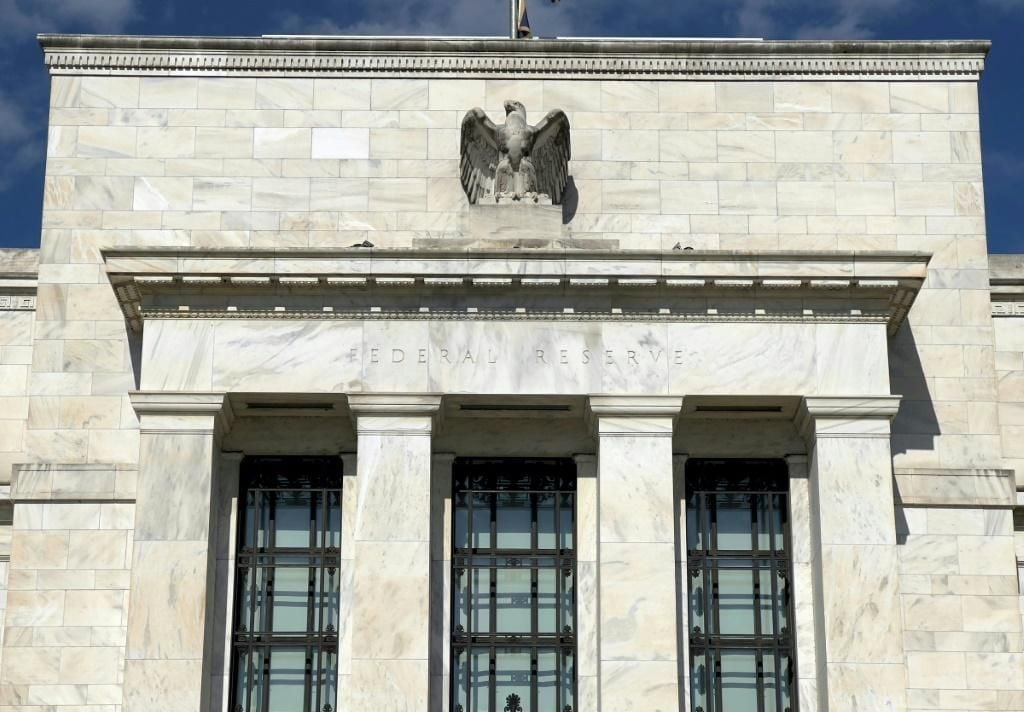
β’ The Federal Reserve's policy committee decided to hold the federal funds rate steady at 3.5% to 3.75% on March 18, 2026, citing elevated uncertainty about the economic outlook and the implications of Middle East developments for the U.S. economy.
β’ The Fed noted that while economic activity continues to expand at a solid pace, job gains have remained low and unemployment rates have shown little change, with inflation remaining somewhat elevated above the 2% target.
β’ The Committee signaled readiness to adjust monetary policy if risks emerge that could hinder maximum employment and price stability, indicating a cautious stance given current geopolitical and economic headwinds.
β’ Wall Street indices declined sharply on Wednesday, March 18, with the S&P 500 falling 1.4% to 6,624.70, Dow Jones dropping 1.6% to 46,225.15, and Nasdaq sliding 1.5% to 22,152.42.
β’ The Federal Reserve decided to keep its main interest rate unchanged, opting against resuming cuts to support the job market and economy amid rising inflation pressures.
β’ Fed Chair Jerome Powell stated, βWe just donβt know,β regarding the impact of surging oil prices and President Donald Trumpβs tariffs on the economy.
β’ The U.S. dollar fell slightly to 159.70 Japanese yen from 159.88 yen, while the euro rose to $1.1478 from $1.1453 in early Thursday trading.
β’ Currency moves followed Wall Street's slump, with Dow dropping 1.6% to 46,225.15, amid steady Fed rates and oil-driven inflation concerns.
β’ A stronger dollar, combined with higher U.S. yields and oil prices over $111, pressured Asian assets and currencies significantly.
β’ US stock indexes opened lower on March 18, 2026, following accelerated Producer Price Index (PPI) data for February, with Russell 2000 down 0.84%, Dow Jones -0.42%, S&P 500 -0.28%, and Nasdaq -0.23%.
β’ The Cboe Volatility Index rose 3.76% to 23.21, while US 10-year Treasury yield increased 2.2 basis points to 4.224%, and gold futures fell nearly 3% to $4,860.40.
β’ Investors await Federal Reserve's afternoon decision expected to keep rates steady but provide economic insights amid inflation concerns and Iran conflict escalation.
β’ U.S. stocks ended higher on March 17, with the Dow Jones up 0.1% to 46,993.26, S&P 500 up 0.25% to 6,716.09, and Nasdaq up 0.47% to 22,479.53.
β’ Energy sector led gains at 1.02% amid oil surge tied to Middle East tensions, while health care lagged down 0.92%.
β’ Investors await Federal Reserve policy guidance from its latest meeting, boosting market sentiment despite volatility.