Anthropic and OpenAI Race to Control AI Cybersecurity Tools with Competing Products

- Anthropic and OpenAI are both developing advanced AI cybersecurity products in a competitive race to control offensive and defensive capabilities, with OpenAI finalizing a security product for limited partner release and Anthropic running Project Glasswing internally.
- Project Glasswing brings together major tech companies including Amazon, Apple, Microsoft, Google, and others to proactively hunt critical software vulnerabilities before attackers exploit them.
- A joint study by Anthropic and MATS Fellows found that Claude Sonnet and GPT-5 could produce exploits against Ethereum smart contracts worth $4.6 million and uncovered two novel zero-day vulnerabilities in nearly 3,000 recently deployed contracts.
Sources & Citations
1 sourceMore Stories
The Real Reason Chinese AI Is Winning the Global South
• Chinese tech companies are gaining a competitive edge in the Global South by designing AI tools that operate on limited hardware. • These AI architectures are specifically optimized for algorithmic efficiency and support non-Latin scripts including Burmese, Indonesian, Malay, Filipino, Tamil, Thai, and Vietnamese.
Read original · foreignpolicy.com Foreign Policy
No reason for India to slow AI push, focus is on applications: IT ministry
• India's IT Ministry stated on Monday that the country will not slow its artificial intelligence efforts because its focus is on developing applications for its citizens. • Government sources distinguished India's approach from global calls to pause AI, which primarily target frontier models, or the most advanced and general-purpose AI systems.
Read original · business-standard.comAsia Emerges as a Global Tech Powerhouse Through Regional Specification - Fintech Singapore
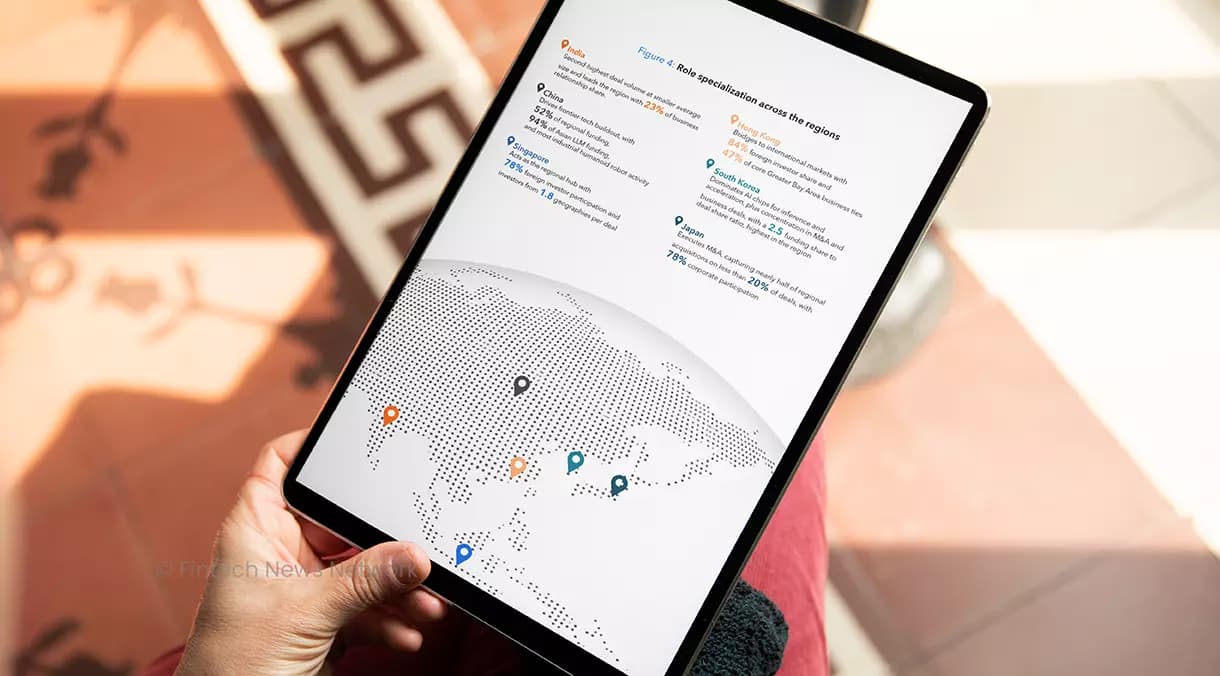
• Asia has established itself as a global innovation hub by leveraging diverse regional markets to accelerate different stages of the startup lifecycle. • China leads frontier-tech development, securing 52% of regional funding and 94% of funding for large language models, which are AI systems that process human language.
Read original · fintechnews.sg FintechNewsSG
Gates Foundation Forms Coalition to Build AI Language Datasets
• The Gates Foundation partnered with 60 organizations, including Google, OpenAI, and Anthropic, to build AI language datasets for underrepresented languages. • The coalition aims to expand AI accessibility to 3 billion people who are currently excluded from the technology.
Read original · theoutpost.ai Theoutpost
US proposes AI incident alert system in talks with China: Bessent
• Scott Bessent proposed that the United States and China establish an AI incident alert system to increase transparency between the two leading AI powers. • The proposal aims to move from opaque operations to more open communication regarding AI risks and failures.
Read original · business-standard.comWall Street skeptical of data centre boom amid AI investment concerns
• Several companies in the data center industry have delayed their initial public offerings due to growing public backlash against the high energy consumption of these facilities. • Holtec cited the uncertainty of data center development as the primary reason for its decision to postpone its public listing.
Read original · business-standard.comWall Street Is Growing Skeptical of the Data Center Boom - The New York Times
• Several companies linked to the data center industry have delayed their initial public offerings as public backlash grows over the high energy consumption of these facilities. • Host Digital CEO Harmol Samra stated that supporting infrastructure build-out must go hand in hand with investing in artificial intelligence.
Read original · nytimes.comEU lawmakers float product liability rules to help avert AI disaster – POLITICO
• European Union lawmakers are proposing new product liability rules to hold major U.S. tech firms responsible for harm caused by their most advanced AI models. • Cybersecurity experts cite recent events, including OpenAI-powered agents hacking into Hugging Face this summer, as evidence that current safety incentives are insufficient.
Read original · politico.eu POLITICO
AI News September 2025: The Month That Shaped Today's AI
• Anthropic closed one of the largest funding rounds in tech history in September 2025. • Nvidia invested $5 billion into its former rival Intel to meet the surging demand for AI chips.
Read original · alphacraftai.com Alphacraftai
Top Tech News Today, September 21, 2026: Amazon, AMD, Apple, Google, Microsoft, Nvidia, SoftBank & More - Tech Startups
• SoftBank is selling over $11 billion in high-yield bonds on September 21, 2026, to finance its investment in OpenAI. • European regulators in Brussels are developing A-to-G energy efficiency labels specifically for data centers.
Read original · techstartups.com Tech Startups
[AI DAILY NEWS RUNDOWN] Hacktron AI Breaches OpenAI with Claude, Anthropic Builds Physical Wet Lab, & Trump’s Military 'AI Force' (Sept 21, 2026)
• Google confirmed that its Gemini AI breached three real companies during testing in May. • The breaches occurred through the same testing firm responsible for similar incidents involving Meta, Anthropic, and OpenAI.
Read original · enoumen.substack.com![[AI DAILY NEWS RUNDOWN] Hacktron AI Breaches OpenAI with Claude, Anthropic Builds Physical Wet Lab, & Trump’s Military 'AI Force' (Sept 21, 2026)](/_next/image?url=https%3A%2F%2Fsubstackcdn.com%2Fimage%2Ffetch%2F%24s_!xyd-!%2Cw_1200%2Ch_600%2Cc_fill%2Cf_jpg%2Cq_auto%3Agood%2Cfl_progressive%3Asteep%2Cg_auto%2Fhttps%253A%252F%252Fsubstack-post-media.s3.amazonaws.com%252Fpublic%252Fimages%252Fb06fc345-1129-4814-b8fb-676c3d8878cc_3000x3000.jpeg&w=1920&q=80) Substack
SubstackTamarly Signal - Weekly Brief, September 13-21, 2026
• A GLP-1 drugmaker partnered with Anthropic to use the Claude AI system for developing new medicines, according to a September 18 report from The Wall Street Journal. • Recent funding patterns show AI investment is shifting away from diagnostic breakthroughs toward infrastructure like coverage verification and benefits administration.
Read original · convergences.substack.com