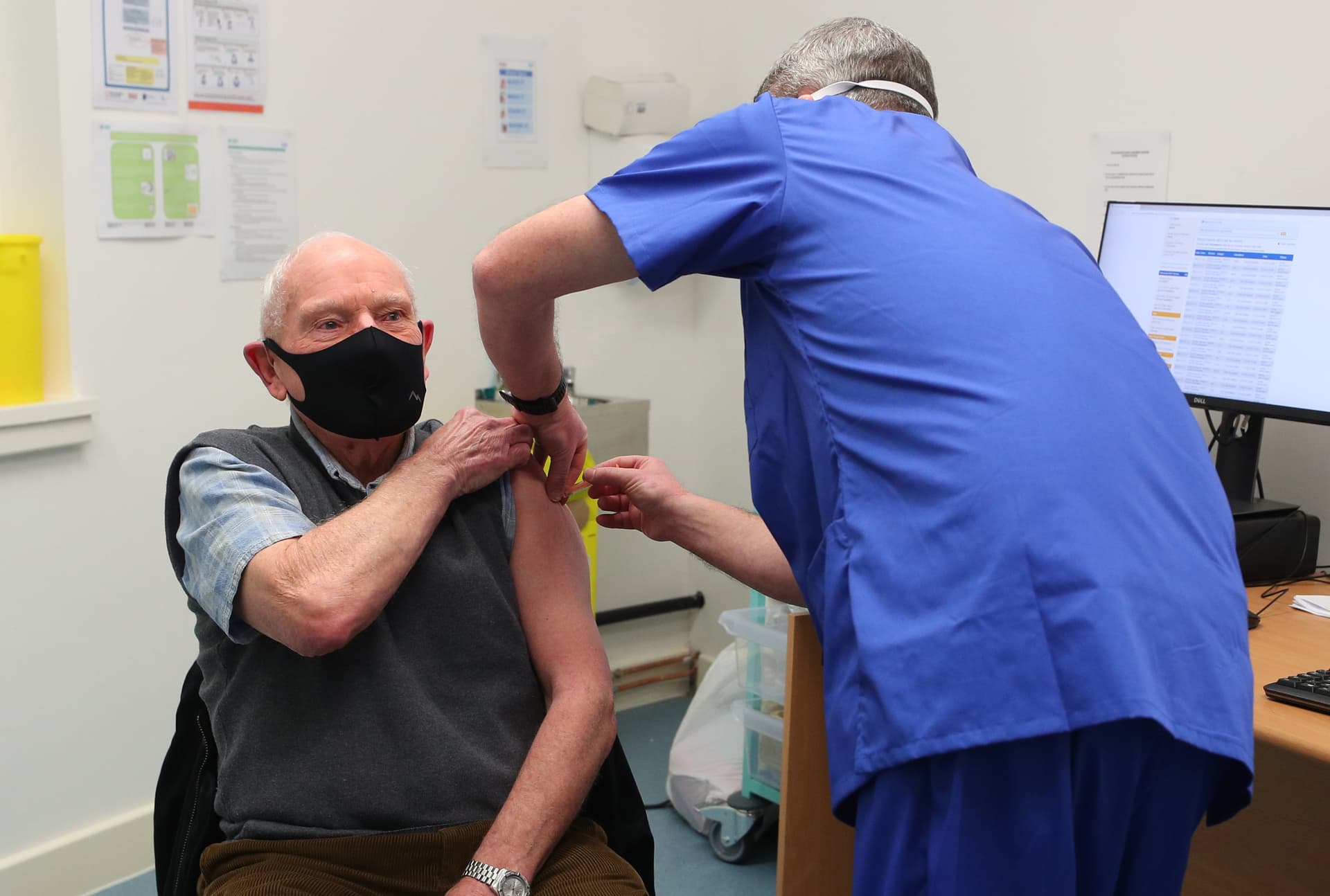
First Clade I Mpox Case Detected in New York City

- Health officials confirmed the first case of mpox clade I in New York City on Friday, a strain known to cause more severe disease and higher mortality than clade II.
- Clade I mpox leads to greater illness severity, prompting heightened vigilance in the densely populated urban area amid the ongoing national mpox situation.
- Detection underscores risks in international travel hubs, as clade I has driven recent African outbreaks with fatality rates exceeding 3% in some regions.
- Officials are conducting contact tracing and monitoring for additional cases while advising vaccination for at-risk groups.
Sources & Citations
1 sourceMore Stories
FDA Approves Groundbreaking Oral Drug for Advanced Pancreatic Cancer – Archyde
• On August 31, 2026, the FDA granted expedited approval to daraxonrasib (marketed as Rasonque), a first-of-its-kind daily oral medication. • The drug is specifically indicated for adults suffering from advanced metastatic pancreatic ductal adenocarcinoma.
Read original · archyde.comUpdated COVID Shots Matched to the XFG Variant Reach Pharmacies While Federal Eligibility Guidance Remains Unsettled
• The FDA approved updated 2026-2027 COVID-19 vaccines targeting the XFG variant on August 27, with doses shipping immediately to pharmacies, hospitals, and clinics. • While the vaccines are now physically available across the country, federal eligibility guidance remains unsettled, leaving uncertainty regarding who qualifies for the shots.
Read original · medicaldaily.com Medical Daily
FDA Approves New COVID-19 Vaccines for the 2026-2027 Season
• The FDA has approved new COVID-19 vaccines for the 2026-2027 season, specifically designed to target the XFG variant. • The vaccines are approved for adults aged 65 and older, with eligibility extended to younger individuals in high-risk groups depending on the specific shot.
Read original · everydayhealth.com Everyday Health
More than two-thirds of new drugs approved by FDA in 2024 were based on a single study
• A new analysis reveals that more than two-thirds of new drugs approved by the FDA in 2024 were sanctioned based on the findings of a single study. • The report indicates a steady decline in the number of studies required for drug approval since 2016, raising concerns about the rigor of the process.
Read original · cidrap.umn.eduFDA gives expedited approval to new groundbreaking pancreatic cancer drug | Cancer research
• The US Food and Drug Administration (FDA) has granted expedited approval to daraxonrasib, a first-of-a-kind oral medication designed to treat the most common form of pancreatic cancer. • Developed by Revolution Medicines, the drug functions as a Ras multiselective inhibitor, targeting specific genetic drivers of the disease.
Read original · theguardian.comRecent FDA Drug Approvals Rely on Fewer Studies, More Industry Funding - Cancer Therapy Advisor
• Researchers analyzed the impact of the 21st Century Cures Act, which allows the FDA to approve novel drugs based on a single pivotal trial rather than multiple studies. • Findings indicate that since 2016, the number of studies supporting new drug approvals in the US has steadily decreased.
Read original · cancertherapyadvisor.comRevolution’s pancreatic cancer drug wins speedy FDA approval
• The U.S. FDA has granted speedy approval to a groundbreaking pancreatic cancer drug developed by Revolution Medicines. • In a large-scale trial, the therapy demonstrated the ability to double the survival rate for patients suffering from advanced, metastatic disease.
Read original · cnn.comFDA approves landmark pancreatic cancer drug that's shown to improve survival : NPR
• The FDA has approved a landmark drug designed to treat pancreatic cancer, one of the deadliest forms of the disease. • The medication utilizes a new therapeutic approach by blocking a specific protein that fuels tumor growth in the vast majority of pancreatic cancer cases.
Read original · npr.orgPfizer and BioNTech Receive U.S. FDA Approval for XFG-adapted COVID-19 Vaccine
• The U.S. FDA has approved a supplemental Biologics License Application for Pfizer and BioNTech’s 2026-2027 COVID-19 vaccine formula. • The updated vaccine, COMIRNATY ® XFG, specifically targets the XFG variant to better align with currently circulating strains of the virus.
Read original · pfizer.comU.S. approves breakthrough pancreatic cancer drug, heralding a new era for an intractable disease
• The U.S. has approved daraxonrasib, a breakthrough drug designed to treat pancreatic cancer, which is widely regarded as one of the most serious and difficult-to-treat malignancies. • Unlike traditional chemotherapy, this medication specifically targets the activated KRAS protein found within pancreatic cancer cells to inhibit tumor growth.
Read original · scientificamerican.com Scientific American
Pancreatic cancer drug approval: FDA OKs Revolution Medicines' daily pills
• The U.S. Food and Drug Administration (FDA) has approved a new daily pill developed by Revolution Medicines for the treatment of pancreatic cancer. • This groundbreaking medication introduces a novel therapeutic approach to combat one of the most lethal forms of cancer.
Read original · apnews.comFDA approves updated COVID vaccines. Here's what you need to know - ABC News
• The FDA has approved updated COVID-19 vaccines designed to protect against the latest circulating strains of the virus. • Health officials emphasize that these vaccines are most effective at preventing severe disease, hospitalizations, and ICU admissions.
Read original · abcnews.com ABC News