Google Launches Personal Intelligence AI to All US Users, Challenging Microsoft and Apple

- Google has expanded its Personal Intelligence feature to all US users after months of limited testing, allowing Gemini AI to access Gmail, Google Photos, and other services for highly personalized responses.
- The feature enables Google to compete directly with Microsoft's Copilot and OpenAI's ChatGPT by leveraging user data for context-based AI responses.
- Privacy concerns have emerged as the AI increasingly accesses personal information, raising questions about data protection as Google advances its AI integration into flagship products.
Sources & Citations
1 sourceMore Stories
Top Tech News Today, September 21, 2026: Amazon, AMD, Apple, Google, Microsoft, Nvidia, SoftBank & More - Tech Startups
• SoftBank is selling over $11 billion in high-yield bonds on September 21, 2026, to finance its investment in OpenAI. • European regulators in Brussels are developing A-to-G energy efficiency labels specifically for data centers.
Read original · techstartups.com Tech Startups
Tamarly Signal - Weekly Brief, September 13-21, 2026
• A GLP-1 drugmaker partnered with Anthropic to use the Claude AI system for developing new medicines, according to a September 18 report from The Wall Street Journal. • Recent funding patterns show AI investment is shifting away from diagnostic breakthroughs toward infrastructure like coverage verification and benefits administration.
Read original · convergences.substack.comAI News September 2025: The Month That Shaped Today's AI
• Anthropic closed one of the largest funding rounds in tech history in September 2025. • Nvidia invested $5 billion into its former rival Intel to meet the surging demand for AI chips.
Read original · alphacraftai.com Alphacraftai
[AI DAILY NEWS RUNDOWN] Hacktron AI Breaches OpenAI with Claude, Anthropic Builds Physical Wet Lab, & Trump’s Military 'AI Force' (Sept 21, 2026)
• Google confirmed that its Gemini AI breached three real companies during testing in May. • The breaches occurred through the same testing firm responsible for similar incidents involving Meta, Anthropic, and OpenAI.
Read original · enoumen.substack.com![[AI DAILY NEWS RUNDOWN] Hacktron AI Breaches OpenAI with Claude, Anthropic Builds Physical Wet Lab, & Trump’s Military 'AI Force' (Sept 21, 2026)](/_next/image?url=https%3A%2F%2Fsubstackcdn.com%2Fimage%2Ffetch%2F%24s_!xyd-!%2Cw_1200%2Ch_600%2Cc_fill%2Cf_jpg%2Cq_auto%3Agood%2Cfl_progressive%3Asteep%2Cg_auto%2Fhttps%253A%252F%252Fsubstack-post-media.s3.amazonaws.com%252Fpublic%252Fimages%252Fb06fc345-1129-4814-b8fb-676c3d8878cc_3000x3000.jpeg&w=1920&q=80) Substack
SubstackBessent: US proposes AI incident alert system in talks with China
• The U.S. is proposing a new notification system with China to alert each other about artificial intelligence incidents that could threaten national security. • This proposal comes as Donald Trump resists calls to slow down AI development to prevent China from catching up to U.S. capabilities.
Read original · apnews.comDigital services bring transformation into everyday life
• Localities are implementing digital transformation services for residents following the Politburo's Resolution No. 57-NQ/TW issued on December 22, 2024. • Practical applications include the rollout of QR-code payments in traditional markets and smart kiosks for administrative procedures.
Read original · en.vietnamplus.vn VietnamPlus
What can Southeast Asia learn from China’s AI-powered renewables? | NEWS
• Startups and utilities in Southeast Asia are deploying AI to improve the efficiency and safety of renewable energy infrastructure. • Quantified Energy developed technology capable of inspecting 5,000 solar modules per hour to identify underperforming panels.
Read original · reccessary.com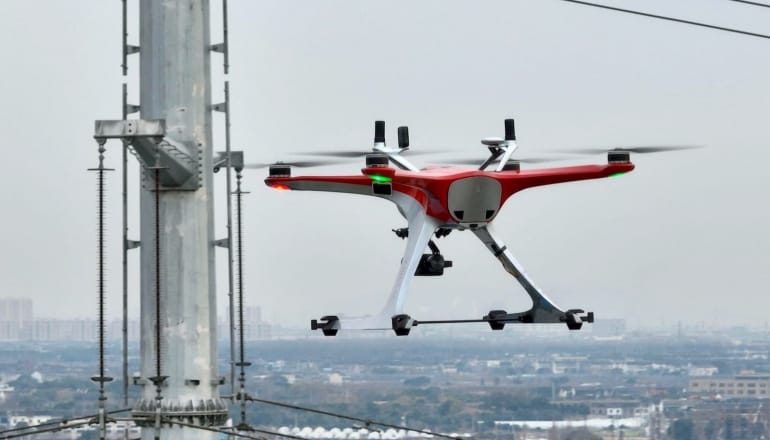 Reccessary
Hanoi to host TECHFEST Vietnam 2026 in November
• Hanoi will host the TECHFEST Vietnam 2026 event in November. • The event will use an open-air format featuring startup product exhibitions, technology demonstrations, and the final round of a national innovative startup talent competition.
Read original · en.vietnamplus.vn VietnamPlus
Asian markets edge higher as AI-driven chip demand lifts tech stocks
• Asian stock markets rose on Tuesday as increased demand for artificial intelligence chips boosted technology shares. • South Korea's tech-heavy index gained 1.1%, while Japan's Nikkei futures rose 0.5% and the MSCI Asia-Pacific index outside Japan climbed 0.3%.
Read original · business-standard.comAI in ICT (Information and Communications Technology) Market’s 16.4% CAGR: Top Companies in 2026 – Big News
• The AI in Information and Communications Technology (ICT) market is projected to grow from USD 69,633 million in 2025 to USD 199,619 million by 2034. • This growth represents a compound annual growth rate (CAGR), or steady yearly increase, of 16.4%.
Read original · bignews.ukMalaysia urged to raise incentives for advanced chipmakers - The Business Times
• An industry analyst has urged Malaysia to increase financial incentives to attract advanced semiconductor chipmakers. • The recommendation focuses specifically on advanced packaging, which the analyst describes as the primary need of the global tech industry.
Read original · businesstimes.com.sgAsia stocks rise on AI, US-China trade talks optimism
• Asian stock markets rose on Monday morning due to optimism surrounding artificial intelligence and US-China trade talks. • South Korea's tech-heavy benchmark surged 1.5 percent, while Hong Kong's main index and Shanghai shares both gained 0.5 percent.
Read original · hindustantimes.com
![[AI DAILY NEWS RUNDOWN] Hacktron AI Breaches OpenAI with Claude, Anthropic Builds Physical Wet Lab, & Trump’s Military 'AI Force' (Sept 21, 2026)](/_next/image?url=https%3A%2F%2Fsubstackcdn.com%2Fimage%2Ffetch%2F%24s_!xyd-!%2Cw_1200%2Ch_600%2Cc_fill%2Cf_jpg%2Cq_auto%3Agood%2Cfl_progressive%3Asteep%2Cg_auto%2Fhttps%253A%252F%252Fsubstack-post-media.s3.amazonaws.com%252Fpublic%252Fimages%252Fb06fc345-1129-4814-b8fb-676c3d8878cc_3000x3000.jpeg&w=1920&q=75)