Hughes Network Systems Secures USAF Contract for AI-Enhanced Hybrid Satellite Networks
- Hughes Network Systems won a US Air Force Research Laboratory contract under the RAPID program to develop hybrid satellite networks blending military, allied, and commercial systems.
- The project explores software-defined networking, AI, and machine learning for resilient communications in contested environments, routing data across space and terrestrial links.
- Aimed at improving military connectivity for command centers and tactical forces, it supports broader DoD efforts like Enterprise SATCOM for flexible bandwidth management.
Sources & Citations
1 sourceMore Stories
China accuses CEO of one of America's biggest AI companies of bad behaviour; says: You suffer from … - The Times of India
• Chinese state media, via the CCTV-affiliated channel Yuyuantantian, has accused American AI firm Anthropic of engaging in unethical practices. • Beijing is demanding that the U.S. verify its domestic AI companies adhere to strict safety, disclosure, and independent auditing standards.
Read original · timesofindia.indiatimes.comGlobal AI boom fuels Asia factory expansion
• Asia's factory activity expanded in August, driven by a global surge in demand for artificial intelligence (AI) hardware. • Private surveys released Tuesday highlight specific growth in Taiwan and Malaysia, brightening economic prospects for the export-reliant region.
Read original · manilatimes.net The Manila Times
Fierce Biotech Layoff Tracker 2026: ArsenalBio winnows down workforce; Kolon cuts staff
• Novartis and Genentech have announced significant workforce reductions as part of Fierce Biotech's 2026 layoff tracker. • On July 7, Novartis cut 322 positions at its East Hanover, New Jersey headquarters, primarily impacting marketing, patient support, and field sales.
Read original · fiercebiotech.comTech equity funding rises 21% QoQ to $4.8b in Q3
• Tech companies raised $4.8 billion in equity funding during Q3 2026, marking a significant increase in investor activity. • This figure represents a 21.09% rise compared to the $4 billion raised in Q2 2026.
Read original · sbr.com.sg Singapore Business Review
EuroHPC selects Bull to lead €387m Lumi-AI supercomputer contract
• EuroHPC has selected Bull to lead a €387 million contract for the development of the Lumi-AI supercomputer. • This agreement represents the first major contract for Bull following its renationalization by the French government.
Read original · itpro.com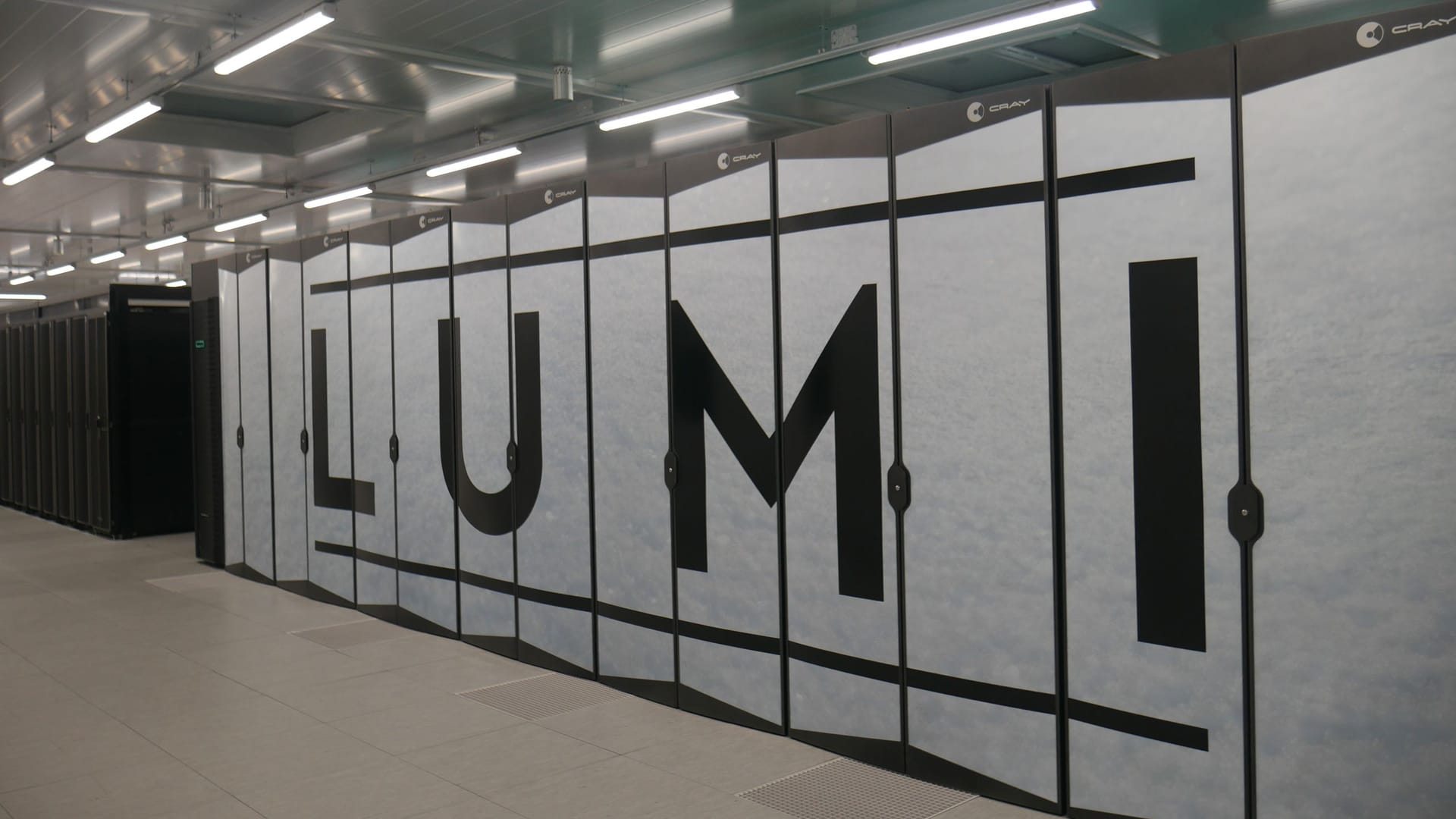 IT Pro
Vivatech
• The Vivatech initiative is addressing the significant funding gap facing European AI businesses, which struggle to scale and commercialize despite having world-class research and engineering talent. • The program provides comprehensive support across AI infrastructure, academic research, and commercialization to help transition breakthroughs into market-ready products.
Read original · vivatech.comEuroHPC selects Bull for $450m LUMI-AI supercomputer deployment
• EuroHPC JU and the LUMI AI Factory consortium have selected Bull to deploy the LUMI-AI supercomputer in a project valued at $450 million. • The investment is split equally between EuroHPC JU and a consortium of partners from Finland, Estonia, Czechia, Norway, Denmark, and Poland.
Read original · verdict.co.uk Verdict
Factbox-US companies face rise in cyber attacks By Reuters
• U.S. companies are experiencing a significant rise in cyber attacks, with recent security breaches affecting major AI firms including OpenAI and Anthropic. • In response, the White House announced the creation of a coordination group in July to help AI developers and critical infrastructure operators share information on system vulnerabilities.
Read original · investing.comLUMI-AI: €387.8 Million for AMD MI430X and EPYC
• Finland is constructing LUMI-AI, a high-performance computing facility funded by a €387.8 million investment. • The system will utilize AMD MI430X accelerators and 256-core EPYC processors to significantly expand Europe's AI and HPC capacity starting in 2027.
Read original · igorslab.de igor´sLAB
New AI models pose growing risk to financial stability, FSB chief Bailey warns By Investing.com
• Financial Stability Board (FSB) chief Bailey has warned that the emergence of new AI models poses a growing risk to global financial stability. • Bailey emphasized the urgent need for robust response and recovery capabilities, specifically the ability to restore critical systems and data from "bare metal" after major cyber incidents.
Read original · investing.comASE CEO describes AI resource squeeze as a short-term problem
• ASE Technology CEO and SEMI Global Board Executive Committee Chair Tien Wu stated that the early growth of AI is causing a short-term shortage of land, talent, capital, and power in Taiwan. • Speaking at a pre-show conference on August 31, Wu emphasized Taiwan's indispensable role in the global technology ecosystem despite these resource pressures.
Read original · digitimes.com DIGITIMES
Move and win roundup: Week of August 31, 2026
• Campaign Asia released its weekly "Move and win" roundup on August 31, 2026, detailing recent business wins and executive appointments across the industry. • Key companies featured in the roundup include Supermassive, Singlife, Chop Shop, Visa, AKQA Australia, Havas Play, OpenAI, Nova Studio, Edge Marketing, and Influence Matters.
Read original · campaignasia.com