IEA: Countries agree to strengthen energy efficiency to mitigate Hormuz disruption impact - SAFETY4SEA
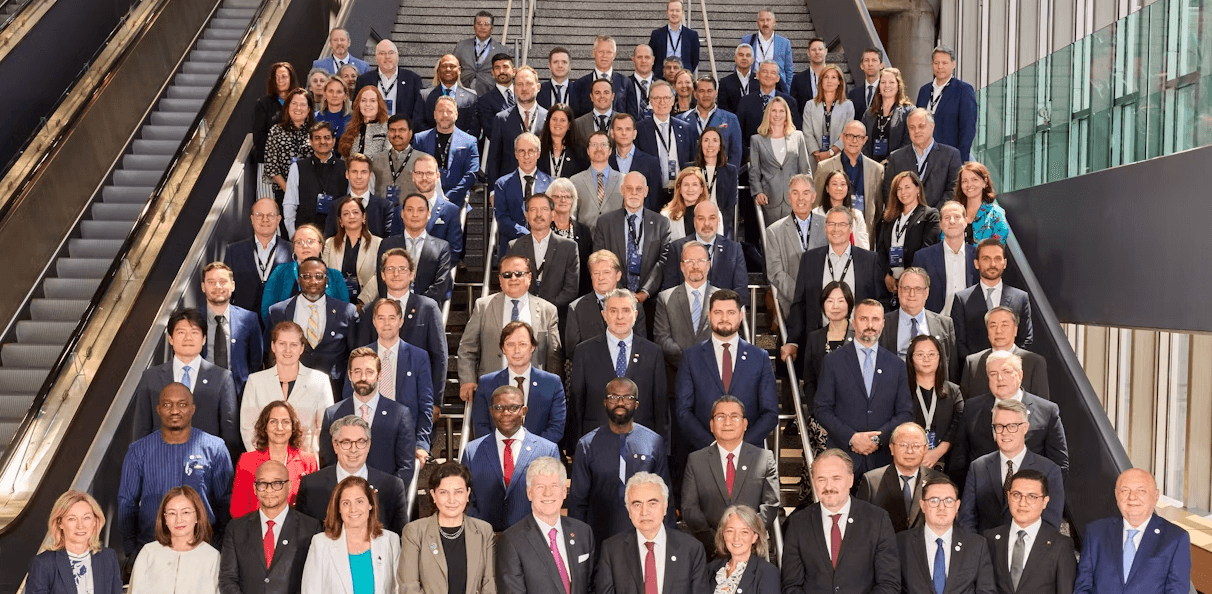
- On June 29, dozens of governments agreed to strengthen energy efficiency policies to better protect households and businesses from volatile energy prices.
- The initiative aims to improve global resilience against future energy shocks, specifically those potentially caused by disruptions in the Strait of Hormuz due to Middle East conflicts.
- This move matters as it seeks to reduce systemic dependency on unstable energy corridors and mitigate the economic impact of geopolitical instability.
- Participating nations will now focus on implementing these efficiency measures to stabilize energy costs and enhance long-term security.
Sources & Citations
1 sourceMore Stories
UAE advances peace efforts through mediation, humanitarian action - The Gulf Time Newspaper
• The UAE is advancing international peace and stability efforts through a combination of diplomacy, dialogue, and humanitarian action. • The government is prioritizing conflict prevention and the protection of civilians to resolve existing global crises.
Read original · gulftime.ae Gulftime
In a world of wars and climate crisis, a new leader could save the UN. But would Trump allow it? | Steve Bloomfield
• A UN commission of inquiry recently accused Israel of committing genocide in Gaza while the organization struggled to maintain its global influence. • Donald Trump’s Board of Peace has effectively pushed the UN into a bystander role during current international conflicts.
Read original · theguardian.comWorld leaders return to UN amid wars in Middle East and Ukraine
• World leaders are returning to the United Nations assembly to address ongoing wars in Ukraine and the Middle East. • The 80-year-old organization is currently facing a combined crisis of morale and finance alongside questions regarding its next leader.
Read original · rappler.com RAPPLER
World News | Guterres Calls for Global Unity, Cooperation Ahead of ‘last UNGA’ as UN Secretary-General
• UN Secretary-General Antonio Guterres called on world leaders this Sunday to prioritize peace, dignity, justice, and humanity. • The appeal comes as leaders prepare to gather in New York for the United Nations General Assembly, which will be Guterres' final assembly as Secretary-General.
Read original · latestly.comSecurity forces preparing ‘extensive’ Yom Kippur operations in West Bank after terror attack
• Israeli security forces are preparing extensive operations in the West Bank following a deadly shooting attack at a local spring. • National Security Minister Itamar Ben Gvir has demanded that the terrorist responsible for the attack be executed.
Read original · timesofisrael.comWorld leaders return to UN amid wars in Middle East and Ukraine - Reuters
• World leaders are gathering for the United Nations General Assembly to address ongoing conflicts in Ukraine and the Middle East. • Oxfam is using the event to urge global action on an "inequality emergency" involving climate change, artificial intelligence, and the crisis in Gaza.
Read original · alto.gab.comWorld leaders return to UN as it struggles to remain relevant
• Nearly 130 heads of state are meeting at the United Nations as the organization struggles to maintain its relevance amid global political strain. • The assembly follows a period of tension with the United States, where Donald Trump slashed financial contributions and withdrew from dozens of UN bodies.
Read original · citizen.digital Citizen Digital
Macron and Carney announce closer France-Canada ties amid Trump tensions
Two leaders meet in French territory off Canada as Ottawa seeks stronger relations with EU while fighting trade war with USThe leaders of France and Canada have pledged closer ties to grapple with rising geopolitical tensions, climate change and the erosion of democratic values, after they met in a French territory off Canada’s Atlantic coast.The two leaders’ visit to Saint-Pierre and Miquelon – the first by a French president since 2014 and the first by a Canadian prime minister – came just weeks after Donald Trump posted an image showing the islands, as well as all of Canada and other countries in North America, covered by the US flag. Continue reading...
Read original · theguardian.comMore than 800,000 bees stolen across far north Queensland in ‘sophisticated’ operation
Apiarists will lose not just the insects but the value of pollination contracts, which can be worth thousands of dollarsFollow our Australia news live blog for latest updatesGet our breaking news email, free app or daily news podcastAn estimated 800,000 bees, worth tens of thousands of dollars, have been stolen from properties in far north Queensland.The industry is already reeling from the this month’s arrival of the varroa mite parasite. Continue reading...
Read original · theguardian.comICE agent shoots and wounds man at traffic stop in Austin, Texas, officials say
Anti-ICE protests break out in push for transparency as unnamed man is in serious but stable condition at hospitalA US Immigration and Customs Enforcement (ICE) officer shot and wounded a man on Sunday afternoon in Texas’s capital of Austin, local authorities said, and anti-ICE protesters quickly gathered at the scene.The unnamed man was in serious but stable condition at a hospital after being shot once in the torso on the city’s north side, Austin’s police chief, Lisa Davis, said at a news conference with the mayor and other city officials. Continue reading...
Read original · theguardian.comPolice allege mother behind Blue Mountains stabbing attack on three children that left one dead
Bystanders found all four on the side of the road at Valley Heights on Sunday with stabbing injuriesPolice have alleged that the mother was behind a stabbing attack on three young children that left one dead and two others fighting for their lives in hospital.The woman, aged in her forties, is also in a critical condition. Continue reading...
Read original · theguardian.comTrump reportedly to form health funding board that could veto ‘woke’ initiatives
President’s latest order expected to bring NIH funding under control of Trump administration to align with agendaDonald Trump’s latest executive order is expected to establish a board responsible for approving National Institutes of Health grant funding, marking another attempt by the Trump administration to censor topics that do not align with the president’s agenda.The executive order, reported by outlets including the Washington Post and Politico, was discussed in a meeting on Friday where senior administration officials accused the NIH of funding “woke” initiatives that went against Trump’s political priorities. Continue reading...
Read original · theguardian.com