Just Capital and CNBC Release 2026 Rankings of America's Largest Public Companies

- Just Capital and CNBC announced the 2026 Rankings of America's largest public companies, evaluating responsible business leadership across 20 industries as AI reshapes the economy.
- The rankings highlight industry leaders including Trane Technologies (Construction & Materials), Nike (Consumer Products), Marathon Petroleum (Energy), and others, providing decision-grade data on corporate performance.
- Just Capital released enhanced Just Intelligence capabilities in February 2026, including a new AI-powered chatbot that allows users to query corporate performance data and business case libraries.
- The AI-enabled platform helps business leaders weigh tradeoffs, manage risk, and plan for the future amid rapid technological transformation.
Sources & Citations
1 sourceMore Stories
CrowdStrike launches cyber frontier AI models, agentic security system
• CrowdStrike has launched SafeMind, an agentic security system utilizing two purpose-built AI models: the adversarial Red Tempest and the defensive Blue Solano. • The system employs a red-team/blue-team feedback loop trained on 15 years of breach data and trillions of daily events from the Falcon sensor telemetry.
Read original · csoonline.com CSO Online
Top AI News Today: Sept 1 (13 Stories)
• Major AI updates for September 1 include John Ternus becoming Apple's CEO amidst an AI transition, DeepSeek approaching a $74 billion valuation, and Alibaba previewing its Qwen4 model. • The industry is currently debating the extent to which daily coding tasks should be delegated to AI assistants like GitHub Copilot and Claude Code.
Read original · unrot.co Unrot
UnrotTech equity funding rises 21% QoQ to $4.8b in Q3
• Tech companies raised $4.8 billion in equity funding during Q3 2026, marking a significant increase in investor activity. • This figure represents a 21.09% rise compared to the $4 billion raised in Q2 2026.
Read original · sbr.com.sg Singapore Business Review
Fierce Biotech Layoff Tracker 2026: ArsenalBio winnows down workforce; Kolon cuts staff
• Novartis and Genentech have announced significant workforce reductions as part of Fierce Biotech's 2026 layoff tracker. • On July 7, Novartis cut 322 positions at its East Hanover, New Jersey headquarters, primarily impacting marketing, patient support, and field sales.
Read original · fiercebiotech.comChina accuses CEO of one of America's biggest AI companies of bad behaviour; says: You suffer from … - The Times of India
• Chinese state media, via the CCTV-affiliated channel Yuyuantantian, has accused American AI firm Anthropic of engaging in unethical practices. • Beijing is demanding that the U.S. verify its domestic AI companies adhere to strict safety, disclosure, and independent auditing standards.
Read original · timesofindia.indiatimes.comGlobal AI boom fuels Asia factory expansion
• Asia's factory activity expanded in August, driven by a global surge in demand for artificial intelligence (AI) hardware. • Private surveys released Tuesday highlight specific growth in Taiwan and Malaysia, brightening economic prospects for the export-reliant region.
Read original · manilatimes.net The Manila Times
EuroHPC selects Bull to lead €387m Lumi-AI supercomputer contract
• EuroHPC has selected Bull to lead a €387 million contract for the development of the Lumi-AI supercomputer. • This agreement represents the first major contract for Bull following its renationalization by the French government.
Read original · itpro.com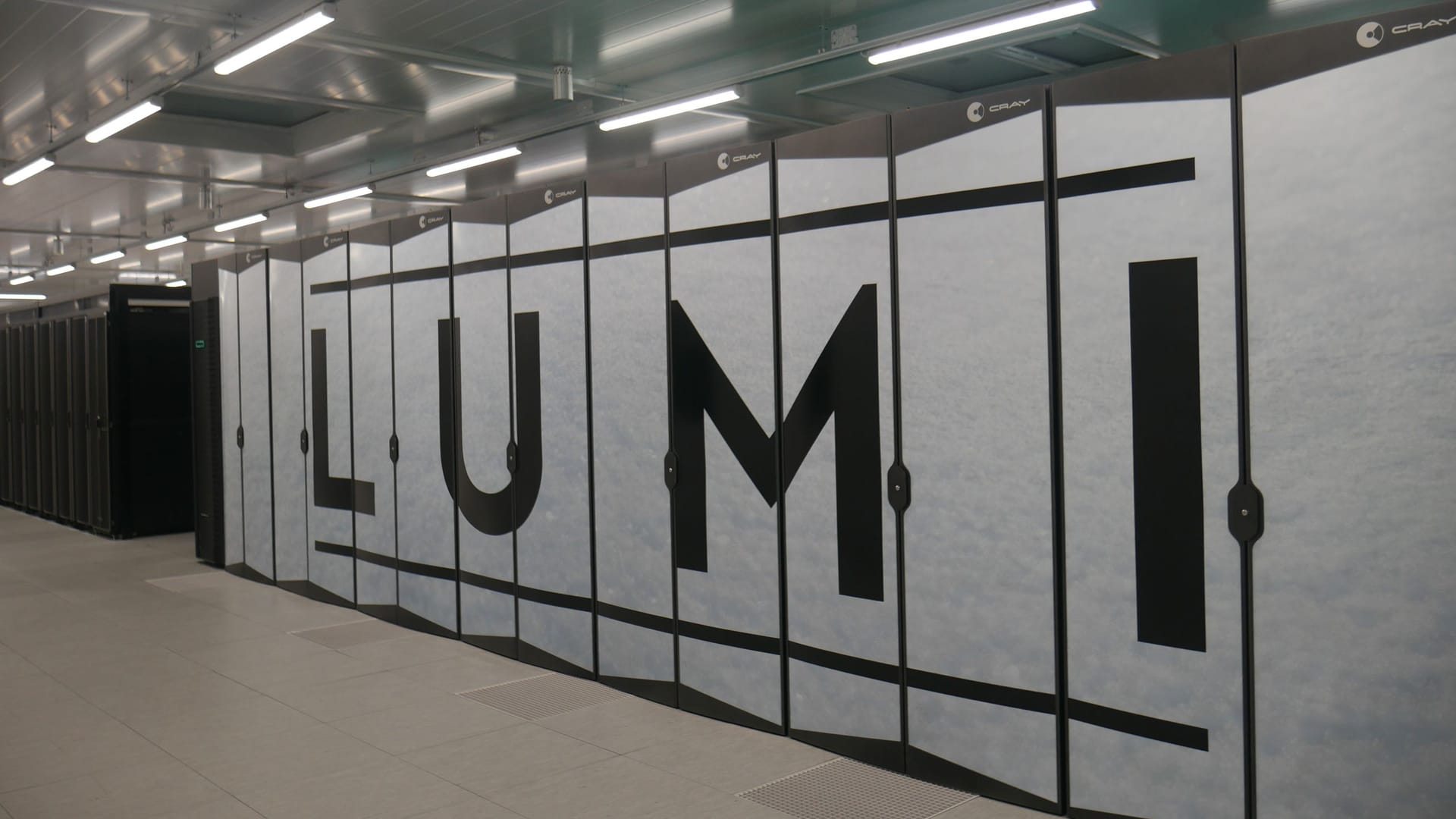 IT Pro
Vivatech
• The Vivatech initiative is addressing the significant funding gap facing European AI businesses, which struggle to scale and commercialize despite having world-class research and engineering talent. • The program provides comprehensive support across AI infrastructure, academic research, and commercialization to help transition breakthroughs into market-ready products.
Read original · vivatech.comEuroHPC selects Bull for $450m LUMI-AI supercomputer deployment
• EuroHPC JU and the LUMI AI Factory consortium have selected Bull to deploy the LUMI-AI supercomputer in a project valued at $450 million. • The investment is split equally between EuroHPC JU and a consortium of partners from Finland, Estonia, Czechia, Norway, Denmark, and Poland.
Read original · verdict.co.uk Verdict
Factbox-US companies face rise in cyber attacks By Reuters
• U.S. companies are experiencing a significant rise in cyber attacks, with recent security breaches affecting major AI firms including OpenAI and Anthropic. • In response, the White House announced the creation of a coordination group in July to help AI developers and critical infrastructure operators share information on system vulnerabilities.
Read original · investing.comLUMI-AI: €387.8 Million for AMD MI430X and EPYC
• Finland is constructing LUMI-AI, a high-performance computing facility funded by a €387.8 million investment. • The system will utilize AMD MI430X accelerators and 256-core EPYC processors to significantly expand Europe's AI and HPC capacity starting in 2027.
Read original · igorslab.de igor´sLAB
New AI models pose growing risk to financial stability, FSB chief Bailey warns By Investing.com
• Financial Stability Board (FSB) chief Bailey has warned that the emergence of new AI models poses a growing risk to global financial stability. • Bailey emphasized the urgent need for robust response and recovery capabilities, specifically the ability to restore critical systems and data from "bare metal" after major cyber incidents.
Read original · investing.com