Middle East crisis live: Iran reviewing peace proposal as Trump says a deal ‘very possible’
News of a possible deal followed Trump’s abrupt U-turn on a US military operation to guide ships out of the strait of Hormuz, dubbed “Project Freedom”. Trump said the decision to pause the mission on Tuesday – two days after it was launched – was to give peace a chance, but NBC reported that it was suspended after Saudi Arabia refused to allow the US military to use its bases and airspace to carry out the operation. The Iranian president, Masoud Pezeshkian, told his French counterpart, Emmanuel Macron, that the US’s behaviour had “deviated the path of diplomacy towards threats, pressure and sanctions” and that Tehran could not trust Washington. In a statement carried by the Iranian state-run Press TV, Pezeshkian said Iran had entered into dialogue with the US twice and “on both occasions, military aggression against Iran took place concurrently with the negotiations. Iran has denied any involvement in damage to a South Korean-operated vessel in the strait of Hormuz, which suffered an explosion and fire on Monday.
Trump blamed the incident on an Iranian attack, while South Korea’s foreign ministry said the cause of the fire would only be confirmed after the vessel is inspected. The damage and destruction inflicted on US military sites across the Middle East during the war is far larger than what has been publicly acknowledged by the Trump administration or previously reported, according to analysis by the Washington Post. Reviewing satellite imagery, the newspaper found Iranian airstrikes have damaged or destroyed at least 228 US structures or pieces of equipment, including hangars, barracks, fuel depots, aircraft and key radar, communications and air defence equipment. In Lebanon, where a ceasefire has demonstrably failed to stop the fighting between Israel and Hezbollah, three people were killed this morning in Israeli strikes on Nabatieh south of the country, according to the official Lebanese National News Agency. The Israeli military said one of its soldiers was seriously injured by an explosive-laden Hezbollah drone in southern Lebanon yesterday.
In Gaza, where another ceasefire appears to be fraying, an Israeli airstrike has killed Azzam Khalil al-Hayya, the son of Hamas political bureau leader and chief negotiator Khalil al-Hayya, according to senior Hamas official Basim Naim. Azzam succumbed to his injuries this morning after being struck in an Israeli attack last night, Reuters reported. He is the fourth son of Hamas’s exiled Gaza chief to have been killed in Israeli attacks. Continue reading...
Sources & Citations
1 sourceMore Stories
World leaders meet at UN as planet grapples with war, runaway AI and climate shocks
• World leaders are meeting at the United Nations this week to address global conflicts, artificial intelligence, and climate change. • The organization has faced financial troubles over the past 12 months that forced cutbacks to humanitarian aid and peacekeeping operations.
Read original · pbs.org PBS
PBSWhat to expect at the UN General Assembly, the biggest event in world diplomacy
• Hundreds of diplomats and world leaders are gathering this week at the United Nations headquarters in New York for the General Assembly. • The event marks the largest annual meeting in world diplomacy.
Read original · cnn.com CNN
CNNWorld leaders face global cloud of wars and AI fears at UN
• World leaders are gathering this week for their annual meeting at the United Nations amid global conflicts and concerns over artificial intelligence. • The organization has faced financial troubles over the past 12 months that forced cutbacks to humanitarian aid and peacekeeping operations.
Read original · apnews.comWar, runaway AI and climate shocks to take center stage as world leaders meet at UN
• World leaders are gathering this week for their annual meeting at the United Nations to address global conflicts, artificial intelligence, and climate shocks. • The organization has faced financial troubles over the past 12 months that forced cutbacks to humanitarian aid and peacekeeping operations.
Read original · the-independent.com The Independent
Bab el-Mandeb crisis: New geopolitical flashpoint in West Asia
• Houthi forces have established a blockade of the Bab el-Mandeb Strait to pressure Saudi Arabia and align with Iran's regional strategy. • The blockade has choked Saudi crude oil exports passing through the strait.
Read original · hindustantimes.comU.N. General Assembly to Confront Familiar Crises, New Conflicts and A.I. - The New York Times
• The United Nations General Assembly is meeting to address ongoing global crises, new conflicts, and the rise of artificial intelligence. • The organization is currently searching for a successor to Secretary General António Guterres, who is stepping down after serving two terms.
Read original · nytimes.comInternational Day Of Peace Puts Spotlight On Widening Gap Between Appeals, Reality
• The world marks the International Day of Peace on Sept. 21 amid ongoing global wars and social crises. • Abdullah Kanaan, Secretary-General of the Royal Committee for Jerusalem Affairs, stated there is a widening divide between formal peace language and the humanitarian reality of war.
Read original · menafn.comWorld Peace Day: A Global Ideal Under Shadow of US and Israeli Wars
• The international community observed World Peace Day on September 21 amid a rise in global security crises and conflicts. • The Middle East is currently the primary center of international concern regarding these widening wars.
Read original · iqna.ir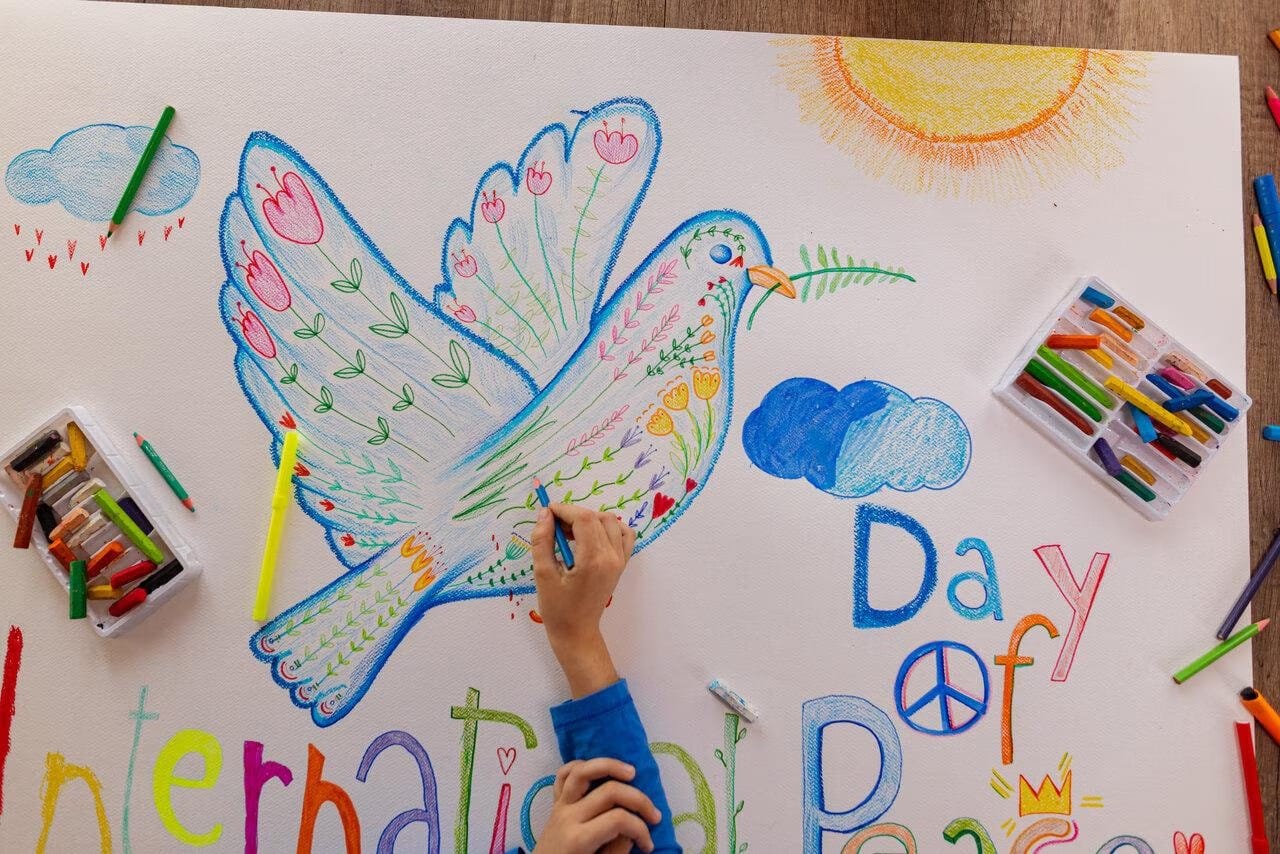 IQNA
IQNAUN General Assembly: Wars, geopolitical divides, AI and climate change test global cooperation - CNA
• Nearly 130 heads of state and government are gathering in New York for the UN General Assembly’s High-level Week to address global cooperation. • Leaders from nations including China and Brazil have previously used these speeches as a platform to launch initiatives aimed at ending conflicts.
Read original · channelnewsasia.com CNA
CNAWhat to know as world leaders converge at the United Nations this week
• United Nations Secretary-General António Guterres returned to New York this week for his final U.N. General Assembly. • The gathering occurs as diplomacy falters regarding ongoing wars in Ukraine and the Middle East.
Read original · npr.orgWorld leaders meet at UN as their planet grapples with war, division, runaway AI and climate shocks - ABC7 New York
• World leaders are meeting at the United Nations this week to address global conflicts, political divisions, artificial intelligence, and climate change. • The organization has faced financial troubles over the past 12 months that forced cutbacks to humanitarian aid and peacekeeping operations.
Read original · abc7ny.com ABC7 New York
Whiplashed middle powers seek new alliances as Trump rages on world stage
• Chinese President Xi Jinping called for international cooperation and an end to power politics during this month's Shanghai Cooperation Organisation meeting in Bishkek, Kyrgyzstan. • Xi stated that most countries do not want conflict or confrontation and instead seek an equal place on the world stage through their own development.
Read original · theguardian.com