NIH Biomedical Funding Spared from $18 Billion Cuts but Delays Persist for US Researchers

- Congress rejected Trump administration's $18 billion NIH budget cut proposal, providing stability for 2026 grantees at institutions like University of Wisconsin-Madison.
- Delays in grant reviews and dispersal have stalled projects, hiring, and caused anxiety, with NIH months behind schedule as of March 26, 2026.
- Vice Chancellor Dorota Brzezinska noted core funding protection but ongoing uncertainty impacts lab operations and future awards before September 30 deadline.
Sources & Citations
1 sourceMore Stories
Amendment 71: New Opportunity: A.16 Cryosphere - NASA Science
• NASA has issued Amendment 71 for the A.16 Cryosphere solicitation, seeking high-impact research proposals focused on glaciers, ice sheets, and sea ice. • Proposed investigations must leverage existing data from NASA's airborne campaigns and satellite missions to address urgent challenges in cryospheric science.
Read original · science.nasa.gov NASA Science
Science : NPR
• NPR's senior climate editor is providing internal newsroom guidance to help staff accurately report on the role of climate change during extreme weather events. • In a separate scientific development, researchers are investigating the use of AI-designed viruses to specifically target and eliminate harmful bacteria.
Read original · npr.orgNASA’s Nancy Grace Roman Telescope Promises a Breakthrough in Cosmic Exploration - The New York Times
• NASA is developing the Nancy Grace Roman Telescope as part of a broader strategy to expand cosmic exploration beyond the capabilities of the Hubble Space Telescope. • The mission aims to complement existing observatories by exploring the universe across a diverse spectrum, including infrared, visible, ultraviolet, X-ray, and gamma ray wavelengths.
Read original · nytimes.comNASA’s new space telescope will reveal the universe like never before
• NASA is developing the Nancy Grace Roman space telescope, a powerful new instrument designed to explore nearly every facet of astrophysics. • The telescope's primary mission focuses on investigating dark matter, dark energy, and the search for alien planets.
Read original · sciencenews.org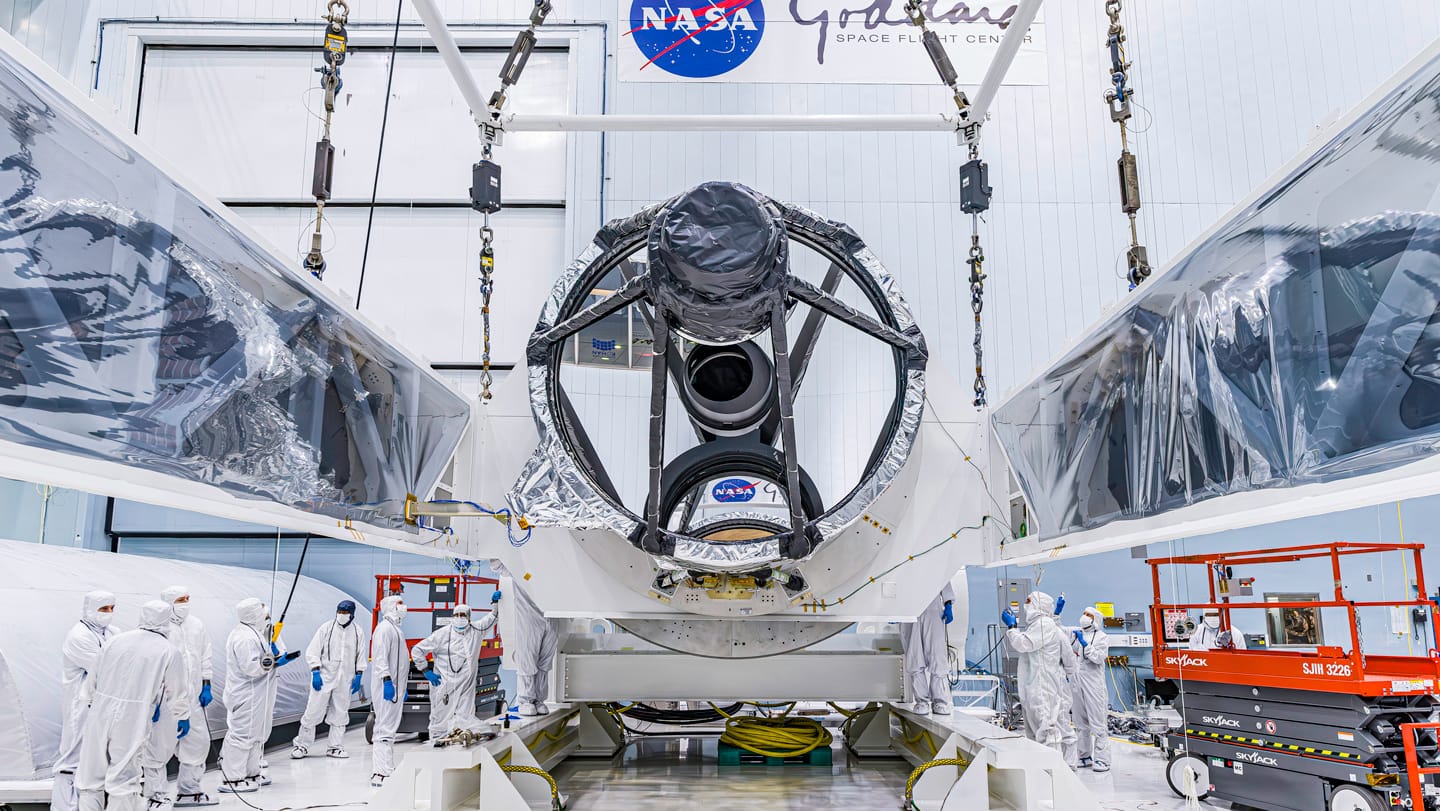 Science News
'A giant leap forward': Nasa launches powerful new space telescope
• NASA has launched the Nancy Grace Roman Space Telescope, named after the agency's first chief astronomer and first female executive. • The telescope is embarking on a multi-year mission to map the universe and investigate the mysteries of dark energy and dark matter.
Read original · bbc.com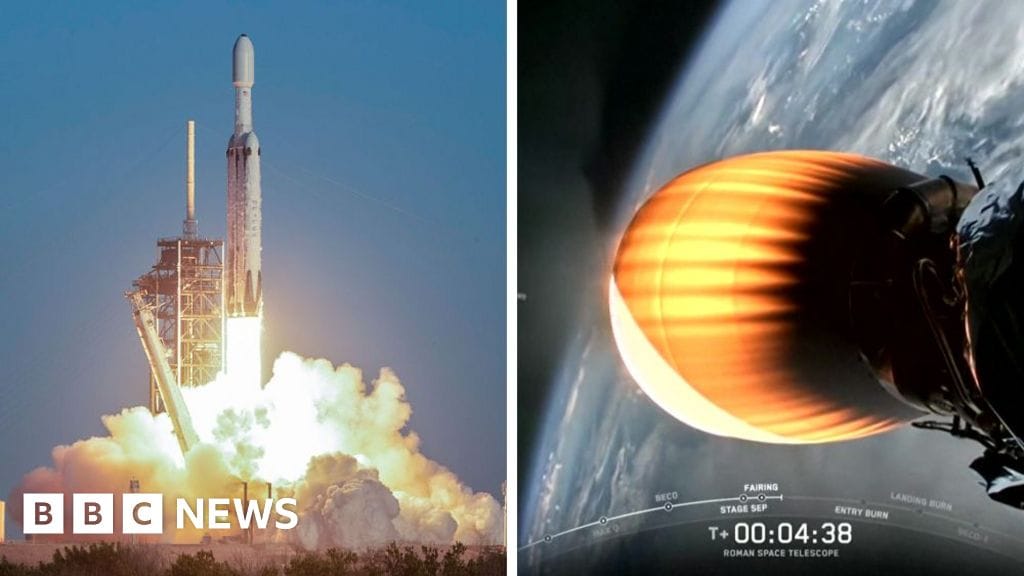 BBC
BBCOn this day in space! Aug. 31, 1965: NASA's ginormous Super Guppy carrier plane takes 1st flight like a flying whale
• On August 31, 1965, NASA's Super Guppy cargo plane successfully completed its first test flight. • Designed with a massive, whale-like fuselage, the aircraft was engineered to transport oversized components that were too large for conventional planes.
Read original · space.com Space.com
NASA’s Dark Universe-Seeking Nancy Grace Roman Space Telescope Launches - NASA
• NASA has launched the Nancy Grace Roman Space Telescope, which is now embarking on a three-month, million-mile journey to reach its final orbit. • The telescope utilizes a wide field of view combined with high-resolution infrared vision to survey vast areas of the sky and probe cosmic history.
Read original · nasa.govNASA’s Nancy Grace Roman Telescope Leaves Earth to Chart the Stars - The New York Times
• NASA has launched the Nancy Grace Roman Space Telescope, a powerful observatory designed to chart the stars and explore the "dark universe." • Astronomers will utilize the telescope's wide and deep field of view to hunt for new exoplanets and study dark energy and dark matter.
Read original · nytimes.comRoman Space Telescope launch updates: NASA, SpaceX celebrate & Trump calls in live during post-launch press conference
• NASA and SpaceX are preparing to launch the Nancy Grace Roman Space Telescope aboard a Falcon Heavy rocket. • The launch is currently scheduled to take place on August 30 at 7:26 a.m. ET.
Read original · space.com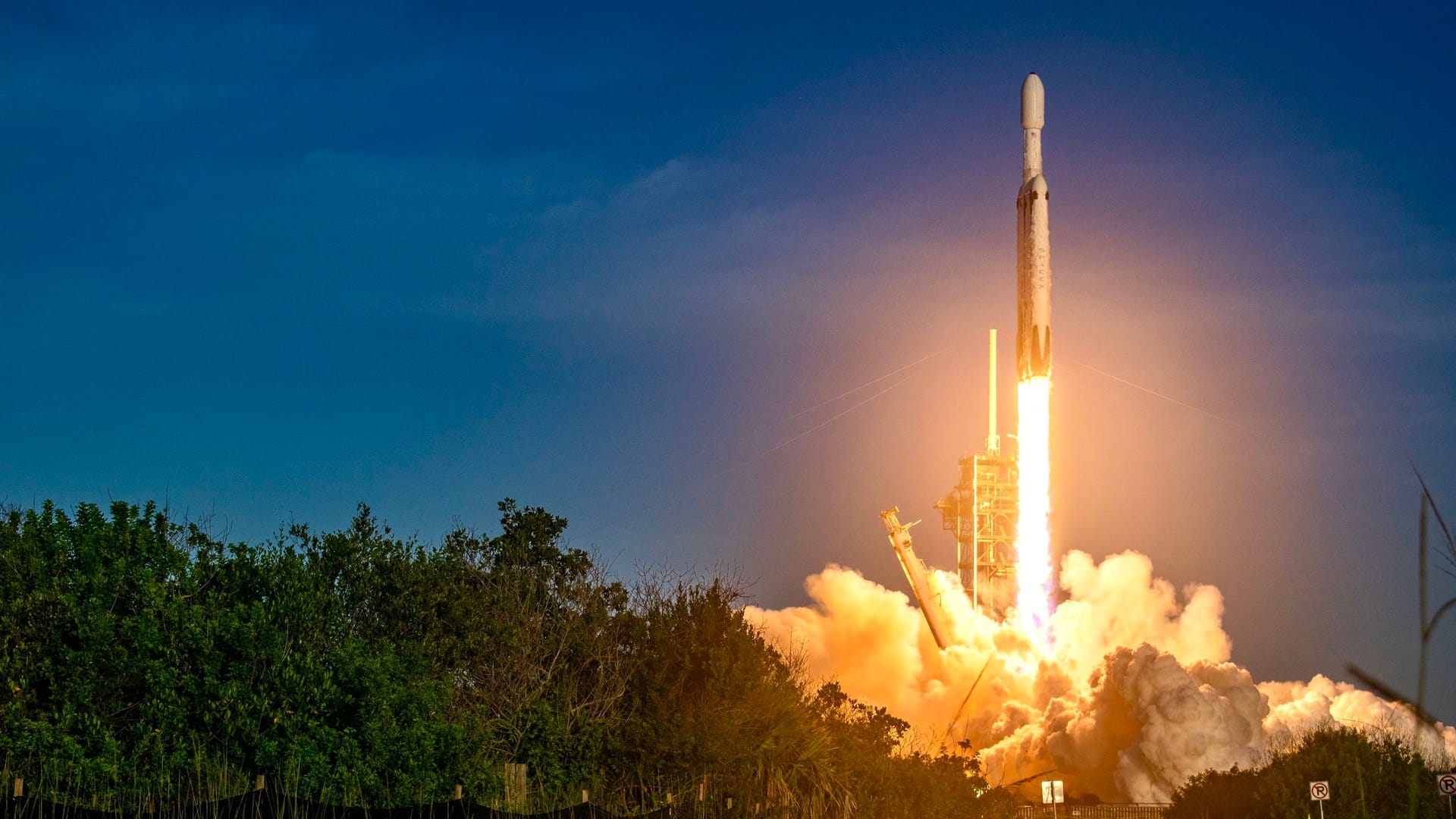 Space.com
NASA Concludes Roman Space Telescope Launch Coverage
• NASA has concluded its live coverage following the successful launch of the Nancy Grace Roman Space Telescope via a SpaceX Falcon Heavy rocket. • The telescope successfully separated from the rocket's second stage, marking the start of its journey into space.
Read original · science.nasa.gov NASA Science
'A glorious dawn launch': NASA's newest space telescope has left the Earth : NPR
• NASA has successfully launched its newest space telescope, a tour-bus-sized instrument designed to unravel cosmic mysteries. • The mission aims to identify more than 100,000 exoplanets beyond our solar system to expand our understanding of the universe.
Read original · npr.orgNASA’s Roman Space Telescope: Launch Updates
• NASA and SpaceX are targeting a liftoff for the Nancy Grace Roman Space Telescope at 7:26 a.m. EDT this Sunday. • The telescope will launch from Launch Complex 39A at the Kennedy Space Center in Florida aboard a SpaceX Falcon Heavy rocket.
Read original · science.nasa.gov