On this day in space! Sept. 6, 1947: The US Navy launches 1st V-2 rocket at sea in ballistic missile test
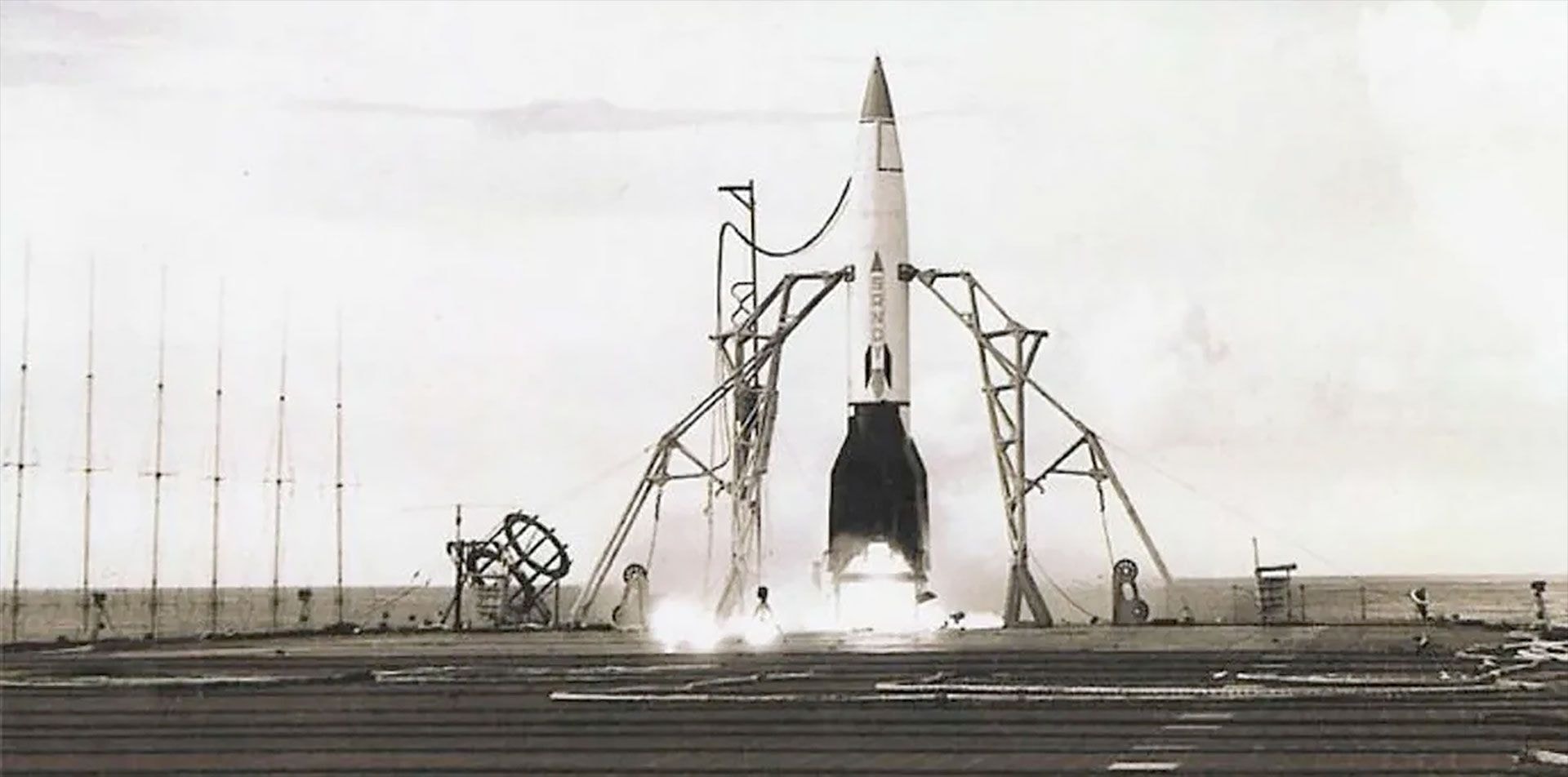
- The US Navy launched its first V-2 rocket from a ship at sea on September 6, 1947, as part of a ballistic missile test.
- Although the specific test was unsuccessful, it proved that Navy ships could serve as floating launch pads for ballistic missiles.
- This milestone demonstrated the feasibility of deploying long-range missiles from maritime platforms to expand military reach.
Sources & Citations
1 sourceMore Stories
Physicists just found a tiny glitch in time itself
• Physicists have discovered a tiny glitch in time itself, which may imply a fundamental uncertainty in measuring time, according to unconventional quantum theories. • The effect, supported by research from the Foundational Questions Institute, suggests that quantum collapse models could have surprising consequences for the nature of time and the precision of clocks.
Read original · sciencedaily.com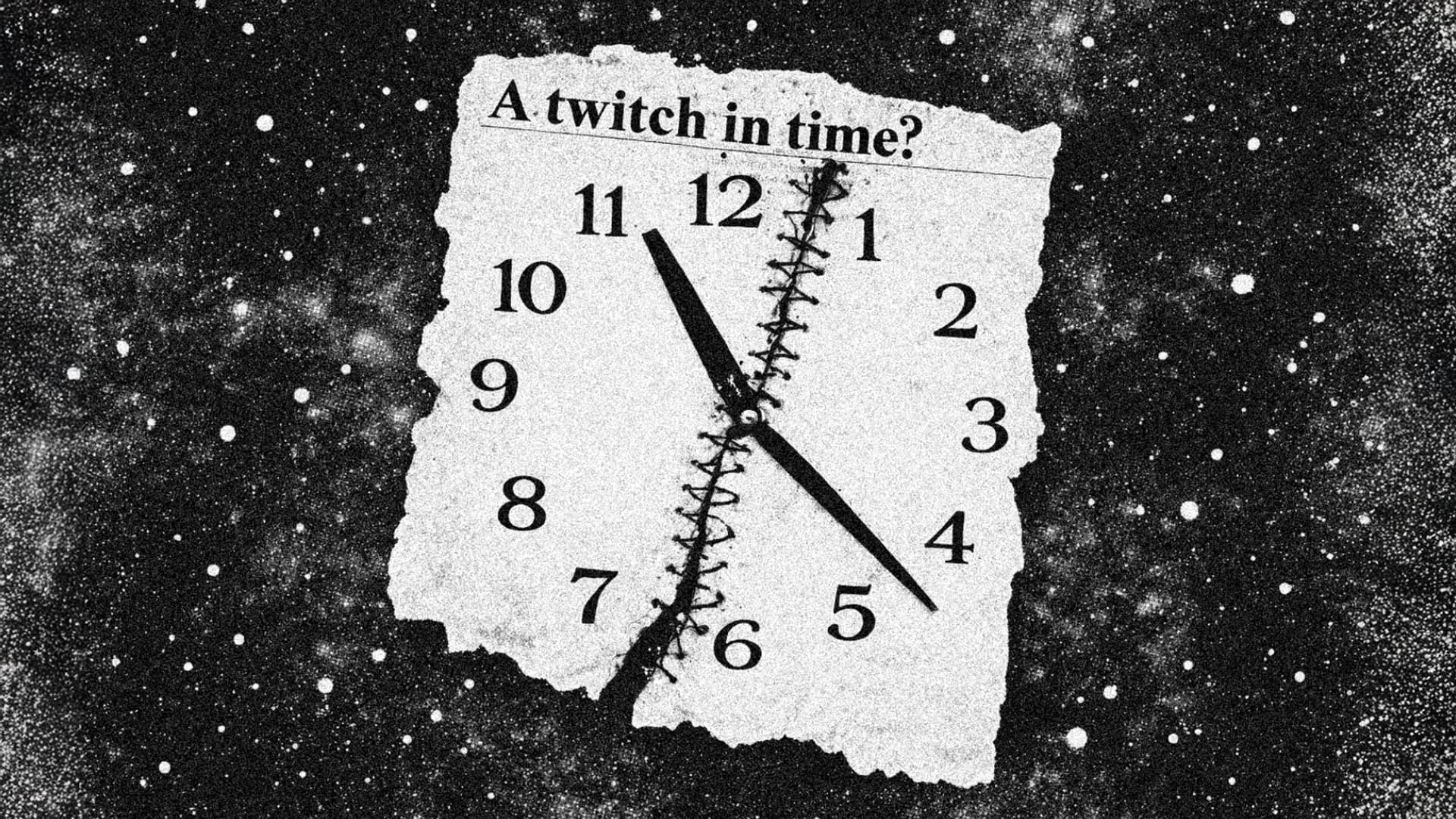 ScienceDaily
Expedition 75 Works on Science Hardware, Spacesuits, and Crew Filming - NASA
• The Expedition 75 crew performed science hardware maintenance and spacesuit upkeep aboard the International Space Station on Thursday. • One crew member disconnected and stowed physics hardware used for crystal growth research inside the Destiny Microgravity Science Glovebox.
Read original · nasa.gov NASA
NASAJames Webb Space Telescope reveals surprises about objects beyond Neptune
• NASA's James Webb Space Telescope and the Hubble Space Telescope recently completed a census of dozens of small, icy worlds located in the Kuiper Belt beyond Neptune. • The telescopes analyzed these distant objects to gather data on the composition and distribution of early planet formation materials.
Read original · mashable.com Mashable
NASA found a strange cosmic object that may explain how black holes become supermassive
• NASA's Chandra X-ray Observatory discovered a rare cosmic object 11.8 billion light-years away that emits X-rays. • This object is a "little red dot," a type of compact galaxy that typically does not shine in X-rays despite being powered by a black hole.
Read original · earth.com Earth.com
NASA’s Hubble, Webb Find Far-out Solar System Objects ‘Remember’ Past - NASA Science
• NASA scientists used the Hubble and James Webb Space Telescopes to study Trans-Neptunian Objects, which are icy bodies located beyond the orbit of Neptune. • The research focused on how these distant solar system objects retain chemical or physical signatures that reflect their past environments.
Read original · science.nasa.govHubble and Webb Team Up to Spy Tiny Frozen Worlds beyond Neptune
• Astronomers combined the Hubble and Webb space telescopes for the first time to search for small, faint frozen objects in the outer Solar System. • The team focused their search on tiny worlds located beyond the orbit of Neptune.
Read original · sci.newsMicroscopic fragments of ancient alien tech may litter the moon — and scientists have a plan to find them
• Researchers propose that microscopic fragments of technology from extinct alien civilizations may have landed on the moon after traveling through interstellar space. • The team claims that these tiny technological remnants could be identified and found in a relatively short amount of time.
Read original · livescience.com Live Science
Strange 'fast radio bursts' across the universe could help solve major cosmic mysteries: 'It's only the beginning'
• Astronomers are using fast radio bursts, which are intense pulses of radio waves from deep space, to investigate the nature of dark matter and dark energy. • Researchers have established that these bursts serve as a leading probe for mapping how matter is distributed across the universe.
Read original · space.com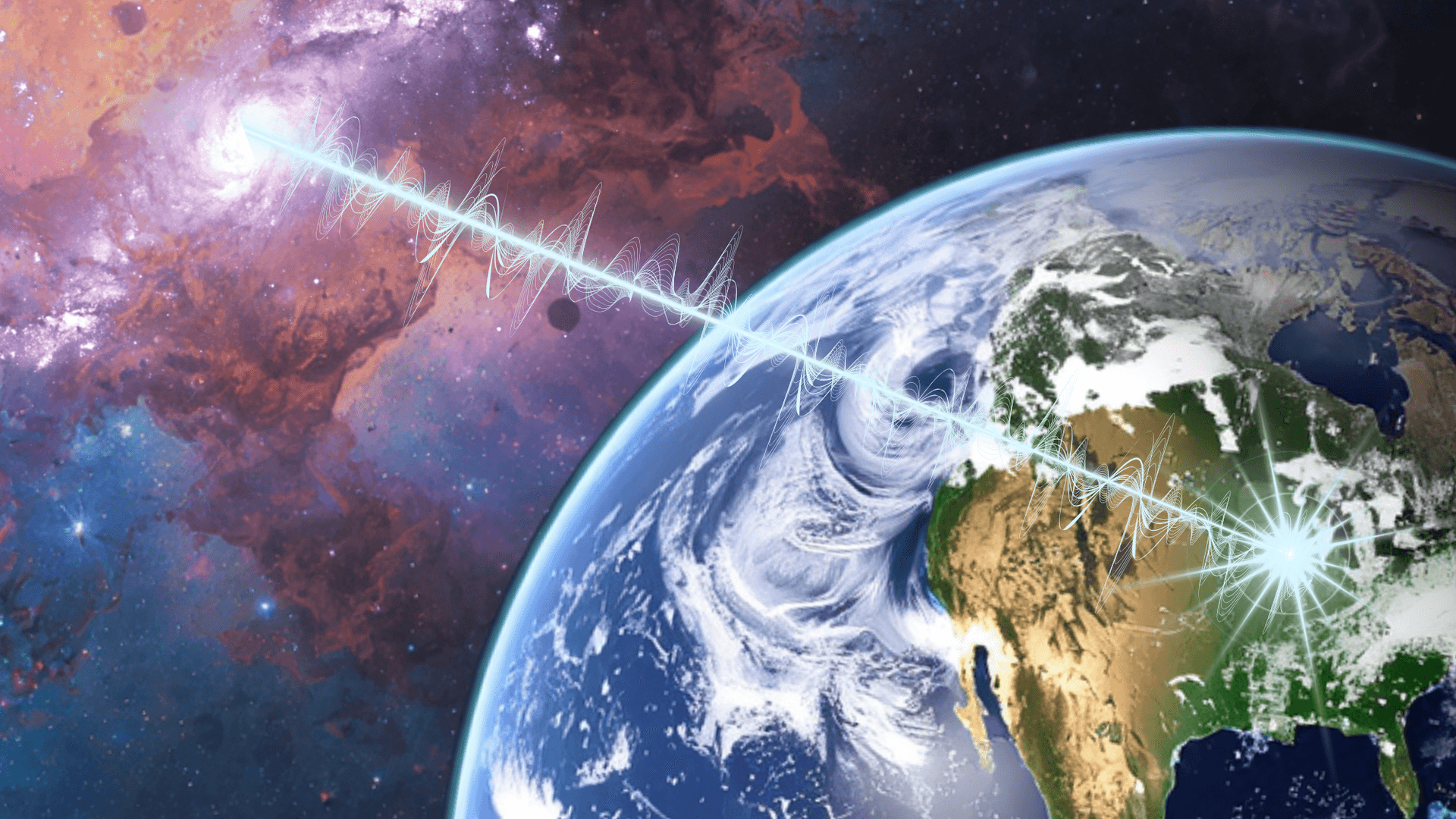 Space.com
‘One of the biggest discoveries in science’: have scientists found dark matter? – podcast | Science
• Scientists believe they have moved a step closer to detecting dark matter, a mysterious substance that has puzzled physicists for decades. • Dark matter is estimated to make up 85% of all matter in the universe, though it cannot be seen and is only known through its gravitational effects on other objects.
Read original · theguardian.comBreakthrough Research Reveals New Scientific Discoveries Today – ICO Optics
• Researchers have made recent breakthroughs in photonics and physics, reshaping our understanding of the universe and its fundamental interactions. • These studies have offered novel insights into how light and matter interact, spanning cosmic formation theories and revolutionary optics engineering applications.
Read original · ico-optics.org ICO Optics
Crew Studies Medicine and Physics, Works on Spacesuits and Earth Photo Gear - NASA
• The Expedition 75 crew members conducted research activities aboard the International Space Station on Wednesday, focusing on vein scans, ultra-hot physics, and Earth observations. • Crew members performed tasks such as swapping out spacesuit components and servicing life support gear to maintain the station's systems.
Read original · nasa.gov
