OpenAI Partners with AWS to Sell AI Tools to US Government Agencies

- OpenAI signed a new contract with Amazon Web Services on March 18, 2026, to provide AI tools to US government customers for both classified and unclassified projects.
- The deal, confirmed by AWS, expands OpenAI's federal footprint and offers an alternative procurement path amid tensions with other providers like Anthropic.
- This move reduces OpenAI's reliance on single cloud vendors and targets core government sectors including defense and intelligence.
- Government AI contracts are now central for major labs, intensifying competition for infrastructure control in secure enterprise use cases.
Sources & Citations
1 sourceMore Stories
Bessent: US proposes AI incident alert system in talks with China
• The U.S. is proposing a new notification system with China to alert each other about artificial intelligence incidents that could threaten national security. • This proposal comes as Donald Trump resists calls to slow down AI development to prevent China from catching up to U.S. capabilities.
Read original · apnews.comHanoi to host TECHFEST Vietnam 2026 in November
• Hanoi will host the TECHFEST Vietnam 2026 event in November. • The event will use an open-air format featuring startup product exhibitions, technology demonstrations, and the final round of a national innovative startup talent competition.
Read original · en.vietnamplus.vn VietnamPlus
Asia stocks rise on AI, US-China trade talks optimism
• Asian stock markets rose on Monday morning due to optimism surrounding artificial intelligence and US-China trade talks. • South Korea's tech-heavy benchmark surged 1.5 percent, while Hong Kong's main index and Shanghai shares both gained 0.5 percent.
Read original · hindustantimes.comDigital services bring transformation into everyday life
• Localities are implementing digital transformation services for residents following the Politburo's Resolution No. 57-NQ/TW issued on December 22, 2024. • Practical applications include the rollout of QR-code payments in traditional markets and smart kiosks for administrative procedures.
Read original · en.vietnamplus.vn VietnamPlus
AI in ICT (Information and Communications Technology) Market’s 16.4% CAGR: Top Companies in 2026 – Big News
• The AI in Information and Communications Technology (ICT) market is projected to grow from USD 69,633 million in 2025 to USD 199,619 million by 2034. • This growth represents a compound annual growth rate (CAGR), or steady yearly increase, of 16.4%.
Read original · bignews.ukMalaysia urged to raise incentives for advanced chipmakers - The Business Times
• An industry analyst has urged Malaysia to increase financial incentives to attract advanced semiconductor chipmakers. • The recommendation focuses specifically on advanced packaging, which the analyst describes as the primary need of the global tech industry.
Read original · businesstimes.com.sgWhat can Southeast Asia learn from China’s AI-powered renewables? | NEWS
• Startups and utilities in Southeast Asia are deploying AI to improve the efficiency and safety of renewable energy infrastructure. • Quantified Energy developed technology capable of inspecting 5,000 solar modules per hour to identify underperforming panels.
Read original · reccessary.com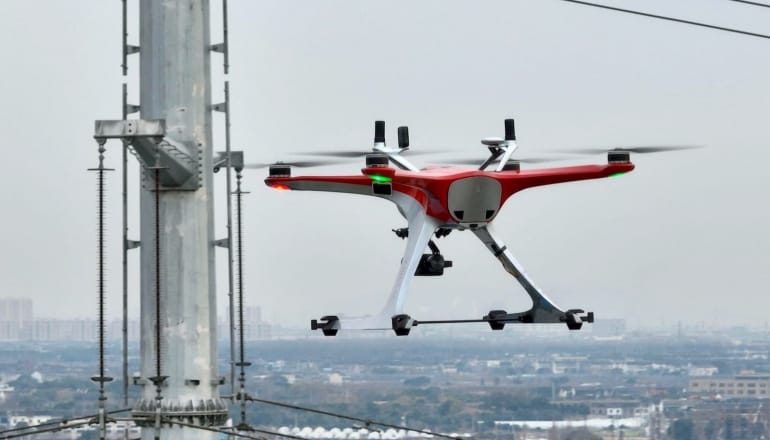 Reccessary
Asian markets edge higher as AI-driven chip demand lifts tech stocks
• Asian stock markets rose on Tuesday as increased demand for artificial intelligence chips boosted technology shares. • South Korea's tech-heavy index gained 1.1%, while Japan's Nikkei futures rose 0.5% and the MSCI Asia-Pacific index outside Japan climbed 0.3%.
Read original · business-standard.comNo Attacker Required: What a Two-Day Hackathon Taught Us About Agent Security - Check Point Blog
• Nineteen Check Point AI Security R&D teams spent two days in a hackathon attempting to build demonstrations of AI agent security vulnerabilities. • The teams focused on scenarios where agents fail or behave unpredictably, referencing a July incident involving OpenAI and Hugging Face.
Read original · blog.checkpoint.comThe startups fixing Europe’s AI power problem
• FlexAI, a Paris-based startup, launched in 2024 with a €28.5 million Seed round to address Europe's AI power problem. • The round was led by investors including Alpha Intelligence Capital, Elaia, and Heartcore, with Bpifrance also participating in the funding.
Read original · eu-startups.com EU-Startups
US proposes AI incident alert system in talks with China, Kremlin’s main party keeps majority
• The United States proposed the creation of an artificial intelligence incident alert system during recent talks with China. • Russia's primary Kremlin-backed party maintained its majority following a carefully orchestrated election.
Read original · apnews.comEurope Is Catching Up in the AI Race - Europe
• Europe's largest companies are starting to catch up with North America in the artificial intelligence race, showing the first signs of progress. • The AI gap between Europe and North America is narrowing, with large European companies making significant investments in AI technology and research.
Read original · europesays.com United States