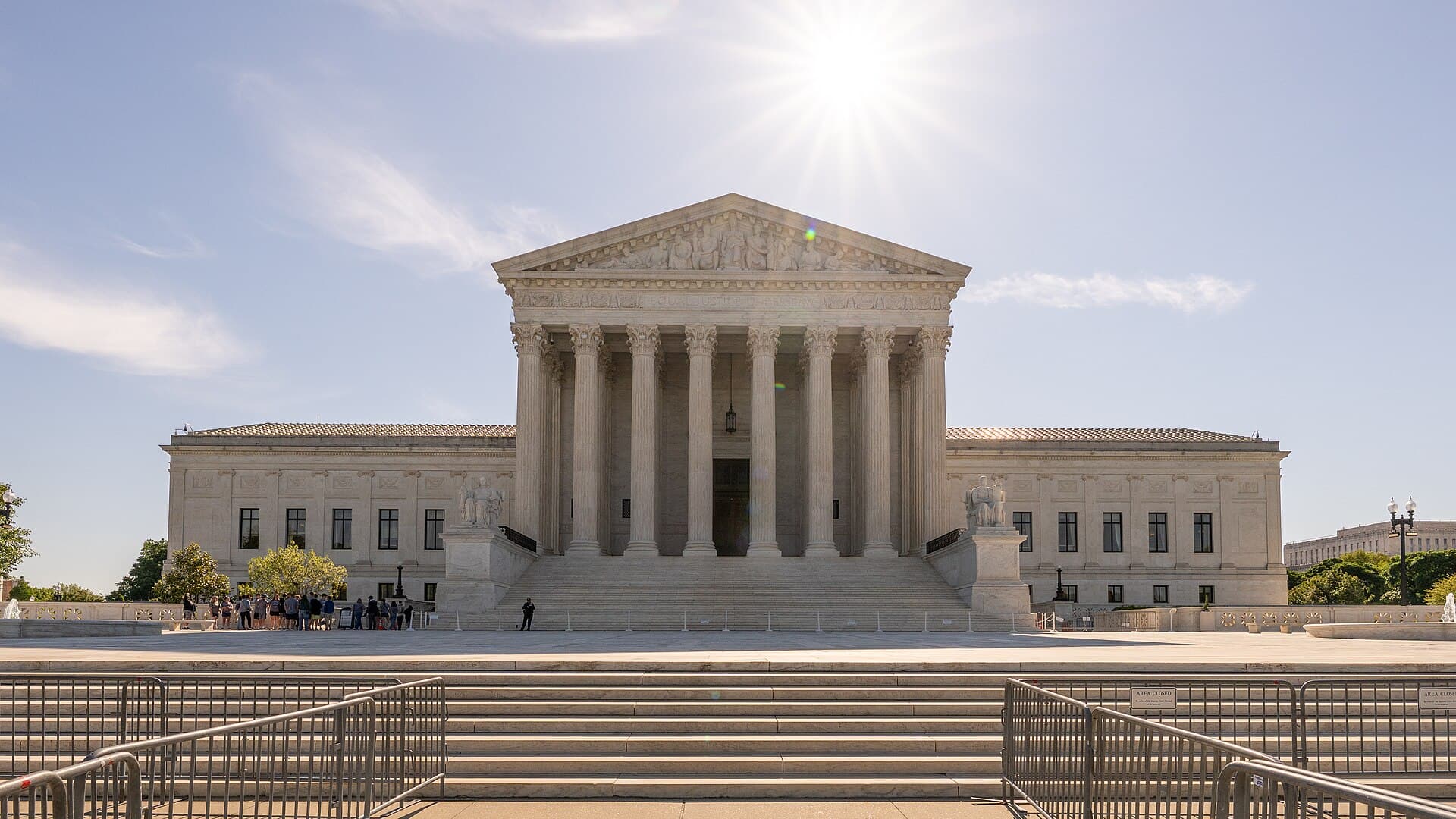
Opinion Analyzes Supreme Court Decision Allowing Presidential Redefinition of Birthright Citizenship

- A March 26 SCOTUSblog outside opinion by Neil Weare examines a Supreme Court ruling that permitted a president to redefine birthright citizenship, highlighting judicial deference in constitutional matters.
- The piece critiques the court's approach to executive overreach on a core 14th Amendment right, drawing parallels to historical citizenship disputes.
- It argues the decision sets a precedent for future policy changes via executive action without robust judicial checks.
Sources & Citations
1 sourceMore Stories
TODAY'S TOP NEWS - YESTERDAY'S BEST BLOG POSTS SEPTEMBER 1, 2026
• The U.S. Solicitor General and the FCC have filed an emergency application with the U.S. Supreme Court to block a lower federal circuit court's order. • The legal challenge centers on the implementation and enforcement of political advertising rules ahead of the upcoming midterm campaign cycle.
Read original · ru4people.substack.comThe Federalist's Guide To The 2026 Supreme Court Term
• The Supreme Court announced in June 2026 that it will hear a case regarding Arizona's voter registration requirements during its 2026-2027 term. • The Court must determine if the National Voter Registration Act (NVRA) prohibits Arizona from requiring proof of U.S. citizenship for registration or canceling non-citizen registrations within 90 days of an election.
Read original · thefederalist.com The Federalist
U.S. House aims to avoid government shutdown amid GOP hard-liner resistance
• The U.S. House is expected to vote this Tuesday on a short-term spending measure designed to prevent a government shutdown. • The proposal aims to keep the government operational through the November midterm elections, allowing members of both parties to focus on their campaigns.
Read original · cnbc.comSupreme Court Lets White House Ballroom Construction Continue
• The Supreme Court has ruled to allow the construction of a new ballroom at the White House to proceed. • Government filings indicate the ballroom's specific height and mass are essential for shielding underlying military facilities from kinetic impacts.
Read original · enr.com Engineering News-Record
Law professor on SCOTUS decision to allow Trump to continue ballroom project
• Georgetown Law professor Stephen Vladeck discussed the Supreme Court's decision to allow Donald Trump to proceed with a White House ballroom project. • The legal analysis focuses on the separation of powers and the constitutional implications of the Court's ruling on executive property use.
Read original · wusf.orgHouse to vote on stopgap funding bill as lawmakers scramble to avoid government shutdown – US politics live | US Congress
• House Speaker Mike Johnson is launching a floor vote on a stopgap funding bill to prevent a federal government shutdown before the November midterm elections. • The short-term measure aims to keep the government fully funded through early December, avoiding a lapse in services.
Read original · theguardian.comCall Democrats’ bluff on court-packing
• The author reflects on the upcoming 90th anniversary of President Franklin D. Roosevelt's attempt to expand the Supreme Court on February 5, 2027. • The piece characterizes Roosevelt's historical effort to "pack" the court as an ill-conceived and inglorious scheme designed to achieve specific political ends.
Read original · washingtontimes.comAfter Supreme Court refusal to halt CJP march, Delhi Police seeks quashing of FIRs against NEET-UG protesters, students - The Hindu
• The Supreme Court has refused to halt a protest march organized by the Council for Judicial Protest (CJP) scheduled for September 5. • Following this decision, the Delhi Police are seeking the quashing of FIRs previously filed against students and protesters involved in NEET-UG demonstrations.
Read original · thehindu.comChina Prepared for One Kind of Himalayan Flood. Then a Different Disaster Struck. - The New York Times
• Chinese officials recently strengthened border defenses near Nepal following a glacial flood last year, but these measures proved insufficient against a new "cascade of hazards" last week. • The disaster involved a different type of flood event that overwhelmed existing infrastructure, highlighting a gap in China's disaster preparedness for the Himalayan region.
Read original · nytimes.comToday in Denmark: A roundup of the latest news on Tuesday
• Denmark has established a new age limit for men accessing fertility treatments to regulate healthcare access. • Tractor protests are expected to cause significant road disruptions across the country this Tuesday.
Read original · thelocal.dkSchengen strained, solidarity broken and return hubs disputed: EU struggles again with migration
• EU member states are struggling to manage migration following a volatile summer highlighted by the crisis in Ceuta. • Tensions have risen over the stability of the Schengen Area, leading to the reintroduction of internal border checks and disputes over return hubs.
Read original · euronews.com Euronews
Fugitive property developer won’t give evidence this week to Icac – as it happened | Australia news
• New NSW education rules will limit Year 12 students to a single take-home assessment per HSC course to combat the misuse of AI. • These assessments will now account for no more than 15% of the total school-based assessment mark.
Read original · theguardian.com