Tech Giants Including Meta, Amazon Pledge Self-Supplied Power for U.S. AI Data Centers
- Major companies—Amazon, Google, Meta, Microsoft, Oracle, OpenAI, and xAI—signed a federal pledge to provide their own electricity for AI data centers, shielding U.S. consumers from grid overload.
- The commitment responds to exploding energy needs from AI infrastructure, following Meta's Louisiana gas plant initiative and similar efforts nationwide.
- Industry leaders aim to prevent rate hikes and blackouts while fueling the AI boom central to U.S. tech competitiveness.
Sources & Citations
1 sourceMore Stories
Trump Media: More than 10 firms pay up to $100,000 a month for fast-access data feed
• Trump Media has launched a new fast-access data feed service this month, with more than 10 firms already paying up to $100,000 per month for access. • The initiative is designed to create a "meaningful" and "durable" revenue stream to offset the company's recent quarterly losses.
Read original · bbc.com BBC
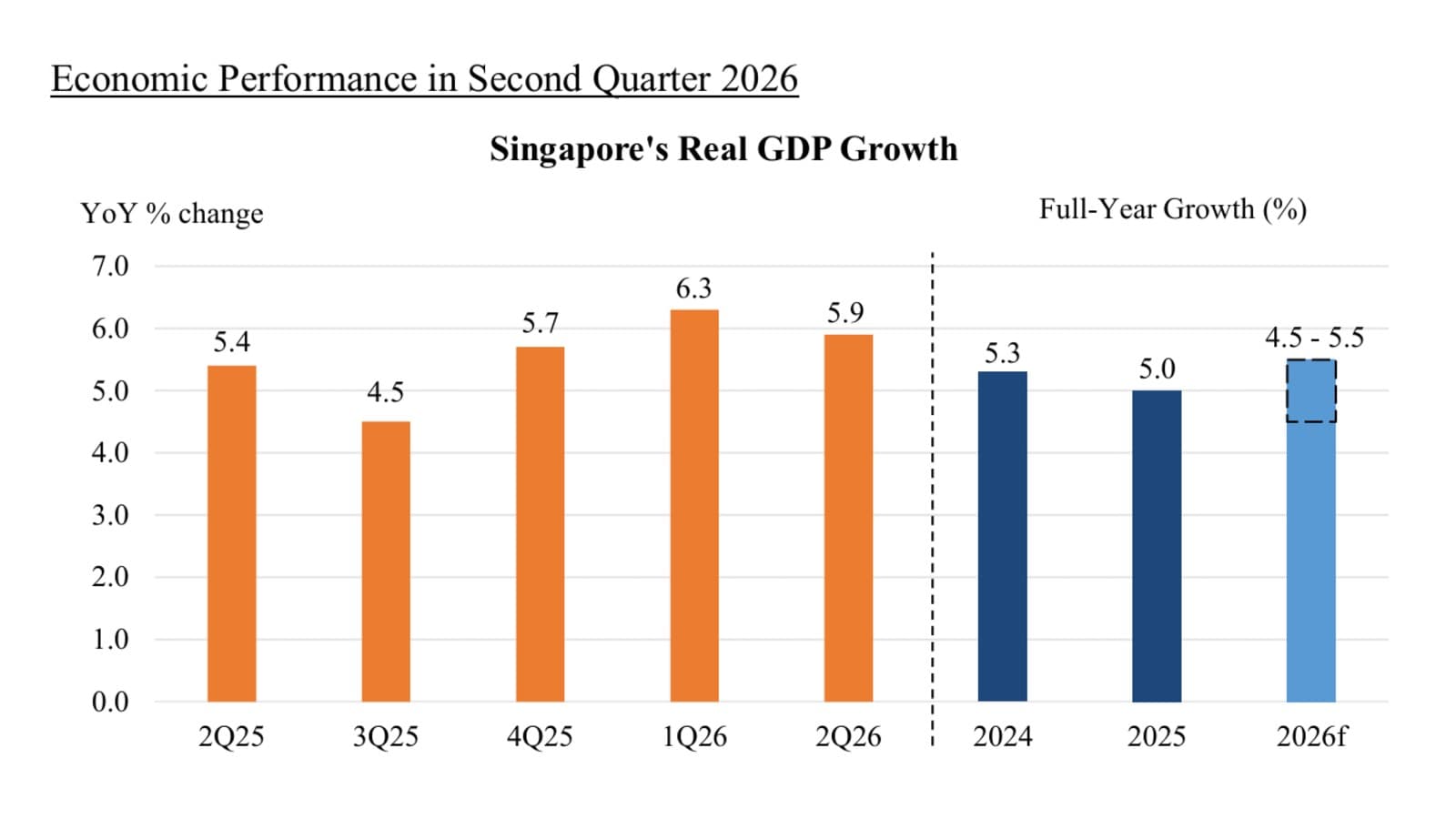
BBCSingapore upgrades 2026 GDP growth forecast to "4.5-5.5%", citing stronger AI-related demand
• Singapore's Ministry of Trade and Industry (MTI) has upgraded its 2026 GDP growth forecast to a range of 4.5% to 5.5%. • The revision follows a strong performance in the first half of 2026, where GDP growth reached 6.1% year-on-year.
Read original · humanresourcesonline.net Human Resources Online
Singapore stocks hit record high on AI-backed growth update; oil weighs on FX
• Singapore stocks reached an all-time high on Tuesday following an increase in the city-state's annual growth forecast, driven by an AI-powered economic boost. • Conversely, Southeast Asian currencies declined as oil prices hit one-week highs, fueled by fading hopes for a U.S.-Iran agreement and rising energy costs for net importers.
Read original · thestar.com.my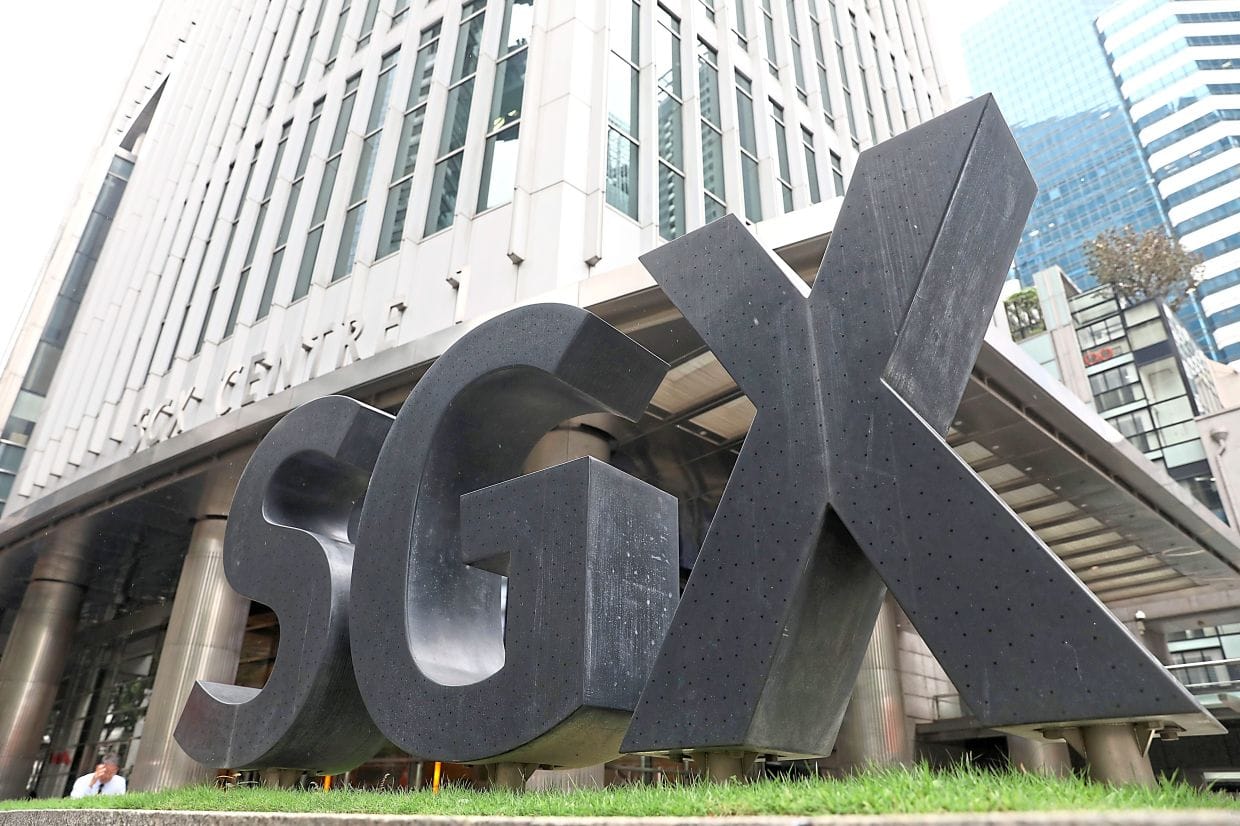 The Star
China Turns to Stock Markets to Fund AI as CXMT Raises $9.8 Billion - Seoul Economic Daily
• China is leveraging its $28 trillion capital markets to fund AI development, highlighted by CXMT raising $9.8 billion through a new listing. • State investors are actively propping up the Chinese market to ensure continued funding for critical technology sectors.
Read original · en.sedaily.com Seoul Economic Daily
Singapore AI-using firms see revenue, employment gains - government study - TNGlobal
• A new study released Tuesday by Singapore's Ministry of Trade and Industry reveals that firms adopting artificial intelligence (AI) are experiencing growth in both revenue and employment. • Researchers analyzed firm-level data by linking online job postings with administrative records to measure the impact of AI adoption over a four-year period.
Read original · technode.global TNGlobal
Singapore's upgraded economic outlook a 'bullish signal' of AI-driven expansion, but other sectors also contributing: Experts - CNA
• Economists have upgraded Singapore's economic growth forecasts following a strong performance in the second quarter. • The positive outlook is driven by robust AI-related demand across the region, with supporting data from Singapore, Taiwan, and South Korea.
Read original · channelnewsasia.com CNA
CNAWatch Malaysia for a preview of Asia's coming AI power crunch - Asia Times
• Malaysia is emerging as a critical case study for Asia's impending "AI power crunch," highlighting that energy infrastructure is the true bottleneck for AI growth rather than chip availability. • While investors currently focus on semiconductors, cloud platforms, and model developers, the massive capital required for power grids and energy production is largely absent from AI investment products.
Read original · asiatimes.com Asia Times
Global Data Centers to Exceed 12,000 by 2035 as AI Capacity Hits 94.8 GW: ABI Research - InfotechLead
• ABI Research forecasts that the number of global data center facilities will grow from 8,821 in 2026 to over 12,000 by 2035. • The Asia-Pacific region is expected to lead growth with a 2.9% CAGR, fueled by hyperscaler investments and digitalization in India, China, Japan, South Korea, and Southeast Asia.
Read original · infotechlead.comSingapore upgrades 2026 growth forecast to 4.5% to 5.5%
• Singapore has upgraded its economic growth forecast for 2026 to a range of 4.5% to 5.5%. • The upward revision is primarily driven by a powerful boom in artificial intelligence (AI) technology.
Read original · straitstimes.comFrench newspapers target Google over AI summaries - Digital Journal
• French newspapers are escalating their conflict with Google over the tech giant's use of their copyrighted articles to generate AI summaries. • This dispute stems from a broader struggle by media companies to protect their intellectual property as they face significant declines in traditional advertising revenue.
Read original · digitaljournal.com Digital Journal
UK AI Funding Reaches $9.6 B in H1 2026; Top Five Companies Account for 84% of Capital - Entrepreneur United Kingdom - Entrepreneur United Kingdom
• UK AI companies raised a record $9.6 billion in the first half of 2026, marking a 360% increase compared to H1 2025. • Despite the funding surge, capital is highly concentrated, with the top five companies capturing 84% of the total investment and most funding centered in London.
Read original · uk.entrepreneur.com Entrepreneur
Can a 30-person start-up build Britain’s answer to OpenAI?
• London-based start-up Cosine is attempting to develop a "sovereign AI" model to serve as the UK's equivalent to OpenAI. • The company currently operates with a small team of 30 people and has secured strategic backing from the UK government.
Read original · ft.com