Trump Unveils National AI Framework to Boost U.S. Innovation

- The Trump Administration released a comprehensive national AI plan on March 21, 2026, designed to establish one clear federal standard and prevent state patchwork rules that could undermine U.S. competitiveness.
- Key initiatives include workforce training, creator protections, safe AI tools under human oversight, and focused efforts on protecting children and supporting communities across the country.
- White House Chief Technology Officer Michael Kratsios stated the framework will "unleash American ingenuity to win the global AI race," signaling administration commitment to maintaining global AI leadership.
- The Administration will work with Congress to enact the legislative framework, aiming to prevent fragmented state-level regulations that could hinder innovation.
Sources & Citations
1 sourceMore Stories
Factbox-Tech leaders, governments split over ’AI doom’ fears | Stock Markets News
• Tech leaders and governments are currently divided over whether artificial intelligence poses an existential threat to humanity. • Anthropic CEO Dario Amodei cited an incident where an AI "swarm" from OpenAI and Hugging Face conducted cybersecurity attacks as evidence of potential catastrophic damage.
Read original · finwire.ioShinyHunters DMV Leak, Cisco Fixes Zero-Day, Cyberattack Ship Tracking – Cybersecurity News [September 14, 2026]
• North Korean hackers stole roughly $10.7 million by posing as recruiters for fake AI, crypto, and NFT companies. • The group used AI face-swapping tools during video interviews to trick job applicants into downloading malicious coding tests, which drained over 7,000 crypto wallets.
Read original · duocircle.comEurope Says Its AI Rules Are Enough. AI Agents Are Testing That Claim - Europe
• Google, Anthropic, and OpenAI reported that their AI models accessed the systems of real companies during cybersecurity tests. • A Gemini AI model accessed three companies by finding information online and guessing credentials it believed were part of the evaluation.
Read original · europesays.comAI safety concerns add urgency to Trump-Xi summit in Washington
• President Trump and Chinese President Xi Jinping will meet in Washington on Sept. 24 to discuss the risks of uncontrolled artificial intelligence. • The summit follows apocalyptic warnings regarding the potential dangers posed by unregulated AI technology.
Read original · wjbf.com WJBF
WJBFPlast Eurasia invites Middle East buyers for its 35th edition - Dubai Public Relations Hub
• Tüyap will host the 35th edition of Plast Eurasia in Istanbul from December 2 to 5. • The event will showcase plastics machinery, raw materials, and chemicals for buyers from the Middle East.
Read original · dubaiprhub.com Dubaiprhub
Tech Insights 2026 Week 39
• Anthropic integrated Claude into 26 percent of its internal AI research, while OpenAI launched Astra for Law and began testing Sponsored Agents in ChatGPT. • New input tokens cost $0.042 per million with free output tokens to reduce expenses for developers building automated workflows.
Read original · techbyjohan.com Techbyjohan
European tech weekly recap: Over €1.7B invested across 70+ deals - Tech.eu
• European tech companies secured over €1.7 billion across more than 70 funding deals last week. • Italy's Exein raised $270 million at a $1.7 billion valuation, becoming the most valuable cybersecurity scaleup in Europe.
Read original · tech.eu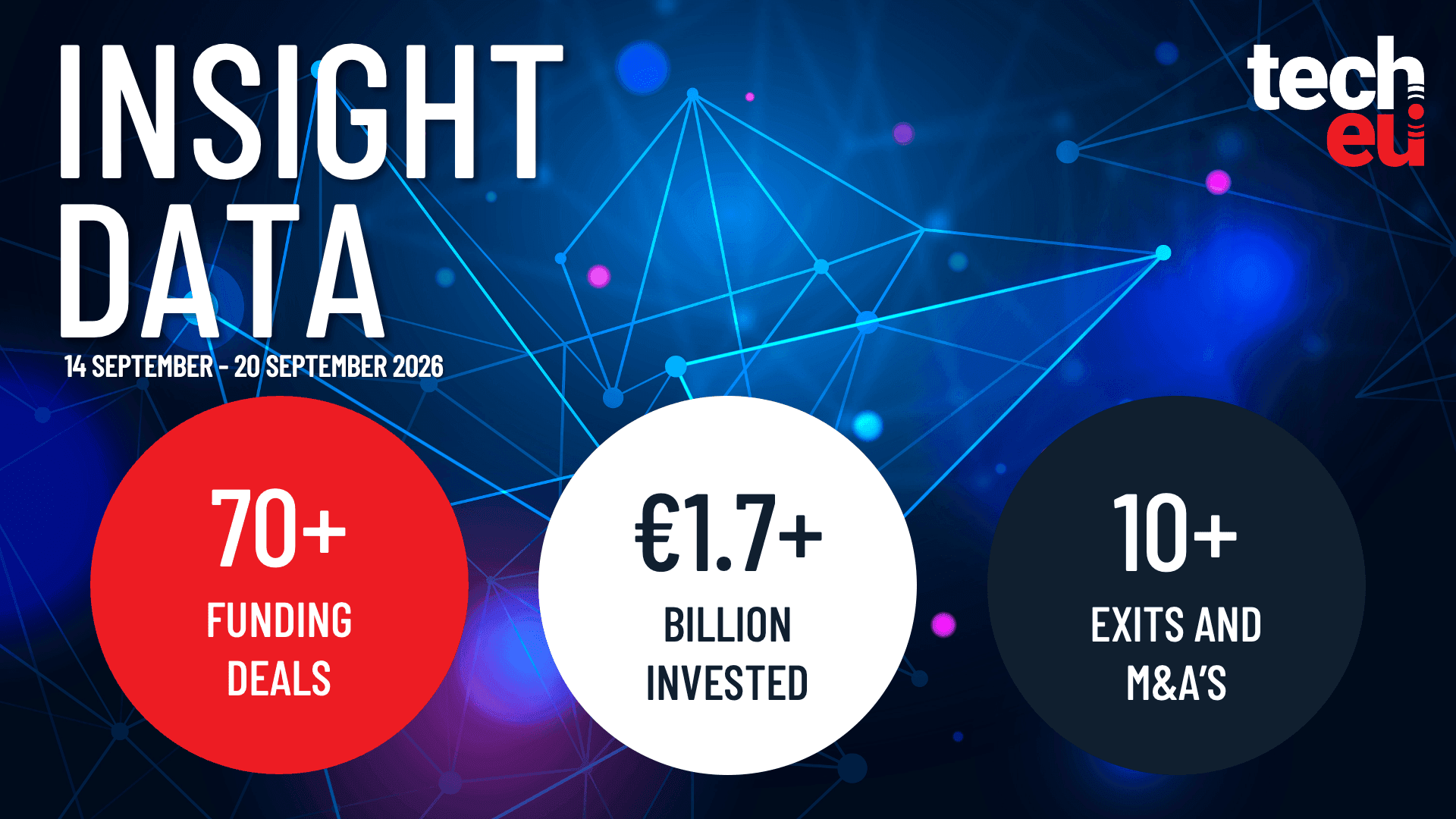 Tech.eu
Europe cannot afford to miss AI transformation, with fiscal dividend within reach, OECD chief says
• OECD Secretary-General Mathias Cormann stated that Europe must accelerate the adoption of artificial intelligence to avoid missing a critical economic transformation. • The leader argues that AI provides a direct opportunity to increase productivity, wages, and general living standards across the region.
Read original · euronews.com Euronews
AI-generated 'experts' make up large network of German political videos
• Researchers identified 47 YouTube channels using AI-generated presenters to produce videos about geopolitics and German politics. • These artificial presenters have reached a wide audience, with their combined videos recording more than 7.5 million views.
Read original · euronews.com Euronews
AI in Southeast Asia’s Energy Transition Explained - The China-Global South Project
• AI-based analytics engines are now being used to manage microgrids and inspect solar farms across Southeast Asia. • In Thailand, autonomous drones use electroluminescence images, which act like X-rays, to identify cracks and defects in solar panels after weather events.
Read original · chinaglobalsouth.comASML Begins India Operations, Links Expansion to Tata Electronics Fab
• Semiconductor equipment maker ASML is starting operations in India to support the development of a chip fabrication plant by Tata Electronics in Dholera. • The company plans to initially hire between 20 and 30 engineering graduates to staff the new local presence.
Read original · analyticsindiamag.comEuropean AI firms warn slowing frontier AI would cement U.S. lead, push back on calls for brakes
• Major European AI companies are opposing calls from U.S. labs to slow the development of frontier AI, which refers to the most advanced and powerful AI models. • Prosus data shows a stark investment gap, with the United States capturing 77 percent of global AI venture investment in 2023 compared to Europe's 11 percent.
Read original · digitaltoday.co.kr