University of Tennessee Scientists Solve 20-Year Nuclear Mystery in Gold Creation Process

Physicists at the University of Tennessee used a neutron detector to measure beta-delayed two-neutron emission in exotic nuclei along the r-process pathway, marking the first detailed study of this process crucial for heavy element formation like gold. The team also discovered a long-sought single particle neutron state in tin-133 after 20 years of searches and observed a non-statistical population challenging existing nuclear models. These findings, funded by the National Science Foundation, enhance models of stellar nucleosynthesis and open new fields in nuclear physics. Next steps include refining theoretical calculations for r-process events in neutron star mergers.
More Stories
Some household smoke alarms contain about 0.3 micrograms of americium, a radioactive element made in nuclear reactors. It was first produced in the 1940s and is now used in a device you can buy for around ten dollars - ScienceBlog.com
• Many household smoke alarms use americium, a radioactive element created in nuclear reactors, to detect smoke. • These devices typically contain about 0.3 micrograms of the element and can be purchased for around ten dollars.
Read original · scienceblog.com ScienceBlog
The First 3D Map of an Ovary Suggests a Hidden System Controls Egg Activation - NewsBreak
• Researchers developed the first 3D map of an ovary to study how and when oocytes, which are immature eggs, are activated. • The study findings were published in the journal Nature Aging.
Read original · newsbreak.comRussian Progress spacecraft delivers 3 tons of cargo to the ISS (video)
• Russia's Progress 96 spacecraft docked with the International Space Station on September 19. • The freighter delivered 3 tons of cargo and supplies to the orbiting laboratory at 9:44 a.m. ET.
Read original · space.com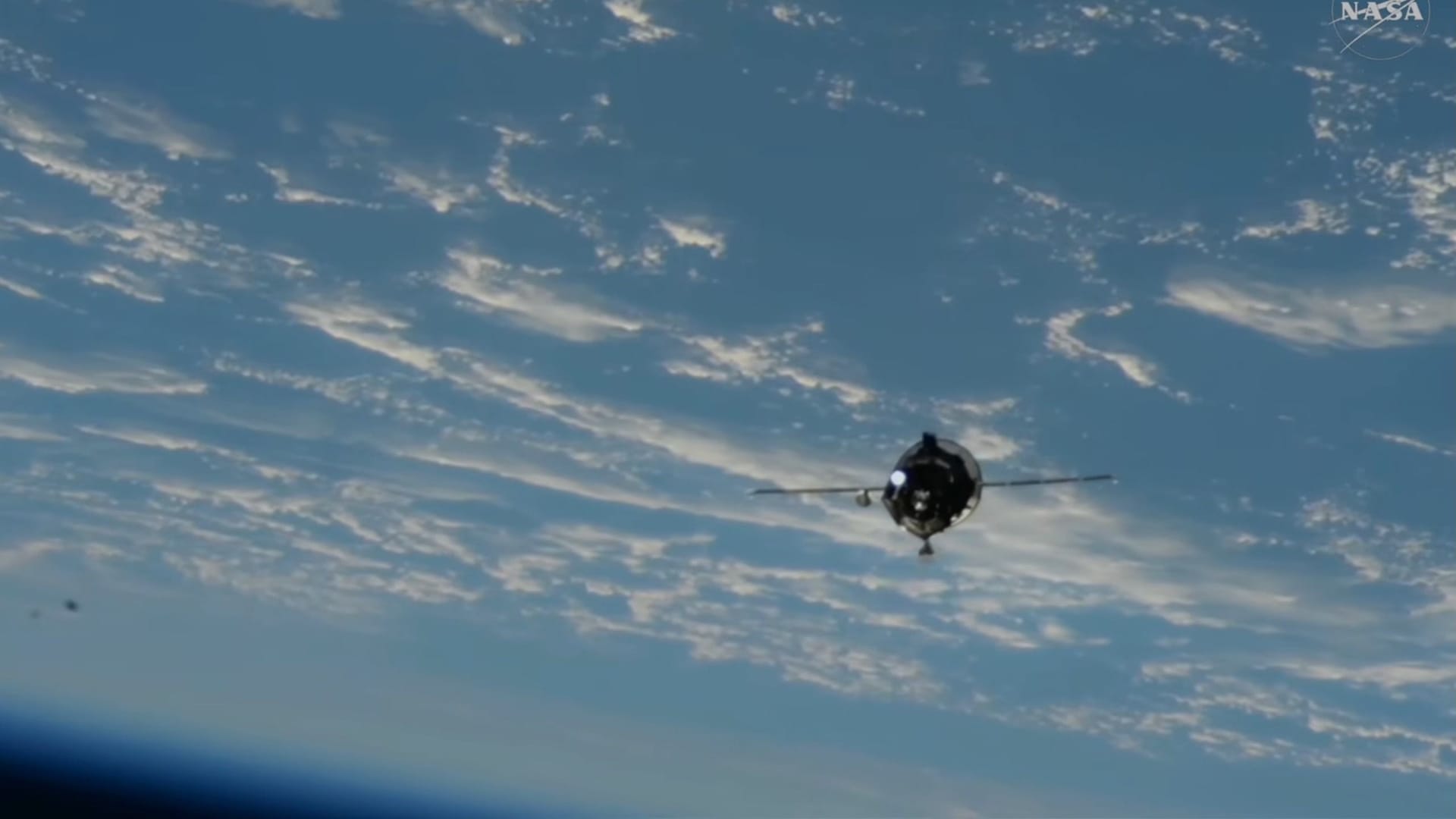 Space.com
King Tut’s Tomb May Hide Secret Chambers, Reviving a Search for Queen Nefertiti - NewsBreak
• In 1922, Howard Carter discovered the entrance to Tutankhamun's tomb, a significant discovery in Egyptian archaeology. • The tomb's discovery has led to a renewed search for Queen Nefertiti, with some believing she may be buried in secret chambers within King Tut's tomb.
Read original · newsbreak.com9-Million-Year-Old Capybara Tooth From Chile Hints at Unexpectedly Wet Conditions in the Ancient Atacama Desert - NewsBreak
• Researchers discovered a 9-million-year-old capybara tooth in Chile's Atacama Desert. • The presence of this semi-aquatic rodent suggests the region had unexpectedly wet conditions during that era.
Read original · newsbreak.comVenus May Have Pulled Its Own Moon Back Toward It, Torn It Apart, and Eaten the Remains - NewsBreak
• Astronomer Stephen Kane created computer models to simulate the possibility of Venus having a moon that it pulled back towards itself, tore apart, and consumed. • Kane's models included different masses of hypothetical moons and varied spin speeds of Venus to predict various outcomes, according to his research.
Read original · newsbreak.comScientists discover 27 mysterious objects in far reaches of solar system
• Scientists discovered 27 mysterious frozen objects orbiting in the far reaches of the solar system beyond Neptune. • These tiny worlds are located in the distant outer regions of the solar system.
Read original · independent.co.uk The Independent
Interstellar comet 3I/ATLAS likely formed where its star's light couldn't touch it
• Scientists determined that the interstellar comet 3I/ATLAS likely formed in a region of its original solar system where its home star's light could not reach. • Researchers used the object's composition to conclude it originated far from its parent star.
Read original · space.com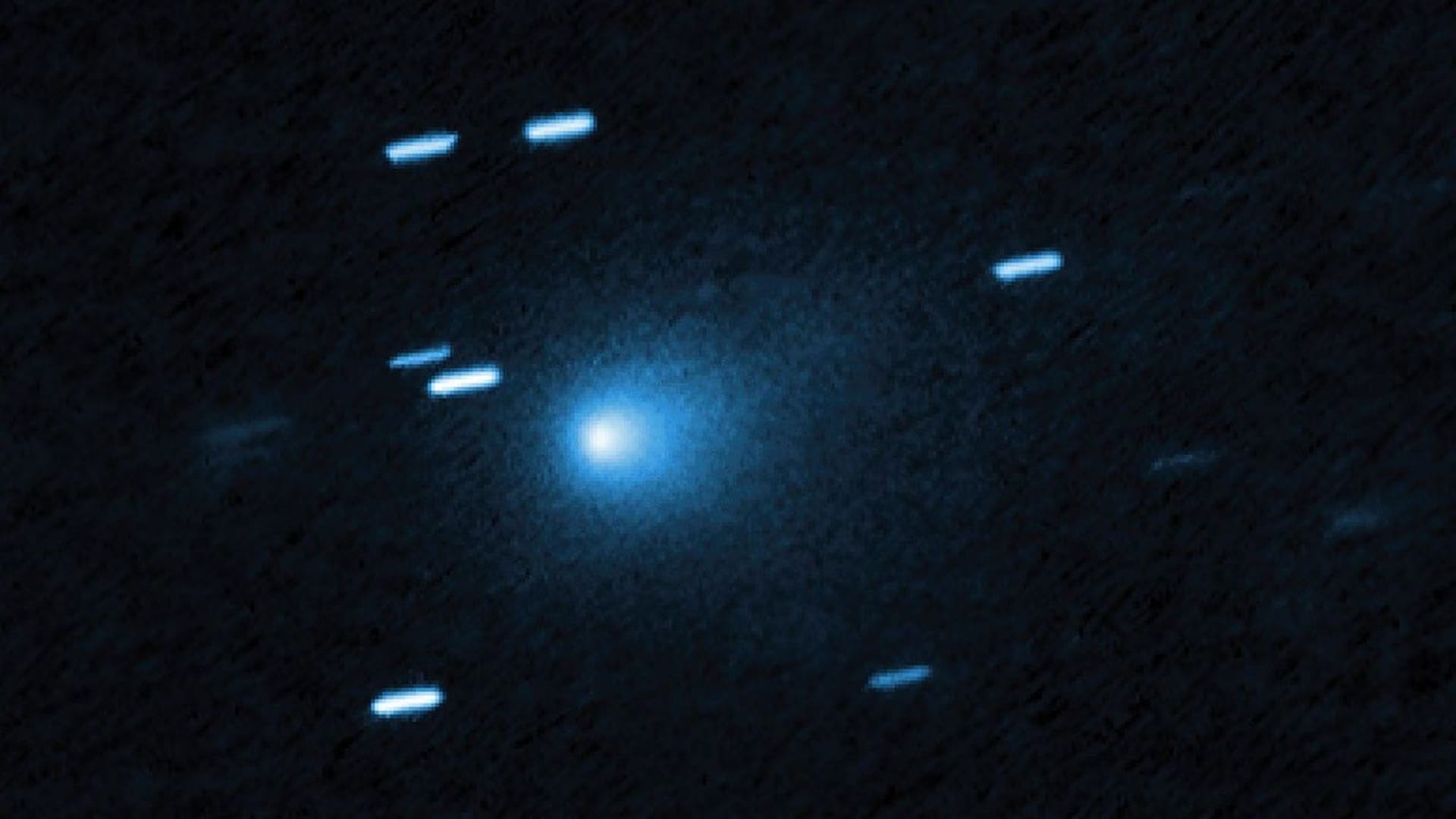 Space.com
Latest Science News and Research Discoveries Explained – ICO Optics
• ICO Optics is exploring cutting-edge scientific developments and breaking down complex breakthroughs into digestible insights. • Recent studies in fields like quantum physics and deep-space astronomy are redefining our understanding of the natural world, with new findings emerging regularly.
Read original · ico-optics.org ICO Optics
Archaeologists Discover 55 Ice Age Artifacts in Oregon Caves Four Times Older Than the Great Pyramid of Egypt
• Archaeologists discovered 55 Ice Age artifacts buried beneath volcanic ash in Oregon caves. • The findings date back more than 15,000 years, making them four times older than the Great Pyramid of Egypt.
Read original · dailygalaxy.com Daily Galaxy
Space scientists discover "mysterious objects" unlike anything seen before | World | News
• Space scientists discovered 84 "hypersoft X-ray sources," which are mysterious objects unlike anything previously observed. • Researchers are investigating whether these objects are the stars that eventually turn into Type Ia supernovae, the explosions used to prove the universe's expansion is accelerating.
Read original · express.co.uk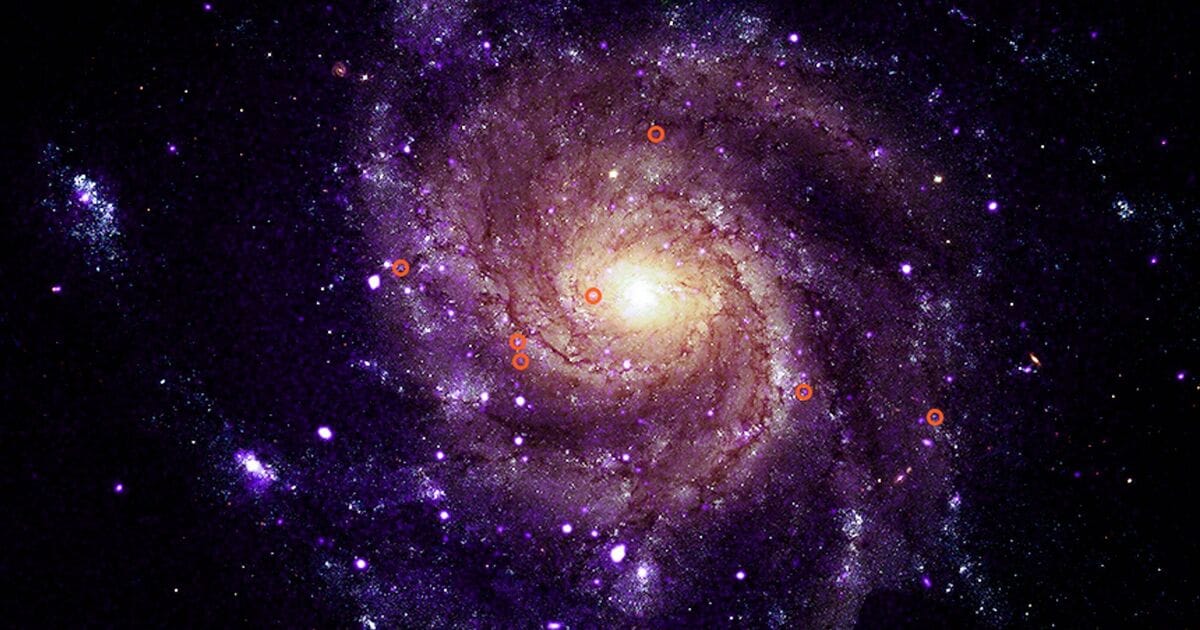 Express.co.uk
The questions science may never answer
• The biggest mysteries in science may remain forever unsolved, leaving some questions without answers. • Scientists and journalists are working to tell true and important science stories, with editors and reporters often being experts in their fields.
Read original · scientificamerican.com Scientific American