US Stocks Rise on Iran Ceasefire Optimism as Oil Prices Trim Gains

- US stocks recovered from early morning losses Thursday to finish higher, with the S&P 500 up 0.7%, Dow Jones up 0.8% (382 points), and Nasdaq composite up 0.8%, buoyed by optimism over a two-week ceasefire with Iran announced late Tuesday.
- Israel's announcement of direct negotiations with Lebanon helped calm market concerns that the ceasefire could unravel due to Israeli bombardment of the country, reversing initial trading pessimism.
- The S&P 500 remains just 2.1% below its all-time high set in January, indicating underlying market strength despite geopolitical volatility and oil price fluctuations.
Sources & Citations
1 sourceMore Stories
Nasdaq slumps more than 4.5% for the week as high-flying tech stocks bleed By Investing.com
• The Nasdaq Composite index fell more than 4.5% over the past week, driven by a significant sell-off in high-growth technology stocks. • The market downturn coincided with the release of critical inflation and economic growth data on Thursday, which influenced investor expectations.
Read original · investing.comAmericans Are Feeling Better About the Economy, Consumer Survey Shows - The New York Times
• Consumer sentiment in the United States has increased in recent weeks, reversing a downward trend seen earlier this year. • According to a University of Michigan survey, the decline began following U.S. and Israeli strikes against Iran in February and was exacerbated by soaring energy costs.
Read original · nytimes.comUK inflation expectations ease further in Citi-YouGov June survey
• UK households' inflation expectations declined further in the June Citi-YouGov survey, signaling that price concerns are becoming less entrenched. • Citi economist Callum McLaren-Stewart noted that readings have returned to levels seen before the conflict, suggesting a reduced risk of inflation expectations becoming "deanchored."
Read original · tradersunion.com Traders Union
Euro holds ground against the US Dollar as traders weigh Middle East tensions and Fed outlook
• The EUR/USD pair is trading slightly higher on Friday, though the Euro remains on track for its second consecutive weekly loss. • The US Dollar's decline is being limited by a combination of geopolitical instability in the Middle East and a hawkish outlook from the Federal Reserve.
Read original · fxstreet.comGermany's DAX 40 Leads European Losses at 24,671 as Tech Rout and Rheinmetall Overhang Drag Index Lower
• Germany's DAX 40 closed as the worst-performing major European index on Friday, June 26, 2026, dropping 1.25% to settle at approximately 24,671 points. • The decline was driven by a broader technology sector rout and a significant "overhang" affecting Rheinmetall, highlighting how political and budgetary shifts can disrupt defense procurement investments.
Read original · bbntimes.com BBN Times
Highlights | Home | ECON | Committees
• On April 9, 2026, the European Parliament's Committee on Economic and Monetary Affairs (ECON) held an Economic Dialogue session. • The event featured discussions with Valdis Dombrovskis, Commissioner for Economy and Productivity, and Andrew Bailey, Chair of the Financial Stability Board.
Read original · europarl.europa.euAI Stocks Are Selling Off Again — Here's What's Actually Going On - Memeburn
• AI stocks experienced a significant sell-off in June 2026, leading to a 2.2% drop in the Nasdaq and a brief freeze in the South Korean market. • Micron Technology saw the steepest decline among US stocks, crashing 13% in a single trading session.
Read original · memeburn.com Memeburn
Wall Street Week Ahead: Jobs data, rate bets in focus as US stocks close solid first half - The Economic Times
• U.S. stock markets are concluding a solid first half of the year, though recent volatility in semiconductor stocks suggests growing investor concern over AI-driven profits. • Markets are now focusing on upcoming jobs data, which will serve as a critical indicator of the overall strength of the U.S. economy.
Read original · economictimes.indiatimes.comFifth Third Bancorp (FITB) Stock Gets Fair Value Bump After Mixed Analyst Target Changes
• Fifth Third Bancorp (FITB) saw its modeled fair value price target increase slightly to US$58.18, up from the previous estimate of US$57.42. • The adjustment follows recent analyst discussions with company management and key takeaways from industry conferences.
Read original · finance.yahoo.comAsia stock markets slide as tech shares slump
• Asian stock markets experienced a significant slide, driven primarily by a slump in technology shares. • South Korea's Kospi index faced extreme volatility, requiring trading to be halted three times in one week to curb panic selling.
Read original · bbc.com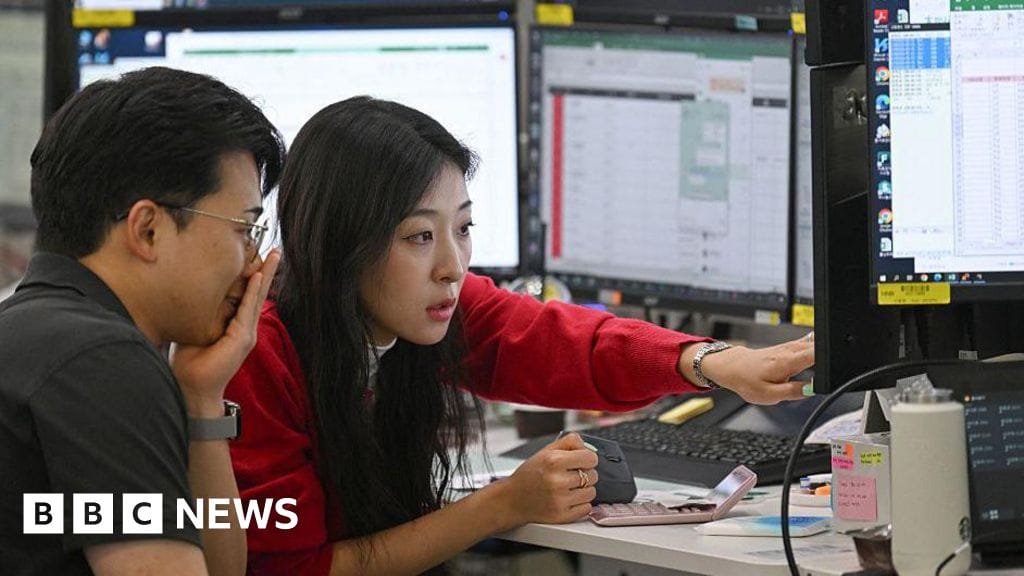 BBC
BBCAnalysts say that the KOSPI is emerging as a major variable in the global stock market, including th.. - MK
• Analysts identify the KOSPI as a critical variable in global stock markets, including the U.S. and Japan, due to its high volatility and recent sharp fluctuations. • Foreign media, including U.S. investment outlet Barance, now view the Korean market as a primary indicator of global AI investor sentiment.
Read original · mk.co.kr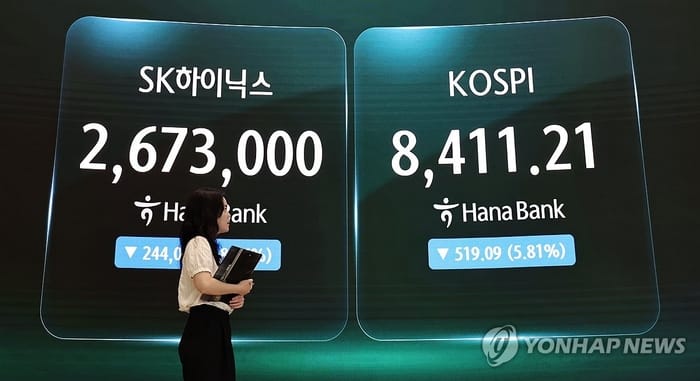 Makro
MakroMarket Roundup 26 June 2026 - KAOHOON INTERNATIONAL
• Thailand’s SET Index closed at 1,542.34 points on June 26, 2026, marking a decrease of 16.21 points or 1.04%. • The total trading value for the session reached THB 66.47 billion, reflecting significant activity despite the downward trend.
Read original · kaohooninternational.com KAOHOON INTERNATIONAL