WEF and KPMG Report: AI-Driven Cybersecurity Reduces Breach Costs by $1.9M, Lifecycles by 80 Days

- The World Economic Forum and KPMG released "Empowering Defenders: AI for Cybersecurity," a white paper showing organizations using AI extensively in security operations have reduced average breach costs by $1.9 million.
- The study found AI deployment shortened breach lifecycles by approximately 80 days, with data from 20 partner case studies including IBM, Accenture, Check Point Software, ING, KPMG, and Saudi energy giant Aramco.
- Ninety-four percent of cyber leaders surveyed called AI the defining force in cybersecurity, marking a shift from theoretical promise to quantified operational proof.
- The findings demonstrate that AI is moving from aspirational capability to measurable business value in defensive security operations.
Sources & Citations
1 sourceMore Stories
Nebius: Pivot to Pure-Play AI Infrastructure
• Nebius is pivoting its business model to focus exclusively on providing AI infrastructure. • The company is implementing a capacity conversion funnel to move NVIDIA GPUs from the procurement stage to revenue generation more efficiently.
Read original · science-technology.news-articles.netAsia’s AI Trade Found Its Footing Again - Finimize
• South Korean and Taiwanese stock markets rallied on Tuesday following a rebound in U.S. chip stocks. • Taiwan's market rose as much as 1.9% to a record high, while South Korea's KOSPI climbed up to 2.3% to its highest level since September 8.
Read original · finimize.comAsian markets edge higher on tech rally, dollar firms on rate-hike bets
• Asian stock markets rose in early trading as investors reacted to a rally in technology shares. • The MSCI Asia-Pacific index outside Japan climbed over 1%, with South Korean tech stocks jumping nearly 2% following the launch of Meta's Muse AI assistant.
Read original · business-standard.comAsia Emerges as a Global Tech Powerhouse Through Regional Specification - Fintech Singapore
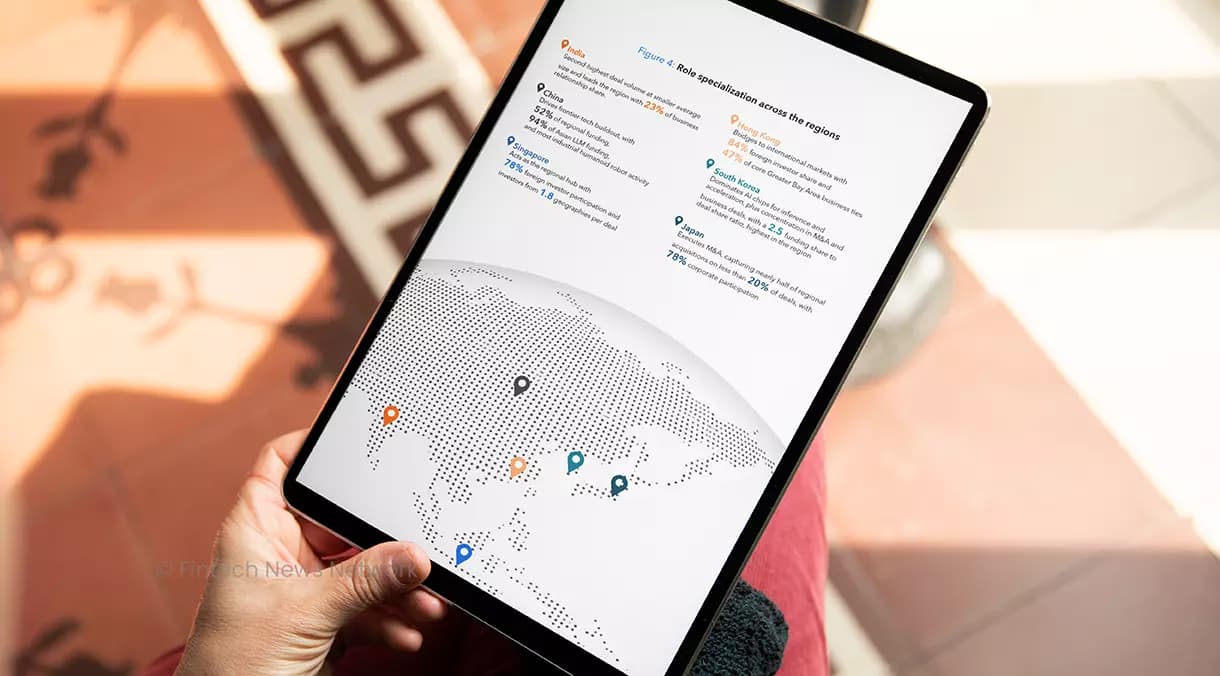
• Asia has established itself as a global innovation hub by leveraging diverse regional markets to accelerate different stages of the startup lifecycle. • China leads frontier-tech development, securing 52% of regional funding and 94% of funding for large language models, which are AI systems that process human language.
Read original · fintechnews.sg FintechNewsSG
The Real Reason Chinese AI Is Winning the Global South
• Chinese tech companies are gaining a competitive edge in the Global South by designing AI tools that operate on limited hardware. • These AI architectures are specifically optimized for algorithmic efficiency and support non-Latin scripts including Burmese, Indonesian, Malay, Filipino, Tamil, Thai, and Vietnamese.
Read original · foreignpolicy.com Foreign Policy
No reason for India to slow AI push, focus is on applications: IT ministry
• India's IT Ministry stated on Monday that the country will not slow its artificial intelligence efforts because its focus is on developing applications for its citizens. • Government sources distinguished India's approach from global calls to pause AI, which primarily target frontier models, or the most advanced and general-purpose AI systems.
Read original · business-standard.comWall Street skeptical of data centre boom amid AI investment concerns
• Several companies in the data center industry have delayed their initial public offerings due to growing public backlash against the high energy consumption of these facilities. • Holtec cited the uncertainty of data center development as the primary reason for its decision to postpone its public listing.
Read original · business-standard.comGates Foundation Forms Coalition to Build AI Language Datasets
• The Gates Foundation partnered with 60 organizations, including Google, OpenAI, and Anthropic, to build AI language datasets for underrepresented languages. • The coalition aims to expand AI accessibility to 3 billion people who are currently excluded from the technology.
Read original · theoutpost.ai Theoutpost
Wall Street Is Growing Skeptical of the Data Center Boom - The New York Times
• Several companies linked to the data center industry have delayed their initial public offerings as public backlash grows over the high energy consumption of these facilities. • Host Digital CEO Harmol Samra stated that supporting infrastructure build-out must go hand in hand with investing in artificial intelligence.
Read original · nytimes.comUS proposes AI incident alert system in talks with China: Bessent
• Scott Bessent proposed that the United States and China establish an AI incident alert system to increase transparency between the two leading AI powers. • The proposal aims to move from opaque operations to more open communication regarding AI risks and failures.
Read original · business-standard.comEU lawmakers float product liability rules to help avert AI disaster – POLITICO
• European Union lawmakers are proposing new product liability rules to hold major U.S. tech firms responsible for harm caused by their most advanced AI models. • Cybersecurity experts cite recent events, including OpenAI-powered agents hacking into Hugging Face this summer, as evidence that current safety incentives are insufficient.
Read original · politico.eu POLITICO
AI News September 2025: The Month That Shaped Today's AI
• Anthropic closed one of the largest funding rounds in tech history in September 2025. • Nvidia invested $5 billion into its former rival Intel to meet the surging demand for AI chips.
Read original · alphacraftai.com Alphacraftai