• The Supreme Court has announced its docket for the start of the new term, scheduling oral arguments for seven major cases throughout October.
• Key proceedings include *Johnson v. United States Congress*, alongside other disputes where the outcome may depend on whether the court deems certain cases premature for a final ruling.
• These decisions are critical as they could either halt ongoing legal battles immediately or leave the legal status of the involved parties uncertain.
President has sued the broadcaster for $10bn, claiming a documentary on 2021 Capitol attack led to financial harmDonald Trump’s legal team is making an 11th-hour attempt to block a court order that would grant the BBC access to the president’s financial records, as part of his multibillion-dollar lawsuit against the British broadcaster.Trump claims that the BBC’s 2024 documentary on the January 6 attacks have damaged the president’s business interests. In July, a Miami-based judge ruled that the president would have to start handing over detailed financial records to the BBC by 6 August. The records would reveal details into the hundreds of businesses owned by the US president’s family trust. Continue reading...
Murdaugh, whose murder convictions were overturned due to clerk’s misconduct, will face trial againSign up for the Breaking News US newsletter email A US federal judge has thrown out a lawsuit by Alex Murdaugh seeking $600,000 in legal fees from the former court clerk whose misconduct led to his murder convictions being overturned on appeal.Murdaugh sued Becky Hill in May, saying she violated his right to a fair trial over the deaths of his wife and son. Continue reading...
• Author Matt Ford argues that the U.S. legislative branch has suffered a steady degradation as the executive and judicial branches have aggressively seized power.
• The piece highlights legal doctrines such as the Major Questions Doctrine and the erosion of Chevron Deference as key factors in the Supreme Court's expanding influence.
• This shift matters because it moves the country away from a system of representative governance toward one ruled by the "whims" of presidents and justices.
• The High Courts Roundup for July 2026 summarizes over 40 key legal rulings across India, featuring a diverse range of cases from political satire to animal-related disputes.
• Major legal battles highlighted include the Sonam Wangchuk medical order, a deepfake case involving politician Raghav Chadha, and a copyright dispute between ANI and OpenAI.
• These rulings are significant as they address emerging legal challenges regarding artificial intelligence, freedom of expression, and intellectual property rights in the digital age.
• Public trust in the U.S. Supreme Court is declining as critics argue the institution is operating as a political body rather than a neutral legal entity.
• The controversy stems from perceptions that the current bench is prioritizing political agendas over established legal precedents.
• This shift matters because the perceived loss of impartiality threatens the Court's legitimacy and its role as an independent branch of government.
• Legal scholar Steve Vladeck critiques the narrative that the Supreme Court's independence justifies its current behavior and impacts.
• The argument for judicial independence has been championed by University of Chicago professor Will Baude, Cato's Doug Bandow, and a USA Today columnist.
• Justice Kagan also supported this view during the Ninth Circuit Judicial Conference, asserting that the Court is not a "puppet" for the Trump administration.
• The author critiques Chief Justice John Roberts and the Supreme Court for spending over two decades dismantling democratic safeguards and favoring wealthy interests.
• This analysis coincides with the United States' 250th anniversary, using the occasion to question if the nation is upholding its founding promises of rule of law.
• The piece argues that while public focus often rests on presidential power and political polarization, the Court's "countermajoritarian project" requires more critical scrutiny.
Former 2UE and 2GB radio broadcaster is facing 22 charges. Jones, 85, has pleaded not guiltyWarning: This live blog may contain graphic content when discussing evidence in the trialJones allegedly gifted cash and car to teenager he kissed after commenting on sprinter’s penis, trial hearsWelcome to day two of the Alan Jones indecent assault trial. On Monday, a former schoolboy athlete told the court he didn’t tell anyone that the broadcaster, now 85, was allegedly kissing him and touching his genitalia when he was a teenager because he was “fearful” of losing Jones’s financial support. The man, known as complainant J, is expected to continue giving evidence via video link on Tuesday.J is the first of six complainants expected to give evidence of their alleged indecent assault by Jones, who is facing 22 charges. The trial before judge Glenn Walsh at Downing Centre local court is expected to run for four months and hear from 76 witnesses. Continue reading...
State supreme court rules in case of two bishops who were silent about three children abused by Mormon parentsClergy members in Arizona who learn of child abuse in the context of religious confession are not required to report it, the state’s supreme court has said in a ruling that protects what church leaders call the “seal of the confessional”.The panel’s ruling ends a long-running case in which three children who were sexually abused by their parents sued the Church of Jesus Christ of Latter-day Saints (LDS), also known as the Mormon church, and two bishops who became aware of the crimes but remained silent.In the US, call or text the Childhelp abuse hotline on 800-422-4453 or visit their website for more resources and to report child abuse or DM for help. For adult survivors of child abuse, help is available at ascasupport.org. In the UK, the NSPCC offers support to children on 0800 1111, and adults concerned about a child on 0808 800 5000. The National Association for People Abused in Childhood (Napac) offers support for adult survivors on 0808 801 0331. In Australia, children, young adults, parents and teachers can contact the Kids Helpline on 1800 55 1800, or Bravehearts on 1800 272 831, and adult survivors can contact Blue Knot Foundation on 1300 657 380. Other sources of help can be found at Child Helplines International Continue reading...
Exclusive: court records reviewed by the Guardian show medical procedures included force-feeding, intravenous forced hydration and involuntary blood drawsHomeland security officials under the Trump administration have quietly attempted to subject at least 10 hunger strikers in US immigrant detention to involuntary medical procedures, including force-feeding, a Guardian investigation has found.In 2025 and 2026, officials had definitely performed the procedures on at least three detained immigrants and likely subjected two more to the forced treatment – widely considered torture by human rights groups. The other five people gave in and broke their hunger strike at the last minute as force-feeding procedures loomed.One Kurdish asylum seeker and hunger striker detained at the privately-run Port Isabel service processing center in Los Fresnos, south Texas, was subjected to force-feeding for nearly eight months, according to a series of filings in the southern district of Texas federal court, beginning in May 2025 and ending only when he was deported.Another hunger striker at the same facility was subjected to involuntary medical procedures, including force-feeding, for nearly six months between September 2025 and March 2026, filings in the same court show.Someone detained at the Krome service processing center in Miami, a privately-run ICE jail, was subjected to forced medical procedures for nearly three months, filings in the southern district of Florida federal court show. DHS seemingly began the forced practices three days before Trump’s 2025 inauguration for a second term, then continued.Two other hunger strikers, one at the Northwest ICE processing center in Washington state and another inside the Montgomery processing center on the outskirts of Houston, Texas, were likely subjected to forced medical procedures, according to filings in the western district of Washington and in the southern district of Texas federal courts.In at least five cases, hunger strikers detained in Texas, Arizona and Florida, ended their hunger strike right before officials began with the forced medical procedures, filings in the southern district of Texas, district of Arizona and southern district of Florida federal courts show.The forced procedures were performed inside the detention centers.In six cases reviewed by the Guardian, detained immigrants did not have any legal representation during the court proceedings granting the involuntary medical procedures.DHS and ICE have conducted these procedures throughout the years, regardless of which presidential administration is in power. In 2024, under Joe Biden, the Guardian found that DHS attempted to subject at least 10 hunger strikers in ICE detention to forced medical treatment. It definitely proceeded with at least two people, and likely subjected at least four more people to them. However, since the return of Trump to the White House and the dramatic increase in immigration arrests and detention , medical experts and advocates worry more hunger strikes will occur and strikers will be subjected to the practices.Look out for Force-fed by ICE parts two and three in the coming days Continue reading...
• The Supreme Court ruled in *Parveen Kumar @ Parveen Chauhan v. State of Haryana* that remission policies issued under Article 161 of the Constitution override statutory policies framed under the Code of Criminal Procedure (CrPC).
• This decision clarifies the hierarchy of legal authority, establishing that the Governor's constitutional powers of pardon and remission take precedence over legislative frameworks.
• The ruling matters as it provides a legal pathway for prisoners to seek release based on constitutional mandates even when statutory criteria are not fully met.
• Approximately 50,000 migrants crossed into the Spanish North African exclave of Ceuta this week, resulting in at least 57 deaths.
• The mass influx has overwhelmed local authorities and triggered a political crisis across the European Union.
• In response to the surge, Italy has implemented temporary border controls for arrivals from Spain, and France is reinforcing its frontier checks.
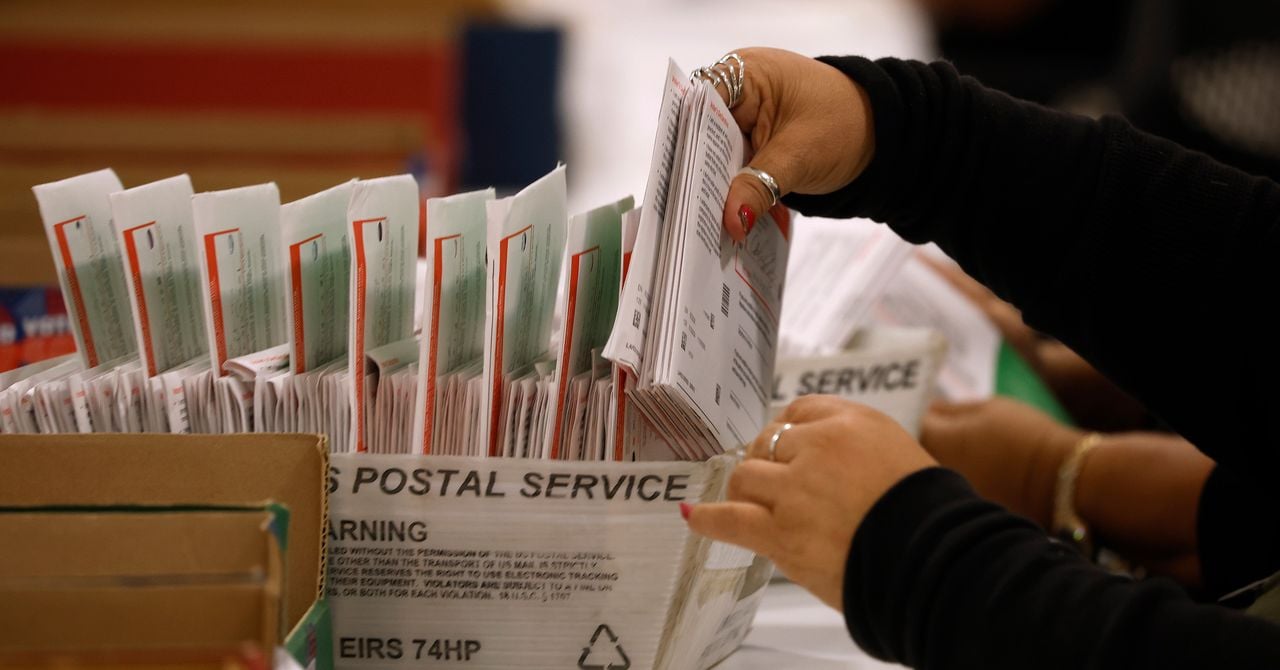
• Former President Donald Trump has petitioned the Supreme Court to overturn a federal appeals court ruling that blocked key parts of his executive order restricting mail-in voting.
• Solicitor General John Sauer filed an emergency application for a stay of the injunction to reinstate the restrictions ahead of the upcoming midterm elections.
• The move is viewed by critics as an attempt to influence election outcomes by limiting voter access to mail-in ballots.
• Former Vice President Kamala Harris announced on Friday that the United States should consider expanding the Supreme Court to include 13 justices.
• Speaking at the National Urban League’s annual conference in Nashville, Harris compared the proposed expansion to the existing structure of 13 district courts.
• This proposal aligns with a broader push by Democrats for judicial reform, alongside Harris's calls to review the Electoral College and grant statehood to Washington, DC, and Puerto Rico.
• In *Mullin v. Al Otro Lado*, the court ruled that the Immigration and Nationality Act prevents individuals who have not yet "arrived in" the U.S. from seeking asylum.
• Similarly, in *Mullin v. Doe*, the court decided that the Temporary Protected Status statute does not allow for judicial review of the Trump administration's decisions regarding Haiti and Syria.
• These rulings effectively uphold the Trump administration's ability to deport Haitians and Syrians by overturning previous administration determinations.
• Donald Trump intends to ask the Supreme Court to revive a lawsuit accusing Hillary Clinton and others of conspiring to sabotage his 2016 campaign via claims of Russian ties.
• The move follows a November 2025 ruling by a three-judge panel that labeled the lawsuit "frivolous" and upheld a $1 million penalty imposed on Trump and his lawyer in 2023.
• Trump's legal team stated on July 29 that the former president remains committed to holding those who used "fake news" and "deception" accountable for attacks on the MAGA movement.
Legal challenge to King’s College London research study claimed it could harm participants but was rejectedA clinical trial of drugs that can delay puberty can go ahead after a high court judge threw out a legal challenge on Friday.Campaigners had launched the attempt to halt the planned research into puberty blockers, to be run by researchers at King’s College London (KCL), on the grounds that they believed it could harm the children taking part. Continue reading...
• In July 2026, press freedom faced escalating legal pressure as new laws, security regulations, and court rulings reshaped the landscape of journalism.
• Reporters continued to operate in high-risk environments, specifically facing extreme dangers while covering conflicts in Gaza, Israel, and Iran.
• The period was marked by significant industry shifts, including intense debates over the role of AI in news and increasing media consolidation.
The Royal Mint Court Residents’ Association had challenged the decision to grant planning permissionConstruction of a new Chinese super embassy in London can go ahead after the High Court dismissed a challenge to the government’s decision to grant planning permission.The Royal Mint Court Residents’ Association (RMCRA) brought legal action against the Ministry of Housing, Communities and Local Government, and the London borough of Tower Hamlets. Continue reading...
Officers in murder trial testify of arriving at Massachusetts home after anguished 911 call from Patrick ClancyThe two police officers focused first on Lindsay Clancy drifting in and out of consciousness in the snow after jumping from her Massachusetts home’s second-floor window. Within minutes, they were racing into the basement after her then husband screamed that all three of their children were dead.“I can’t wake them up – I can’t get them up!” Patrick Clancy frantically told the officers who, along with firefighters and paramedics, gave jurors firsthand accounts on Thursday of the aftermath. Continue reading...
UK’s highest court gives permission for Huda Ammori to challenge court of appeal rulingThe co-founder of Palestine Action has won permission to challenge the ban against the group at the UK’s highest court.The direct action group was proscribed as a terrorist organisation in July last year but its co-founder, Huda Ammori, has been fighting to have it overturned amid a mass civil disobedience campaign. Continue reading...
• The U.S. Supreme Court is facing an all-time low in public reputation due to its perceived role in political conflicts rather than ordinary legal cases.
• Recent examples of this trend include the restriction of COVID-era mail ballots and a ruling by six Republican appointees to strike down a 20-year-old campaign finance law.
• These developments matter because they suggest the Court is increasingly operating as a political entity, undermining its impartiality in high-stakes electoral disputes.
• The U.S. Supreme Court's job approval rating has plummeted to 33%, marking the lowest point in Gallup's 26-year tracking history.
• This decline is part of a broader trend of institutional distrust, with average confidence in national institutions remaining below 30% for five consecutive years.
• The slump reflects a significant erosion of public trust in the judiciary, coinciding with a period where national pride is also at a 25-year low.
• The U.S. Supreme Court has seen a decline in public approval ratings, joining Donald Trump and Congress in a slump of institutional trust.
• Public confidence in the Court has largely fluctuated in the 40% range as political polarization across the United States continues to intensify.
• This trend reflects a growing conviction among Americans that the nation's most powerful institutions are failing to serve the general public.
• Harvard Law professor Nikolas Bowie testified before the House Subcommittee on Courts, Intellectual Property, Artificial Intelligence, and the Internet on May 21.
• Bowie urged lawmakers to end "judicial supremacy," arguing that the Supreme Court should enforce federal law rather than place itself above elected representatives.
• The testimony highlights a growing legal and political push to redefine the Court's role, asserting that the primary responsibility for interpreting the Constitution belongs to national representatives.
• Public approval of the U.S. Supreme Court has fallen to a historic low of 33%, dropping from the previous record low of 39%.
• The poll results follow recent allegations that the high court has functioned as a "puppet" for the Trump administration.
• Justice Elena Kagan defended the court's independence at the 9th Circuit Judicial Conference, citing several rulings against Donald Trump as evidence.
• A court has ruled that Donald Trump's defamation lawsuit against The New York Times is allowed to proceed.
• The legal proceedings will center on the "actual malice" standard, which requires proof that the publisher acted with knowledge of falsity or reckless disregard for the truth.
• This decision is significant as it tests the legal boundaries of press freedom and the difficulty of proving defamation for public figures.
Agents accused in lawsuit of using anti-immigrant slurs and denigrating undocumented MexicansICE agents deployed last summer to the Los Angeles area referred to the subjects of their immigration operations with racial slurs, according to newly released court documents.On 4 July 2025, an unidentified agent wrote in a text chain, “btw tonks everywhere selling food for the 4th festivities in long beach right now,” invoking an anti-immigrant slur, which the US Border Patrol has previously warned against. Continue reading...
• The Supreme Court is expected to eventually address whether states can legally exclude voters from primary elections for refusing to join a political party.
• The core legal conflict centers on whether the right to vote is tied to citizenship or contingent upon party affiliation, potentially infringing on First Amendment rights.
• This issue is highlighted alongside other regional political developments, such as the rise of Troy Jackson in Maine.