• The United Nations General Assembly is meeting to address ongoing global crises, new conflicts, and the rise of artificial intelligence.
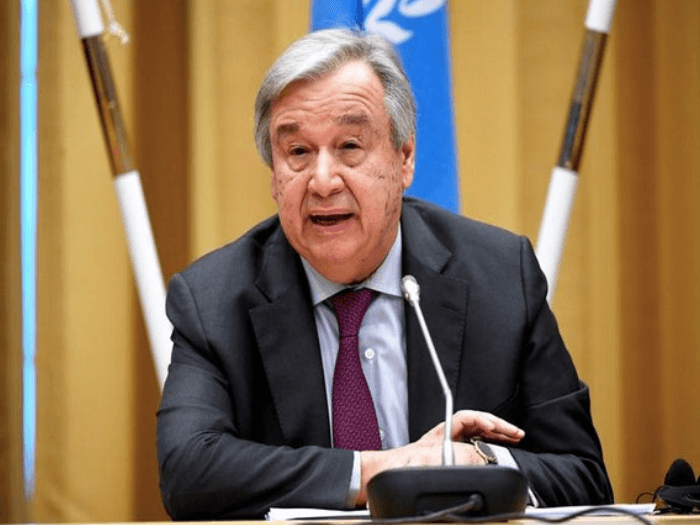
• The organization is currently searching for a successor to Secretary General António Guterres, who is stepping down after serving two terms.
• Geopolitical divisions among the five permanent Security Council members—the U.S., Russia, China, France, and Britain—have hindered the U.N.'s ability to resolve conflicts.
• The BRICS grouping adopted a joint declaration by consensus on September 12 after back-channel negotiations resolved disputes between Iran and the UAE.
• The agreement overcame sharp divisions regarding the conflict in West Asia to reach a unified diplomatic position.
• This consensus serves as a counterpoint to the current polarization of the UN Security Council, which has struggled to unite countries on major geopolitical crises.
• Indian Prime Minister Narendra Modi urged BRICS leaders to address geopolitical tensions, supply chain disruptions, and climate crises during a summit in New Delhi on Saturday.
• The meeting focused on trade, investment, and global conflicts as the bloc seeks a larger role in shaping the global agenda for developing nations.
• These instabilities threaten global stability and directly affect the daily lives of people worldwide.
• Prime Minister Narendra Modi will host leaders from BRICS nations, including Vladimir Putin and Xi Jinping, for a two-day summit in New Delhi starting Saturday.
• The meeting focuses on insulating developing economies from the economic impacts of conflicts in Ukraine and West Asia.
• The summit aims to strengthen the voice of the Global South by addressing global trade disputes, energy security, and economic challenges.
• Geopolitical shocks and global conflicts are severely undermining Africa's climate goals by triggering widespread economic and environmental disruption.
• These distant crises drive up inflation and increase the cost of energy, diverting critical funding away from vital climate resilience projects.
• The situation is critical because it stalls the continent's ability to adapt to climate change, leaving vulnerable populations more exposed to natural disasters.
• Economics professor and financial crisis expert Tuomas Malinen has warned that the United States is currently on the verge of a recession.
• Malinen highlights a critical indicator where private sector yields have risen above the bank prime rate, a trend that historically precedes economic downturns.
• This specific pattern was previously observed prior to the 2008 financial crisis and again following the COVID-19 pandemic.
• India's stock market has evolved through major crises, including the 1992 scam, the 2013 taper tantrum, and the COVID-19 pandemic, which reshaped its regulatory and technological architecture.
• The June 4, 2024, Lok Sabha election results triggered one of the sharpest political market moves in recent history after actual results contradicted optimistic exit polls.
• These events highlight India's deep integration with global financial markets, where distant geopolitical shifts now cause immediate domestic economic consequences.
The prime minister tells the Guardian that last year’s diplomatic rift with ally New Zealand could be on voters’ minds as they head to the pollsAs voters in the Cook Islands prepare to head to the polls in a high-stakes general election, they will have much to reflect on. Over recent years, politics in this small island nation has been defined by fierce debates about deep-sea mining, diplomatic rifts with ally New Zealand and a major reshaping of the country’s foreign partnerships.In an exclusive interview with the Guardian, days before Wednesday’s poll, Cook Islands prime minister Mark Brown defended his four-year term and the decisions he made that have seen this South Pacific nation of 17,000 people pushed into the international limelight, turning it into a battleground for influence between Beijing and western powers. Continue reading...
• The United Nations has formally launched the global selection process to find a successor for the outgoing Secretary-General, António Guterres.
• The search occurs against a backdrop of escalating geopolitical flashpoints and compounding global crises that are currently straining multilateral diplomacy.
• This transition is critical as member states face increasing pressure to reform institutional governance to better address modern international challenges.
Government fears social discontent on ‘most important battlefield’ of economy and livelihoods as war takes its toll amid anti-state dissentIran, in the midst of an escalating five-month war with the US, continues to stumble from one internal crisis to another – whether it is over public executions, the rising cost of living, the alleged bias of the state broadcaster or even the post-midnight destruction of pavements outside liberal-leaning Tehran cafes. Very little that happens in Iran, cultural or political, momentous or trivial, does so uncontested.But there is now a growing threat of a long diplomatic deadlock, forged by mutual distrust in which neither side believes the other will stick to any agreement. That impasse has occurred as the war broadens, drawing in Yemen, Iraq and now Egypt. In Iran, at least, the advocates of escalation are winning. As a result, a convergence of Iran’s conflicts, internal and external, becomes more likely. Continue reading...
From manufactured election insecurity to an outbreak of ‘explosive’ diarrhea, Americans are bearing the brunt of harmful policiesBetween widespread cuts to vital government agencies, various disease and illness outbreaks, and new environmental disaster vulnerabilities, the United States is facing a convergence of crises with widespread repercussions.Yet the Trump administration has hamstrung the federal government from addressing these crises – and in some cases is actively fanning them. Over the past year, the administration has moved to shrink the federal workforce, roll back environmental protections and policies intended to fight the climate crisis, reduced funding for scientific research and is seeking to advance legislation that would impose new voting restrictions. Continue reading...
Government to launch campaign to help people cope with events such as weather emergencies or cyber-attacksThe British public should begin taking “small but important steps” to secure and protect water, power supplies and basic phone signal in case of further severe weather emergencies, national crises or cyber-attacks, Downing Street has said.Darren Jones, the chief secretary to the prime minister, told MPs “the risks we face from climate change cannot be underestimated”, and warned of the “significant and prolonged disruption to essential services” extreme weather events could cause. Continue reading...
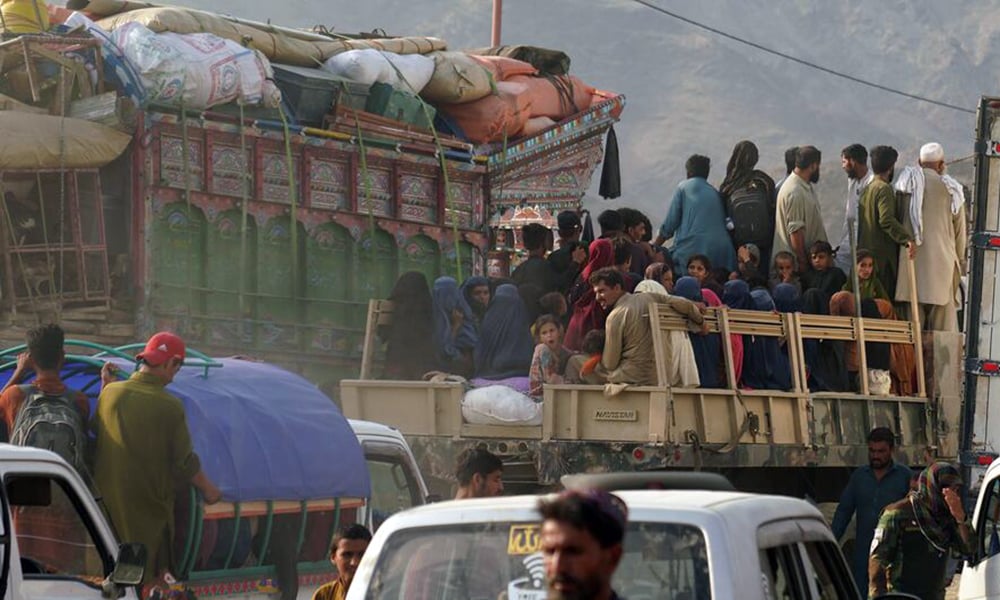
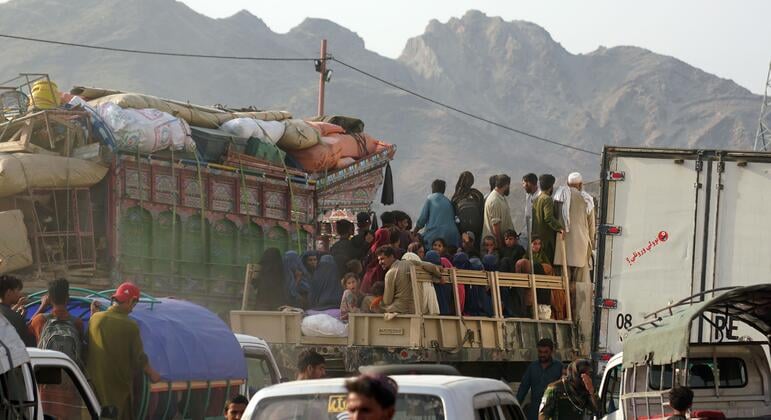
• The United Nations warned on Monday that Afghanistan is currently facing one of the world's largest displacement crises due to poverty, climate shocks, and decades of conflict.
• A recent UNDP socioeconomic review highlights that the return of approximately 2.7 million Afghans is placing immense pressure on the country's fragile economy and public services.
• This crisis is exacerbated by recurring natural disasters and prolonged humanitarian challenges, which threaten the livelihoods of communities already struggling to recover.
• UN agencies warned on Monday that Afghanistan is currently facing one of the world's most severe displacement crises.
• The crisis is being driven by a combination of extreme poverty, persistent drought, and devastating earthquakes.
• To combat the emergency, critical food aid for Afghan students is being transported 15,000 kilometers from Indonesia to Kabul.
• The Norwegian Refugee Council (NRC) has identified Afghanistan as one of the world's most neglected humanitarian crises of the year.
• Funding for aid programs has fallen sharply despite a simultaneous increase in the needs of the Afghan population.
• This funding gap threatens the delivery of essential services and life-saving assistance to millions of vulnerable people.
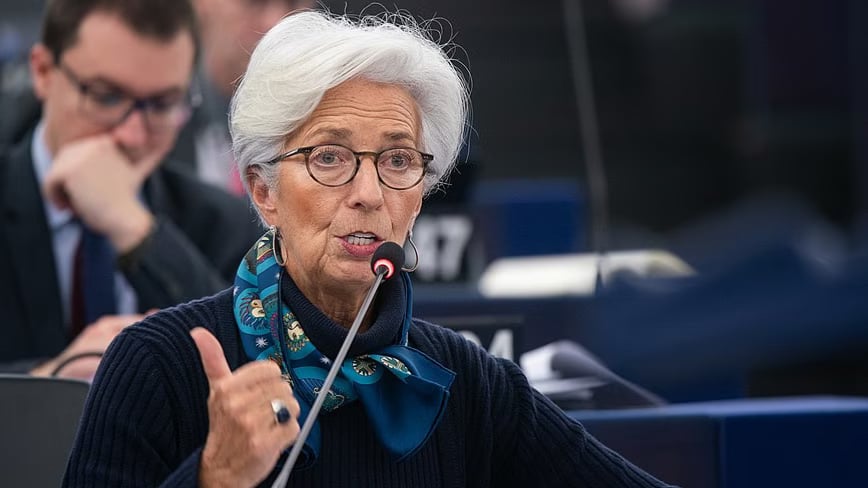
• ECB President Christine Lagarde warned that AI could trigger financial crises, emphasizing that such systemic collapses—rather than the technology itself—are what destroy jobs and savings.
• To mitigate these risks, Lagarde proposed a global governance framework for AI modeled after Cold War-era nuclear non-proliferation treaties.
• These warnings follow similar alarms from IMF Managing Director Kristalina Georgieva regarding "Mythos-class AI" and its potential to destabilize the global financial system.
• G7 leaders met in Évian-les-Bains, France, to address critical global issues including war, AI governance, and the realignment of international supply chains.
• U.S. President Donald Trump announced a deal to end the conflict with Iran just before the summit, focusing discussions on Middle East stability and reopening the Strait of Hormuz.
• The G7 officially labeled the U.S.-Iran agreement a “historic opportunity,” signaling a collective Western effort to stabilize the region.
• The Iranian clerical establishment is experiencing a period of systemic volatility and intense internal political friction.
• High-level administrative infighting has escalated into an overt political war centered on the regime's approach to international diplomacy.
• These deepening vulnerabilities expose critical weaknesses within the regime's leadership structure during a time of multi-front crises.
• Israel's military campaigns in Gaza have expanded into Lebanon, Iran, and the Gulf, fueled by significant financial and military support from the United States.
• The escalation threatens to trigger a prolonged international disorder if diplomatic efforts fail to halt the current trajectory of regional conflict.
• Energy-dependent developing nations face severe risks, as rising fuel costs are expected to drive up food prices, increase fiscal deficits, and spark social instability.
Energy specialists say abandoning net zero and increasing oil and gas drilling would cause more instability for BritonsAbandoning net zero and drilling for more oil and gas in the North Sea would be a massive setback for the UK and would not help the economy, leading experts have said in response to claims by the former prime minister Tony Blair.“This is a bizarre intervention to make during the worst May heatwave on record and when the Iran crisis is providing yet more evidence of the enormous costs of oil and gas,” said Ed Matthew, the UK programme director at the E3G thinktank. “Clean energy is cheaper energy - it protects our bills from prices skyrocketing, its running costs are virtually zero, and it doesn’t cause climate change which threatens economic collapse ... The government should ignore Blair’s ideological nonsense and focus on what works.” Continue reading...
Jonathan Jackson of Illinois calls Cuba ‘most sanctioned part of Earth’ amid US oil blockade causing vast disruptionsSign up for the Breaking News US email to get newsletter alerts in your inboxTwo Democratic US lawmakers on Monday called for a permanent solution to crises confronting Cuba after they visited the island to witness the effects of an American energy blockade. US House members Pramila Jayapal of Washington and Jonathan Jackson of Illinois met with Cuban president Miguel Díaz-Canel and foreign minister Bruno Rodríguez as well as members of Cuba’s parliament during a five-day trip ending on Sunday.“I denounced the criminal damage caused by the blockade, particularly the consequences of the energy siege decreed by the current US government and its threats of even more aggressive actions,” Díaz-Canel wrote on X. Continue reading...
Fatih Birol says world is losing 11m barrels of oil per day, more than the 1973 and 1979 energy shocks combined; IRGC threatens to completely close strait of Hormuz if Trump acts on infrastructure threatsIran vows to destroy Middle East water and energy facilities if US attacks power plantsAFP is reporting that stocks have fallen while oil prices rose after Donald Trump and Iranian leaders traded threats over the key strait of Hormuz and Israel said the Middle East war could last several more weeks.The escalation hammered stock markets, with Seoul and Tokyo – which had been the standout performers before the war started – taking the brunt of the selling, shedding as much as six and five percent, respectively, at one point.Iranian president Masoud Pezeshkian said “threats and terror” are strengthening Iranian unity, after Donald Trump yesterday warned he would “obliterate” Iranian power plants if the strait of Hormuz is not opened within 48 hours.The price of oil increased early on Monday after Trump’s 48-hour ultimatum for Iran to open the strait of Hormuz or face decimation of its energy infrastructure – and Israel warned the war would continue for several more weeks. Shortly after the 2200 GMT open, the price of West Texas Intermediate – the US benchmark crude – for May delivery was up 1.8% to just over $100 a barrel, before retreating slightly.The US treasury secretary, Scott Bessent, gave an interview to NBC News earlier today. When asked if Trump was “winding” down the war or “escalating” it, Bessent said: “They are not mutually exclusive. Sometimes you have to escalate to de-escalate.”In the same NBC interview, Bessent said the US government has “plenty of money” to fund the war against Iran, but is requesting supplemental funding from Congress to ensure the military is well supplied in the future.Lebanon’s health ministry said Sunday that 118 children and 79 women are among those killed, and at least 2,786 others have been wounded, according to the Associated Press. The country’s death toll as of Saturday was 1,024 people.The director general of the International Atomic Energy Agency (IAEA), Rafael Grossi, said he hopes to “re-establish” talks between Iran and the US about Tehran’s nuclear program despite the escalating nature of the conflict. “I’ve been having important conversations here at the White House, and also with Iran. There are some contacts, and we hope to be able to reestablish that line,” Grossi told CBS News.UK prime minister Keir Starmer and US president Trump spoke by phone Sunday evening, according to a statement from the UK government. “The leaders discussed the current situation in the Middle East, and in particular, the need to reopen the Strait of Hormuz to resume global shipping.”Pope Leo on Sunday said death and suffering caused by the war in the Middle East are a “scandal to the whole human family”, as he once again pleaded for an immediate ceasefire. “We cannot remain silent in the face of the suffering of so many people, the defenseless victims of these conflicts. What hurts them hurts the whole of humanity,” Leo said at his weekly Angelus prayer in St. Peter’s Square. Continue reading...

%2Ffile%2Fdailymaverick%2Fwp-content%2Fuploads%2F2023%2F11%2FOpinion-Keita-PlasticsTW.jpg&w=1920&q=85)