⢠Equity benchmarks Sensex and Nifty closed lower after intraday swings, pressured by spiking crude oil prices above $90/barrel.
⢠Foreign investor outflows accelerated to ā¹15,000 crore in April, exacerbating downside in banking and energy sectors.
⢠Auto and FMCG stocks like Maruti Suzuki and ITC provided limited support amid broader risk aversion.
⢠Market experts identify fundamentally strong value stocks as attractive investment opportunities following recent market corrections driven by geopolitical tensions and crude oil price volatility.
⢠Analysts recommend disciplined investors focus on quality companies trading at depressed valuations rather than panic-driven selling, viewing current market weakness as potential entry points for long-term wealth creation.
⢠Selective turnaround stocks and NBFC sector opportunities are highlighted as potential beneficiaries of market recovery, with emphasis on portfolio construction based on fundamental strength rather than technical indicators.
⢠US stocks recently reached an all-time high even as geopolitical tensions between the US and Iran dominate headlines, suggesting investor confidence in economic fundamentals.
⢠The market surge occurs amid what analysts describe as a major market disruption cycle, with oil shocks and other disruptions rattling investors before receding.
⢠The disconnect between headline risks and market performance highlights investor focus on sustained economic growth and underlying corporate fundamentals over short-term geopolitical concerns.
⢠Global financial markets experienced significant volatility during April 12-18, 2026, driven by geopolitical tensions impacting commodity prices.
⢠Oil prices surged higher amid international tensions, affecting energy stocks and broader market sentiment across equities and bonds.
⢠India's retail investor base continues reshaping capital markets, contributing to shifts in the financial landscape alongside global macroeconomic pressures.
⢠Russian President Vladimir Putin issued a bombshell speech from the Kremlin warning against Western military intervention in Iran, marking a significant strategic pivot and directly challenging Trump administration foreign policy.
⢠The address has dramatically escalated geopolitical tensions and prompted immediate reactions from global capitals assessing implications for international security and the balance of power in the Middle East.
⢠Putin's declaration signals Russia's strategic commitment to the region amid the ongoing US-Iran crisis and fragile ceasefire negotiations.
⢠A US fighter jet was shot down over Iranian airspace, marking a significant escalation in military confrontations amid ongoing US-Iran hostilities that began on February 28, 2026.
⢠The incident occurred as tensions remain high following the killing of Iranian Supreme Leader Ali Khamenei and subsequent Iranian retaliatory strikes against Israel and US bases across the region.
⢠The downing of the aircraft raises concerns about potential further military escalations and complicates ongoing ceasefire negotiations between US and Iranian delegations.
⢠US stock futures edged higher on April 5, 2026, with S&P 500 futures up 0.2%, as investors reacted to reports of a push for a potential ceasefire in the Iran war.
⢠Brent crude oil dipped to near $108 a barrel, the dollar weakened, and 10-year Treasury yields hovered around 4.36%.
⢠Trading opened shadowed by Trump escalation threats, with several European and Asian markets closed for Easter holiday.
⢠Taiwanese electronics manufacturer Foxconn reported strong first-quarter revenue growth, yet issued a cautious outlook for future quarters citing escalating geopolitical tensions as a primary risk factor.
⢠The company's performance reflects broader concerns among multinational corporations about supply chain disruptions and market volatility stemming from the Iran conflict and US-China relations.
⢠Oil prices surged as geopolitical tensions related to the Iran war intensified, with the Strait of Hormuz blockade causing the largest global oil supply disruption since the 1970s energy crisis.
⢠The US dollar strengthened amid escalating geopolitical risk, reflecting investor flight to safe-haven assets as financial markets react to the conflict's economic impact on energy supplies and global trade.
⢠A US fighter jet was shot down over Iranian territory on April 3, 2026, intensifying the US-Israeli war on Iran that began with airstrikes on February 28 targeting nuclear sites and leadership.
⢠The incident prompted immediate retaliatory concerns, with Bitcoin prices wavering amid rising geopolitical risk premiums affecting crypto markets globally.
⢠Iran's closure of the Strait of Hormuz has triggered the largest oil supply disruption since the 1970s, spiking energy prices and impacting US economy.
⢠Wall Street experienced a sharp selloff on Wednesday, March 19, 2026, driven by intensifying geopolitical conflicts between the U.S.-Israel force and Iran, sending major indices to their lowest closes of the year.
⢠The Dow Jones Industrial Average fell 1.6% or 768.11 points to 46,225.15, with 28 of 30 components declining; the S&P 500 dropped 1.4% to 6,624.70; and the Nasdaq Composite slid 1.5% or 327.11 points to 22,152.42.
⢠The CBOE Volatility Index (VIX) surged 12.2% to 25.09, reflecting elevated market fear and uncertainty about Middle East implications for the U.S. economy.
⢠The S&P 500 declined 1.6% last week, marking its third consecutive weekly drop, with the Dow falling 2% and Nasdaq shedding 1.3% due to soaring oil prices and broad market selling.
⢠Surging oil prices from geopolitical tensions, including US-Iran escalation, drove the downturn, as investors brace for NVIDIA GTC AI event and FOMC rate decision this week (March 16-20, 2026).
⢠Markets now price only a 33% chance of a June rate cut, down from 57% last month, amid persistent inflation data; Thursday's jobless claims will gauge labor market health.
⢠The S&P 500 declined 1.6% for its third consecutive weekly loss, while the Dow Jones Industrial Average fell 2% and the NASDAQ shed 1.3% as geopolitical tensions and surging oil prices created broad selling pressure across all major indices.
⢠Investors face a critical week ahead with the NVIDIA GTC conference (the "AI Oscars") scheduled alongside the Federal Reserve's FOMC interest rate decision on Wednesday and jobless claims data on Thursday.
⢠Persistent inflation has dramatically shifted market expectations, with traders pricing in just a 33% probability of a June rate cut compared to 57% one month ago, reflecting heightened uncertainty about the Fed's monetary policy path.
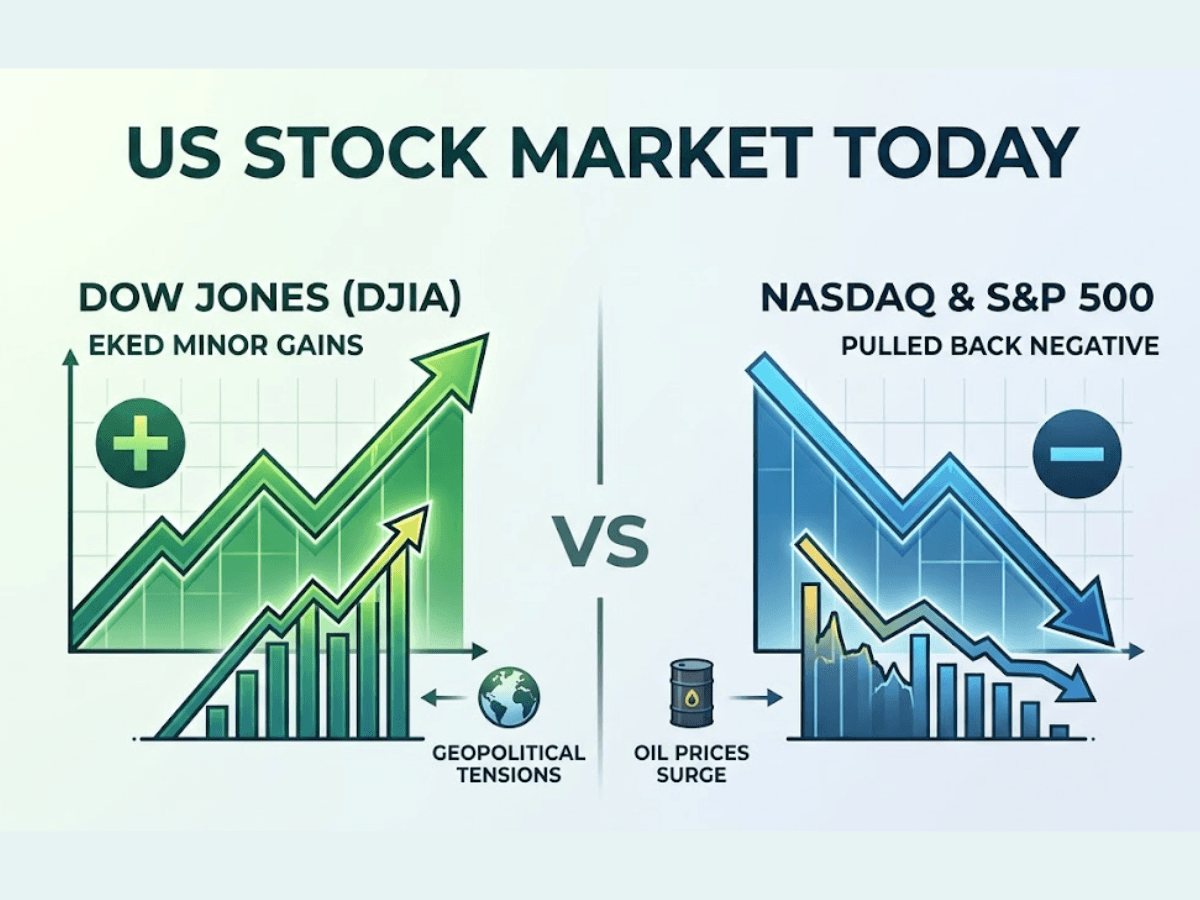
The US stock market displayed divergent performance on Friday, March 13, 2026, with the S&P 500 falling to 6,658 (down 14 points), the Nasdaq dropping 100 points to 22,211, while the Dow Jones held relatively steady near 46,702 amid rising geopolitical tensions and volatile oil prices. The VIX volatility index remained elevated at 26.49, signaling sustained market uncertainty, and the S&P 500 is tracking its first three-week losing streak in approximately one year, down roughly 1.1% for the week. Institutional investors and hedge funds reduced risk positions ahead of the weekend, with analysts attributing the decline to normal profit-taking after strong gains in AI and semiconductor stocks earlier in 2026. Key market watchers noted that smart money was likely to remain in defensive positions until clarity emerged regarding the Strait of Hormuz and potential ceasefire negotiations.