• China has publicly criticized Iran amid the Persian Gulf conflict, urging an immediate ceasefire and protection of shipping lanes as the Strait of Hormuz closure disrupts global energy markets.
• Beijing condemned Iran's attacks on Gulf states while aligning temporarily with Europe on ceasefire efforts, though it also warned the U.S. against strikes violating international law.
• This shift highlights changing diplomatic dynamics, creating a brief convergence between China and Brussels amid severe energy market shocks and stalled UN votes on intervention.
• Prime Minister Keir Starmer has led a 40-nation diplomatic effort to reopen the Strait of Hormuz following Iran's de facto blockade in response to US and Israeli strikes on Iranian targets.
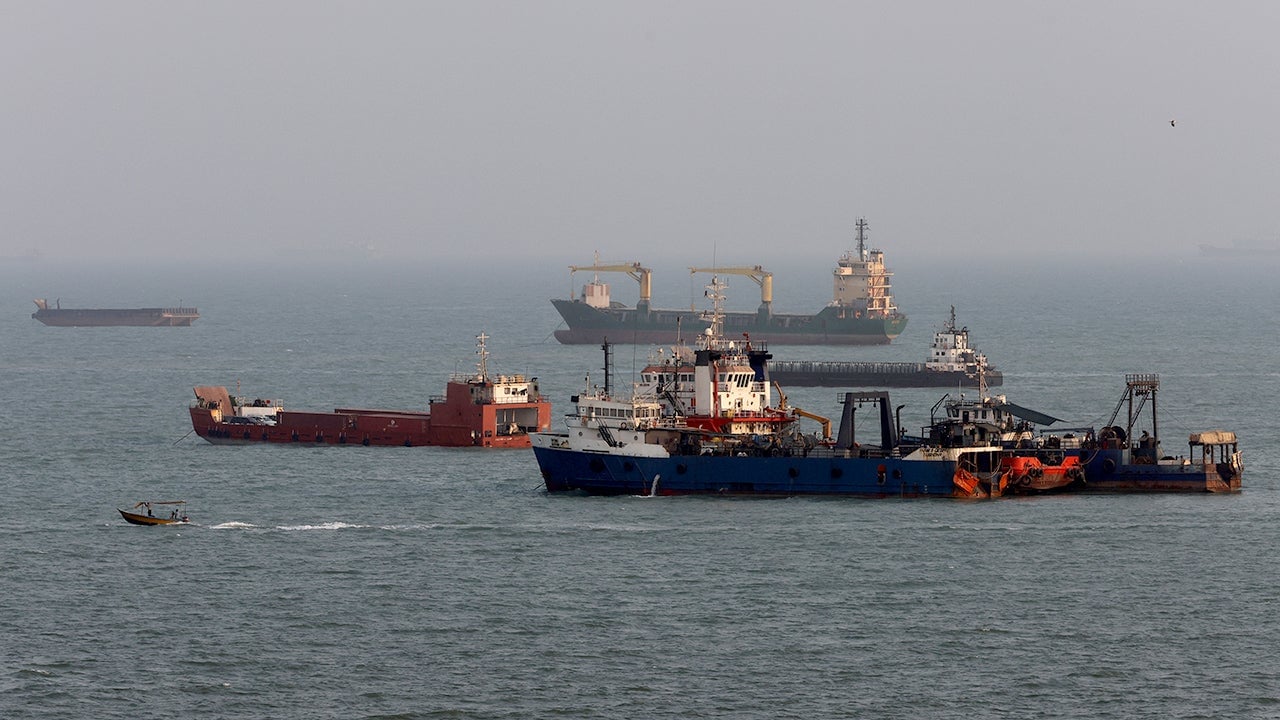
• The vital maritime route carries nearly 20 percent of global oil and LNG supplies, with disruptions pushing crude prices above $100 per barrel and triggering fuel rationing and economic strain worldwide.
• While the UK and allies explore sanctions and coordinated maritime measures, the United States has stepped back, with President Trump urging other nations to take the lead in managing the crisis.
• Iran's Islamic Revolutionary Guard Corps Navy commenced large-scale military exercises in the Persian Gulf on April 1, deploying multiple warships and missile systems near the strategically vital Strait of Hormuz.
• US Central Command deployed additional naval assets to the region in response, with Pentagon officials stating the move is designed to "ensure freedom of navigation" and protect commercial shipping lanes critical to global energy markets.
• The Iranian exercises follow recent diplomatic tensions and represent the latest in a series of military posturing events that have increased risk premiums on global oil prices by approximately 3% this week.
Yvette Cooper hosted virtual summit of more than 40 countries aimed at reopening vital shipping laneMiddle East crisis live – latest updatesPlans to clear sea mines and rescue trapped ships in the strait of Hormuz will be discussed at a global military planning meeting next week, after a virtual summit of more than 40 countries convened on Thursday hosted by Yvette Cooper.Ahead of the summit, the British foreign secretary condemned “Iranian recklessness” for “hitting global economic security” as she led talks aimed at reopening the vital shipping lane. Continue reading...
Talks, convened by the UK, will examine ‘all viable diplomatic and political measures’ to get critical waterway openFollow our Australia news live blog for latest updatesGet our breaking news email, free app or daily news podcastAustralia will join talks with 35 nations, convened by the United Kingdom, to explore ways to reopen the strait of Hormuz, the government confirmed on Thursday.The UK prime minister, Keir Starmer, announced the meeting on Wednesday, which will exclude the United States, to discuss “all viable diplomatic and political measures” to secure the waterway and restore freedom of navigation. The meeting is expected to take place at about 10pm AEDT on Thursday. Continue reading...
US understood not to be invited directly to talks that will explore ways of reopening critical waterwayMiddle East crisis – live updatesThe UK will convene 35 countries – excluding the US – to explore ways to reopen the strait of Hormuz, the vital shipping route for oil and gas that has been blocked by Iran.Keir Starmer, the prime minister, said the next phase of discussions in the joint British and French efforts to secure the waterway would be held on Thursday, with Yvette Cooper, the foreign secretary, alongside international leaders. Continue reading...
• President Trump told allied nations to "go get your own oil" and stated it is not America's responsibility to keep the Strait of Hormuz open, shifting burden of regional security to countries dependent on the waterway.
• Trump reiterated the US military could conclude its Iranian operations within two to three weeks and said America will have no further involvement in Middle East strait security following withdrawal.
• The statements reflect Trump's isolationist stance on Middle East commitments, placing responsibility for maintaining critical shipping routes on regional allies rather than continuing US military presence and protection.
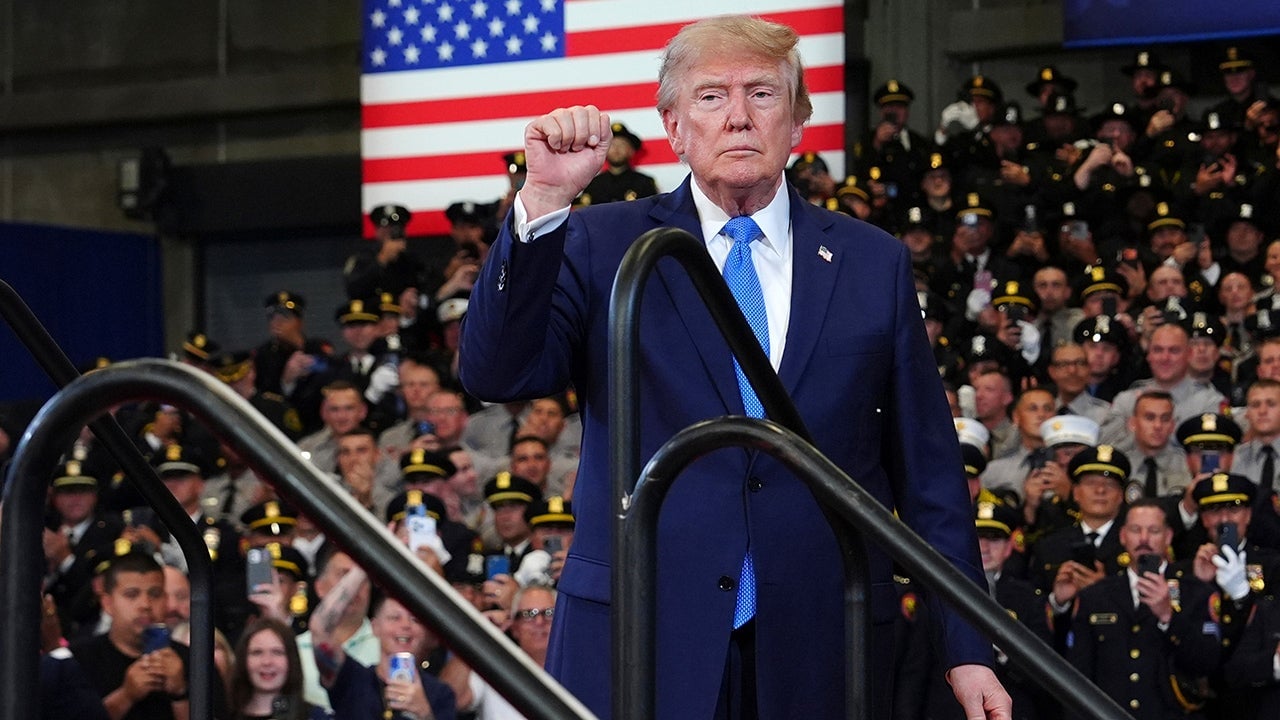
• The S&P 500 rose over 1.5% and Nasdaq climbed nearly 2% Monday after the White House signaled it may abandon America's role in reopening the Strait of Hormuz, with Trump telling allies on Truth Social to "build up some delayed courage" and secure the strait themselves.
• Trump wrote on social media: "You'll have to start learning how to fight for yourself, the U.S.A. won't be there to help you anymore, just like you weren't there for us," signaling a potential shift toward military disengagement despite ongoing operations.
• The mixed messaging coincides with U.S. gas prices crossing $4 per gallon Tuesday—up more than $1 from February 27—marking the first time since 2022's Ukraine crisis energy shock, while Trump's approval rating has dropped to -16.7, a record low for his second term.
• G7 foreign ministers have rejected US President Trump's request to send troops to protect shipping through the Strait of Hormuz, citing concerns about escalation into a broader conflict with Iran.
• The group of seven nations stated they would only assist with securing the critical energy export passage once hostilities with Iran conclude, and condemned Iran's closure of the strait as affecting non-combatant countries.
• Trump has publicly criticized European and NATO allies for refusing to establish the mission, suggesting their participation should not be conditioned on ceasefire negotiations.
• France's defense ministry announced 35 countries participating in military discussions for a defensive mission to escort commercial vessels through the Strait of Hormuz.
• The talks address Iran's threats to toll or block the vital waterway, critical for global energy flows.
• Initiative gains traction amid US pressure on allies, potentially easing oil price spikes affecting US consumers.
• G7 foreign ministers rejected US President Donald Trump's push to deploy troops for securing the Strait of Hormuz amid the Iran conflict, stating assistance only after hostilities end.
• French Foreign Minister Jeanuel Baru condemned Iran's closure of the strait, impacting non-conflicting countries, while Trump criticized European and NATO allies for hesitation.
• The decision highlights transatlantic tensions over escalation risks in the energy chokepoint vital for global oil exports.
• Israel launched strikes on central Tehran and warned of expanding its campaign against Iran, which continues firing missiles at Israel and Gulf Arab states, as U.S. strikes persist.
• President Trump extended the deadline to April 6 for Iran to reopen the Strait of Hormuz, stating talks are 'going very well' after Iran requested a grace period despite public denials.
• Israel moved thousands of troops into Lebanon to control the area south of the Litani River, 20 miles north of the border.
• Israel's military launched a wave of airstrikes in the heart of Tehran early Friday, March 27, while U.S. President Donald Trump delayed his deadline to strike Iran's energy plants until April 6 amid ongoing Strait of Hormuz tensions.
• The conflict has resulted in over 1,900 deaths in Iran, nearly 1,100 in Lebanon, 18 in Israel including four soldiers, and 13 U.S. military members, with millions displaced in both countries.
• Trump cited Iran's request for a grace period and stated talks on a 15-point proposal are going 'very well,' despite Tehran's public denials of negotiations.
• Israel's military launched a wave of airstrikes targeting the heart of Tehran early on March 27, 2026, as confirmed by military statements, while smoke rose over Beirut.
• The strikes coincide with US President Donald Trump extending his deadline to bomb Iran's energy plants until April 6, 2026, after Iran's request, claiming talks are 'going very well' despite Tehran's denials.
• Trump referenced a 15-point US proposal to end the conflict, amid convulsing stock markets and Iran's insistence on no direct negotiations, heightening global tensions over the Strait of Hormuz closure.
Defence chiefs have been discussing how to unblock the conduit for about a fifth of the world’s oil suppliesThe UK has offered to host an international security summit to draw up a “viable, collective plan” to reopen the strait of Hormuz as economic fallout from the Iran conflict continues.Defence chiefs have been discussing how they could unblock the vital shipping lane, through which about 20% of global oil supplies usually pass, amid the Middle East crisis unleashed by the US and Israel. Continue reading...
Speaking after signing trade agreement in Canberra, the European Commission president warns ‘situation is critical’ for global energy supplyGet our breaking news email, free app or daily news podcastThe US and Iran must come to the negotiating table to immediately end the de facto closure of the strait of Hormuz and stop hostilities in the Middle East, the head of the European Commission says.Ursula von der Leyen, the European Commission president, said Iran’s efforts to block the strategic waterway via attacks on unarmed commercial vessels and critical infrastructure “must be condemned”. Continue reading...
PM will meet with the Commons liaison committee and chair the government’s Cobra emergency committee todayGood morning. It is the last week the Commons is sitting before the Easter recess and, in normal circumstances, we would be focusing on domestic policy, and announcements coming out before the holiday period. But today, with the world focused on what will happen if Iran does not comply with the “deadline” set by Donald Trump for the opening of the strait of Hormuz tonight (he says he will “obliterate” Iran’s power plants if he does not get his way), foreign policy will dominate.Starmer has two important meetings on the topic this afternoon. One of them will be live on TV, but unfortunately it will be the duller and less consequential one – his meetinng with the Commons liaison committee. After that he will chair a meeting of the government’s Cobra emergency committee, where the government will be taking decisions about how it will respond to the possibility that the energy price crisis could get significantly worse. In a sign of how serious the economic consequences could get, Andrew Bailey, governor of the Bank of England, is attending.The prime minister spoke to the president of the United States, Donald Trump, this evening.The leaders discussed the current situation in the Middle East, and in particular, the need to reopen the strait of Hormuz to resume global shipping. Continue reading...
• President Donald Trump issued a 48-hour ultimatum demanding Iran reopen the Strait of Hormuz or face U.S. "obliteration" of key energy infrastructure, escalating the ongoing conflict into its fourth consecutive week.
• U.S. stock index futures fell sharply Sunday evening: S&P 500 futures declined 0.3% to 6,542.25 points, Nasdaq 100 futures fell 0.4% to 24,008.0 points, and Dow Jones futures dropped 0.16% to 45,821.0 points, reflecting market anxiety over potential military escalation.
• Major indexes have posted cumulative losses of 4-7% over the past 30 days as concerns mount over the long-term economic impact of prolonged conflict, compounded by stronger-than-expected inflation data reducing expectations for Federal Reserve rate cuts this year.
Trump tells Iran to reopen strait to shipping or face destruction of its energy infrastructure, as Tehran launches its most destructive attack yet on IsraelHello and welcome to our continuing live coverage of the US-Israel war on Iran and its repercussions for the Middle East, the world and the global economy.President Donald Trump has threatened to “obliterate” Iran’s power plants if Tehran does not fully reopen the strait of Hormuz within 48 hours – threatening a new escalation, just a day after the president spoke of “winding down” the war.Iranian ballistic missile barrages wounded about 100 people in southern Israel on Saturday, striking the cities of Arad and Dimona after air defence systems failed to intercept at least two projectiles. The Israeli Air Force is investigating its failure to prevent the attacks. Benjamin Netanyahu called it “a very difficult evening in the campaign for our future”.The International Atomic Energy Agency said it had received no indication of damage to the Negev nuclear research centre, which is near to Dimona.In the early hours on Sunday, Israeli military announced in a brief statement that it was conducting strikes in Tehran.Saudi Arabia’s ministry of defence said it had detected three missiles launched towards Riyadh early in the morning. One of the missiles was intercepted, while two fell in an uninhabited area, it saidIran on Saturday launched two ballistic missiles with a range of 4,000 km (2,500 miles) at the US-British military base at Diego Garcia in the Indian Ocean, according to the Israeli military, which said it was the first time Iran had used long-range missiles since the conflict began on February 28.The British foreign secretary condemned the attacks on Diego Garcia, while stressing the UK has “taken a different position from the US and Israel” on the conflict. Yvette Cooper said ministers wanted to see a swift resolution to the war, adding the government was supporting defensive action against the “reckless Iranian threats”.A projectile struck close to a bulk carrier off the coast of the United Arab Emirates on Sunday, causing an explosion, according to the British military’s United Kingdom Maritime Trade Operations center.The death toll has risen to more than 1,500 people in Iran, more than 1,000 people in Lebanon, 15 in Israel and 13 US military members, and a number of civilians on land and sea in the Gulf region, according to Associated Press. Millions of people in Lebanon and Iran have been displaced. Continue reading...
• President Trump criticized NATO allies as "cowards" for declining to assist in reopening the Strait of Hormuz, which Iran continues to block, causing global oil prices to surge.
• Trump argued that European nations complain about high oil prices resulting from the blockade but refuse to contribute militarily to resolving the crisis.
• The diplomatic rift reflects tensions within the Western alliance over burden-sharing in the Middle East conflict and control of critical global energy infrastructure.
US president claims he ‘always says yes’ to Australia, Japan and South Korea, after saying he didn’t need help from trio of countries earlier this weekDonald Trump says he is “very surprised” Australia has not sent warships to aid in opening the strait of Hormuz as the blockade of the key strategic route for global oil supply continues to impact fuel prices.“I was very surprised,” the US president said in Washington on Friday when asked what he took issue with regarding Japan, South Korea and Australia. Continue reading...
• The U.S. and allies intensified operations on March 20, 2026, deploying low-flying attack jets and Apache helicopters to target Iranian naval vessels and drones in the Strait of Hormuz.
• Iran's IRGC released video of a U.S. F-35 struck over Iranian airspace, forcing an emergency landing at a U.S. base; Pentagon confirms the $100 million jet incident.
• This battle threatens global energy supplies, with oil prices seesawing and predictions of $150-$200 per barrel if unresolved, exacerbating a crisis three weeks into the war.
Claims come despite Donald Trump saying he is not leaning towards putting ‘boots on the ground’Middle East crisis – live updatesThe US is reportedly considering plans to occupy or blockade Iran’s Kharg Island to pressure Tehran to reopen the strait of Hormuz despite earlier suggestions by Donald Trump that he was not leaning towards putting “boots on the ground”.The claims, made on the Axios website, followed previous reporting that the US was considering occupying the key Iranian oil terminal. Continue reading...
Report shows how minerals critical to defense readiness have seen a ‘near total’ disruption in seaborne tradeSign up for the Breaking News US email to get newsletter alerts in your inboxThe closure of the strait of Hormuz is causing a “paralyzing, real-time problem” for any prospective manufacturing surge in the US defense industrial base, and even for the repair of defense equipment damaged by Iranian attacks, according to analysis published by West Point’s Modern War Institute.In particular sulphur, a vital upstream input in the extraction of critical minerals including copper and cobalt, has seen a “near total” disruption of seaborne trade in the straits, which makes up half the world’s total shipments, and prices have spiked nearly 25% since the war began, and seen a 165% rise year on year, the report said. Continue reading...
• US military conducted attacks today on Iranian missile installations near the Strait of Hormuz to neutralize threats to transiting ships.
• The strikes target sites from which Iran could launch attacks on commercial and military vessels in the critical waterway.
• The operation escalates US involvement in the Iran conflict, aiming to secure global oil shipping routes amid heightened tensions.
Officials say military planners liaising with US Central Command but situation remains too dangerous for anything to happen soonMiddle East crisis – live updatesBritain has said it remains involved in discussions with the US and European allies over escorting merchant shipping through the strait of Hormuz but the situation remains too dangerous for it to happen soon.Iran is still considered to pose a threat and have a wide range of weapons available – from cruise missiles to sea drones – despite 19 days of US-led bombing of its navy and coastal sites. Continue reading...
Snub comes as Iran vows revenge for killing of Ali Larijani. Plus, judge orders reinstatement of Voice of America staffGood morning.Donald Trump has said the US does not need Nato after a number of the organization’s members rejected his call to send their warships to reopen the strait of Hormuz.How many people have been displaced in Iran? Up to 3.2 million people, according to the UN’s refugee agency. Here, Tehran residents speak about their daily life under bombardment.For the latest updates, follow our liveblog. Continue reading...
• Brent crude oil prices rose 3.2% to USD 103.42 per barrel, while US oil prices increased 2.9% to USD 96.21 per barrel due to Strait of Hormuz tensions and reduced vessel movement.
• The Trump administration plans to ease sanctions on Venezuela's oil sector by issuing permits for foreign companies, aiming to boost crude production and counter soaring prices.
• Global oil markets remain volatile as the Strait of Hormuz, through which 13 million barrels pass daily, faces ongoing disruptions from the Iran conflict.
• US Central Command announced military strikes on Iranian missile sites located near the Strait of Hormuz using bunker buster weapons.
• The strikes target Iran's military infrastructure and represent an escalation in the three-week conflict between the US and Iran.
• The Strait of Hormuz remains a critical global shipping route through which approximately 13 million barrels of oil pass daily.
• As the Iran war enters its 17th day, President Trump is pressuring NATO allies and other nations to send warships to the Strait of Hormuz to secure the critical oil route, warning that the United States cannot do it alone.
• Trump stated "We'll protect them and if ever needed help, they won't be there for us," signaling frustration with allied hesitancy while claiming numerous countries are on their way to assist despite limited public commitments.
• Military analysts suggest a four-week campaign would be required to remove missiles, drones, fast attack craft, and mines from the strategic waterway, with Trump's administration reportedly reaching out to Australia, Japan, South Korea, the UK, France, and China with minimal success in securing open support.