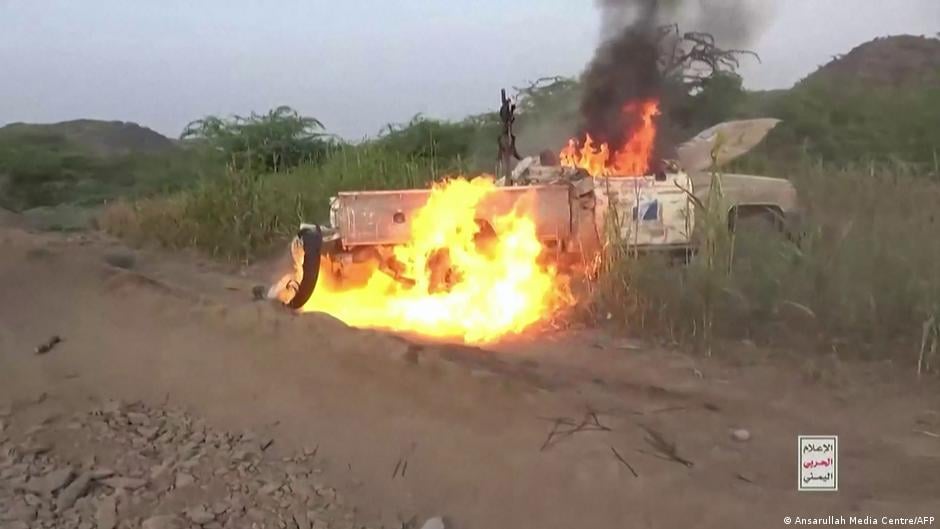
• Yemen's Houthi rebels have launched a new wave of deadly attacks targeting Saudi-backed government troops, according to Yemeni state media.
• Amidst the escalation, political figures including Cruz have argued that the Trump administration should pursue a strategy aimed at "regime collapse."
• Separately, the U.S. Army announced on Friday that it is opening test ranges to private companies developing drones and missiles.
• The UK Supreme Court will hear an appeal regarding the legal status of Palestine Action, an anti-Israel activist group.
• The case follows a June Court of Appeal ruling that banning the group as a terrorist organization was lawful due to its support for violence.
• This reverses a February High Court decision which had found that the ban unlawfully interfered with the group's freedom of expression.
Yemeni sources say Saudi Arabia is preparing sea and possible land attack to break chokehold on oil exports through Red SeaSaudi Arabia is preparing for a major military offensive against the Houthis by sea and possibly by land in central Yemen, Yemeni sources believe, in a move to break the chokehold on its oil exports through the southern Red Sea.Saudi forces have been seen withdrawing from the east of Yemen in what could be preparation for a land offensive. At the same time, Riyadh is trying to organise a naval coalition to protect shipping from Houthi attacks in the Red Sea and the Bab al-Mandab strait. Continue reading...
• A new war in Yemen is looming, with signs indicating a re-eruption of conflict is imminent.
• Recent developments have strengthened anti-Houthi forces in the country, potentially altering the balance of power.
• The Houthis have shifted from rhetoric and mobilization to military action, escalating tensions.
• The Iran-backed Houthi militia in Yemen has escalated attacks to exploit a period of vulnerability within Saudi Arabia.
• The group aims to leverage this conflict to secure significant political concessions regarding the ongoing war in Yemen.
• This escalation follows years of conflict and a Saudi strategic pullback driven by international pressure over the severe humanitarian crisis in Yemen.
• On Saturday, July 25, 2026, conflict escalated as Saudi Arabia and Houthi rebels engaged in a series of reciprocal attacks.
• The hostilities occur within the broader context of an ongoing war involving the United States and Israel against Iran.
• This expansion of violence signifies a widening regional conflict, drawing in key Middle Eastern actors and increasing instability.
Saudi air defences intercept ballistic missiles as Iran reports first night without US strikes in two weeksYemen’s Iran-backed Houthi rebels claimed a missile attack on the southern Saudi city of Jizan on Saturday, after vowing retaliation against the kingdom for attacks this week.Iran, meanwhile, reported no strikes overnight on Saturday for the first time after two weeks of US attacks. The Iranian health ministry spokesperson, Hossein Kermanpour, said: “Iran had a peaceful night” in a post on X. Tensions, however, remain high. Continue reading...
No end to fighting in sight as Revolutionary Guards launch drones at targets in Bahrain, Jordan and KuwaitThe US struck targets across Iran on Friday, reaching as far as the Caspian Sea, as Donald Trump threatened “major military punishment” for Tehran and its Houthi allies in Yemen for extending the war to a second major shipping chokepoint at the entrance to the Red Sea.As Iran retaliated with missile and drone fire against US bases and allies across the region, the New York Times reported that Tehran had rejected a US ceasefire proposal delivered by the Iraq prime minister, Ali al-Zaidi. This despite the US secretary of state, Marco Rubio, claiming a day earlier that Iran was begging for a ceasefire. Iraq later disputed the report. Continue reading...
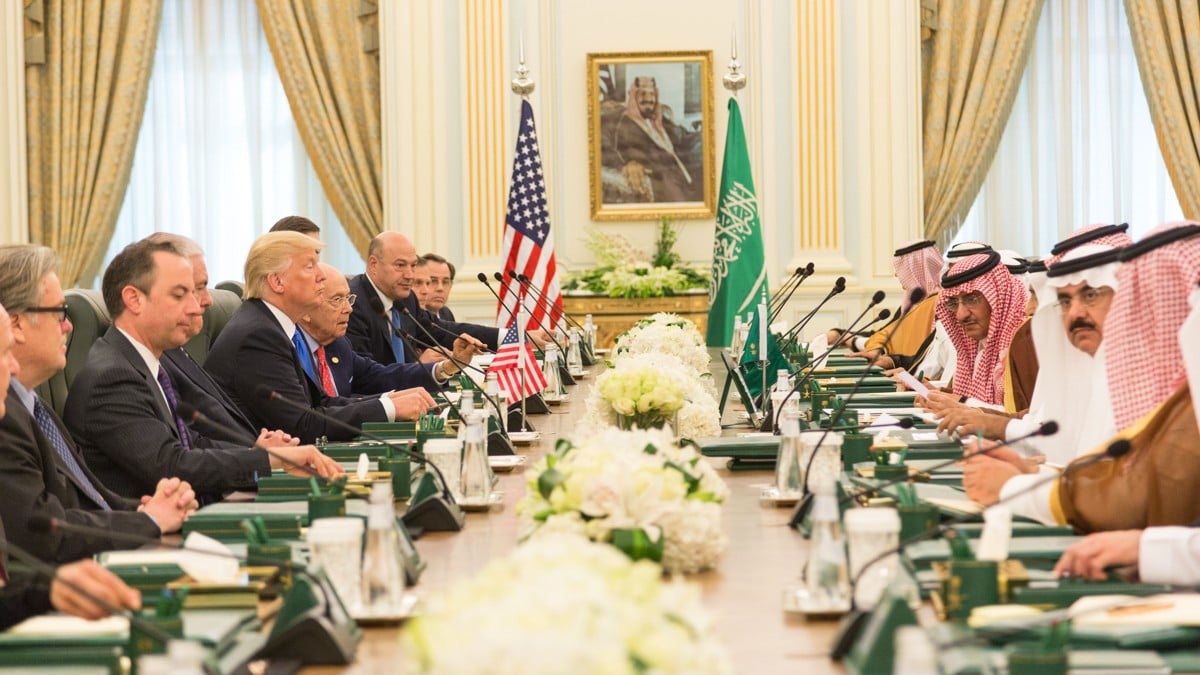
Conflict continues across the region as White House announces nuclear technology agreement. Plus, the artist who flattened a Tesla with a tankGood morning. The US has signed a landmark nuclear deal with Saudi Arabia that could allow the kingdom to enrich uranium in the future. The deal will be submitted to Congress for review, where it could face opposition among lawmakers who fear a lack of monitoring safeguards.In lengthy talks stretching over more than one administration, the US has feared that Riyadh would look elsewhere for nuclear technology if the US did not provide what it wanted. Saudi Arabia has long said that if it does not partner with the US, it could do so with China or Russia, which have different proliferation standards.Why is a uranium deal with Saudi Arabia controversial? The full details of the deal have yet to be released, but it comes as the US’s war with Iran is being fought in part to prevent Tehran enriching uranium domestically and make it near impossible for Iran to build a nuclear weapon. Saudi Arabia has in the past said it would need a nuclear weapon if Iran acquired one. Kenneth Roth has analysed why Trump would agree it right now.What are the latest developments in the war? The US military launched its 12th successive night of strikes, which have now widened to western and central Iran. In attacks lasting five hours, the US claims to have struck military targets including maritime capabilities, missile and drone storage facilities, coastal surveillance sites and air defense assets. Yemen’s Houthi militia also attacked two Saudi Arabian oil tankers, the Iran-aligned group said on Thursday, with a Saudi news agency later confirming one of the vessels was ablaze in the Red Sea. Continue reading...
• Yemen’s Houthi rebels claim to have attacked tankers in the Red Sea, asserting that the vessels violated their established blockade.
• The US military has launched its 12th consecutive night of strikes against Iranian-linked targets to degrade Tehran's ability to threaten shipping in the Strait of Hormuz.
• In a significant diplomatic shift, the US has signed a nuclear deal with Saudi Arabia to stabilize regional security.
• The United States is increasing its military presence in the Middle East by deploying additional refueling planes and potentially heavy bombers amid escalating hostilities with Iran.
• Jordan's National Center for Security & Crises Management reported that the Jordanian army detected and engaged six missiles launched from Iran that entered its airspace.
• These developments coincide with ongoing attacks by Houthi rebels on shipping vessels in the Red Sea, further destabilizing the region.
US military says it is degradimg Tehran’s ability to threaten ships in strait of Hormuz; Houthis say tankers violated their blockade; US signs nuclear deal with Saudi ArabiaWelcome to our live coverage of the continuing crisis in the Middle East.The US military announced on Thursday evening it had began a 12th consecutive night of strikes against Iranian military targets at the direction of Donald Trump. Continue reading...
Warning to shipping companies, on top of Iran’s chokehold on strait of Hormuz, may severely affect Saudi oil exportsMiddle East crisis live – latest updatesYemen’s Iranian-aligned Houthis have warned shipping companies that their tankers risk being attacked if they use Saudi Arabian ports, as the militia moved quickly to enforce a blockade announced the previous day.The Houthi warning for the Red Sea, coming on top of Iran’s threat to shipping on the other side of the Arabian peninsular in the Gulf, could affect the substantial Saudi oil exports that have so far been unscathed by the months-long conflict and deepen the rapidly escalating crisis in the region. Continue reading...
• Iran-backed Houthi rebels have expanded their conflict by implementing a blockade on Saudi ships in the Red Sea.
• This escalation follows a series of military actions, including the U.S. launching strikes against Iran for the 10th consecutive night.
• The blockade is expected to increase pressure on global energy markets, while Tehran reports receiving new proposals from mediators to resolve the tension.
Revolutionary Guard claims attack on oil tanker and two other ships; Houthis in Yemen say they are imposing an immediate maritime blockade of Saudi Arabia in the Red SeaFull report: Almost 100 troops injured in recent weeks, Pentagon admits, as Iran launches reprisals on US alliesWelcome to our live coverage of the latest developments in the Middle East crisis.Iran attacked a tanker in the strait of Hormuz early on Tuesday, forcing its crew to abandon the ship, as Yemen’s Iran-backed Houthis announced they were imposing an immediate maritime blockade of Saudi Arabia in the Red Sea after the two sides traded fire last week for the first time in years.The latest US strikes came hours after Donald Trump said Iran would pay “many times over” for killing US soldiers after multiple service members were killed in action over the weekend.A tanker came under attack early Tuesday in the Hormuz strait off Oman, forcing the crew to abandon the vessel, the British military’s United Kingdom Maritime Trade Operations centre said. Iran’s Revolutionary Guards claimed the attack as well as two other attacks on ships in the waterway on Monday.The US military’s Central Command said its latest airstrikes were to “degrade” Iran’s ability to attack commercial shipping in the strait and included hitting military command centres and missile and drone launch sites.Iranian media reported strikes in parts of the country including Bandar Abbas, Tabriz and Bushehr, home to the country’s only operational civilian nuclear power.Iran’s launched attacks in response against Bahrain, Kuwait and Jordan, which all host US forces.Oil prices softened after hitting their highest levels in more than a month in the previous session. Brent crude futures eased 0.4% to $88.87 a barrel by 0052 GMT on Tuesday while US West Texas Intermediate crude for September delivery was steady at $82.47 a barrel.Democrats have seized on the deaths of three US troops killed in Iranian strikes to urge Trump to urgently reverse his resumption of the war with Iran amid widespread anxiety over climbing casualties.The Lebanese army began taking charge of security in three southern villages, the US said, as a deal to secure an Israeli withdrawal from southern Lebanon and the disarmament of Hezbollah faced its first test on the ground. Continue reading...
Fresh Houthi attacks on Red Sea shipping would be devastating – but the Iranian proxy has reasons to be cautiousThe true significance of the long-awaited entry of Yemen’s Houthis into the Iran war depends on whether the Tehran-backed proxy group is intending to send a few missiles and drones from a distance towards Israel or will instead capitalise on its proximity to the narrow Bab al-Mandab strait to effectively close off the Red Sea to shipping, just as Iran has effectively shut the strait of Hormuz.The combined effect of both waterways being shut to commercial traffic from countries that neither the Iranians nor Houthis favour would be devastating. Napoleon Bonaparte’s remark that “the policy of a state lies in its geography” has never seemed more apt. Continue reading...
War continues to escalate with Yemen’s Iran-backed Houthis confirming a second wave of attacks on Israel since they joined the war on SaturdayRead the full reportHello and welcome to our live coverage of events in the Middle East as the war enters its second month.The war only continues to escalate as Yemen’s Iran-backed Houthis confirmed a second wave of attacks on Israel since joining the conflict on Saturday. They have vowed to continue strikes in the coming days, posing a threat not just to worsening regional security but also global trade.In a televised speech, Houthi military spokesperson, Yahya Saree, said the Iran-backed group had launched a “barrage of cruise missiles and drones” in a second attack on Israel, targeting key military sites. He vowed the Houthis would continue military operations in the coming days until Israel “ceases its attacks and aggression”.The entry of the Houthis, poses a direct threat to the Bab al-Mandab strait at the southern end of the Red Sea, a second major choke point in the supply chain of energy supplies and other trade in and out of the Middle East. With Iran’s near total closure of the strait of Hormuz, a shutdown of the Bab al-Mandab, located between Yemen and the Horn of Africa, would amplify the already grave impact of the war on the global economy, and could also reignite a Saudi-Yemen conflict.The Pentagon is preparing plans for weeks of ground operations in Iran – potentially including raids on Kharg Island and coastal sites near the strait of Hormuz – though President Donald Trump has not yet approved any deployment, the Washington Post is reporting. Any ground operation would stop short of a full-scale invasion, instead involving raids by special operations forces and conventional infantry troops, the Post said, citing unnamed officials.Exiled Iranian Crown Prince Reza Pahlavi has told one of the US’s biggest annual gatherings of conservatives that he is ready to lead a new Iranian government and would call on the country’s citizens to rise up when the “right moment arrives”, AP reports. Pahlavi is the son of the shah, a monarch deposed in 1979 when the Islamic theocracy came to power.Iran’s Revolutionary Guard threatened to target US universities in the Middle East after saying US-Israeli strikes had deliberately targeted two Iranian universities. “If the US government wants its universities in the region to be free from retaliation... it must condemn the bombing of the universities in an official statement by 12 noon on Monday, March 30, Tehran time,” said the statement published by Iranian media.Pakistan has said it would host a meeting of Middle Eastern powers on Monday in an effort to find a regional approach to ending the conflict. But the talks, which bring together the foreign ministers of Saudi Arabia, Turkey and Egypt, did not appear to include any of the warring parties, casting further doubt on persistent US claims of diplomatic progress.Israeli attacks killed three journalists in a targeted strike on their car in southern Lebanon, which the Lebanese president condemned as a “blatant war crime”. The strike killed Ali Shoeib, from Hezbollah-owned al-Manar TV, Fatima Ftouni and her brother and cameraman Mohammed Ftouni from pro-Hezbollah outlet al-Mayadeen.Tedros Adhanom Ghebreyesus, the director general of the World Health Organisation, called for an end to attacks on medical staff after nine paramedics were killed in southern Lebanon on Saturday.The Israeli military bombarded Tehran with a “wide-scale wave of strikes”, damaging residential areas, civilian infrastructure, and research and educational buildings. The IDF also said it had hit Iran’s headquarters for naval weaponry.Iran has allowed 20 oil tankers from Pakistan to pass through the strait of Hormuz. Ishaq Dar, Pakistan’s deputy prime minister, said two ships would cross per day. The country has been playing a key mediatory role in the conflict. Continue reading...
US president says he is extending deadline for strait of Hormuz to reopen to 6 April; Houthis tell Lloyd’s List ‘no reason’ to prevent Saudi oil using Red Sea routeFull report: Trump extends deadline Analysis: Trump pitches peace plan but military buildups rarely veer to off-rampHello and welcome to our continuing live coverage of the US-Israel war on Iran and the consequences for the region, the world, and the global economy.Here are the latest developments:Donald Trump said he will extend – once again – his pause on his threat to attack Iran’s energy infrastructure for 10 days until 6 April, claiming that the request came from Tehran and that talks were going “very well”. The US president threatened last Saturday to would strike Iranian energy infrastructure if Tehran did not reopen the strait of Hormuz. Then, on Monday he postponed his threat for five days (until Friday), citing “very good and productive conversations” with Iran on ending the war (which Tehran dismissed as “fake news” designed to “manipulate” the oil markets). Now, he’s pushing that deadline back, again.The price of Brent crude also dropped following Trump’s latest announcement. Oil prices rose to their highest level this week, with Brent crude trading at roughly $108 a barrel after Trump’s cabinet meeting earlier on Thursday.Yemen’s Houthis have said there is no need to worry amid fears that if Donald Trump follows through on threats to seize Iran’s Kharg Island, Tehran may ask them to attack shipping in the Red Sea.A day after Tehran dismissed Trump’s 15-point ceasefire plan, the US president claimed that Iran was “begging to make a deal,” and that he wasn’t the one pushing for negotiations. Earlier, he told Tehran to “get serious soon” on negotiating a deal to end the war.Trump rejected reports that he was looking for an exit ramp, as oil prices soar and political pressure mounts to avoid the kind of drawn-out Middle East war he once spurned. “I read a story today that I’m desperate to make a deal,” Trump told reporters. “I’m the opposite of desperate. I don’t care.”A US proposal for ending nearly four weeks of fighting is “one-sided and unfair”, a senior Iranian official told Reuters on Thursday.However, Trump said Iran is allowing some oil tankers through strait of Hormuz as a sign of good faith for talks. He said that Iran allowed 10 oil tankers to pass through the strategic strait as a “present” to show it was serious about negotiations to end the war.The Pentagon is looking at sending up to 10,000 additional ground troops to the Middle East to give Trump more military options even as he weighs peace talks with Tehran, the Wall Street Journal is reporting, quoting defence department officials with knowledge of the planning.The Israel Defence Forces’ chief of staff has warned that the military will “collapse in on itself” as it faces increasing demands and a growing manpower shortage while fighting on multiple fronts, according to Israeli media reports.A Thai-flagged cargo ship that was hit by unknown projectiles in the strait of Hormuz earlier this month has run aground off Iran’s Qeshm Island, Iran’s Tasnim news agency said on Friday. Continue reading...