Exclusive: Film-maker Gabar Choli describes how he endured coercive treatment over eight months in detention in TexasA Kurdish man who was force fed over the course of eight months while on hunger strike in US immigration detention has spoken out about it for the first time, describing how much the process harmed him physically and psychologically.Gabar Choli, a film-maker and activist now living in Canada after being deported, described how he endured the coercive treatment – a practice widely considered torture by international human rights groups – often twice a day after being detained by US Immigration and Customs Enforcement (ICE) when his asylum application was denied. Continue reading...
Exclusive: court records reviewed by the Guardian show medical procedures included force-feeding, intravenous forced hydration and involuntary blood drawsHomeland security officials under the Trump administration have quietly attempted to subject at least 10 hunger strikers in US immigrant detention to involuntary medical procedures, including force-feeding, a Guardian investigation has found.In 2025 and 2026, officials had definitely performed the procedures on at least three detained immigrants and likely subjected two more to the forced treatment – widely considered torture by human rights groups. The other five people gave in and broke their hunger strike at the last minute as force-feeding procedures loomed.One Kurdish asylum seeker and hunger striker detained at the privately-run Port Isabel service processing center in Los Fresnos, south Texas, was subjected to force-feeding for nearly eight months, according to a series of filings in the southern district of Texas federal court, beginning in May 2025 and ending only when he was deported.Another hunger striker at the same facility was subjected to involuntary medical procedures, including force-feeding, for nearly six months between September 2025 and March 2026, filings in the same court show.Someone detained at the Krome service processing center in Miami, a privately-run ICE jail, was subjected to forced medical procedures for nearly three months, filings in the southern district of Florida federal court show. DHS seemingly began the forced practices three days before Trump’s 2025 inauguration for a second term, then continued.Two other hunger strikers, one at the Northwest ICE processing center in Washington state and another inside the Montgomery processing center on the outskirts of Houston, Texas, were likely subjected to forced medical procedures, according to filings in the western district of Washington and in the southern district of Texas federal courts.In at least five cases, hunger strikers detained in Texas, Arizona and Florida, ended their hunger strike right before officials began with the forced medical procedures, filings in the southern district of Texas, district of Arizona and southern district of Florida federal courts show.The forced procedures were performed inside the detention centers.In six cases reviewed by the Guardian, detained immigrants did not have any legal representation during the court proceedings granting the involuntary medical procedures.DHS and ICE have conducted these procedures throughout the years, regardless of which presidential administration is in power. In 2024, under Joe Biden, the Guardian found that DHS attempted to subject at least 10 hunger strikers in ICE detention to forced medical treatment. It definitely proceeded with at least two people, and likely subjected at least four more people to them. However, since the return of Trump to the White House and the dramatic increase in immigration arrests and detention , medical experts and advocates worry more hunger strikes will occur and strikers will be subjected to the practices.Look out for Force-fed by ICE parts two and three in the coming days Continue reading...
ICE report reviewed by the Guardian discloses a patient was ‘subject to force feeding, hydration or urinary catheterization’, which experts have described as tortureThe Trump administration subjected at least one person undertaking a hunger strike in immigrant detention to forcible medical treatment – engaging in medical practice that healthcare associations and international human rights groups have described as torture.A document from the Immigration and Customs Enforcement’s (ICE) health service agency, reviewed by the Guardian, confirms for the first time that the administration has used forced treatment on a hunger striker since Donald Trump began his second term. The document, published online in February by the ICE Health Service Corps (IHSC), discloses that an unnamed patient who began hunger strikes between October and December of last year and “was subject to force feeding, hydration, or forced urinary catheterization, or involuntary blood draws”. Continue reading...
At least 1,500 protest after six men on drug-related charges put in solitary confinement before possible executionPrisoners at Iran’s largest jail have sewn their lips shut as hundreds of prisoners joined a mass hunger strike amid a surge in executions over drug offences and charges linked to anti-government protests.The hunger strike, involving at least 1,500 death row prisoners at Ghezel Hesar prison near Tehran, began two weeks ago after six men convicted on drug-related charges were transferred to solitary confinement before their possible execution, according to Iranian rights groups. Continue reading...
• Activist Sonam Wangchuk has ended a 26-day hunger strike following appeals from lawmakers.
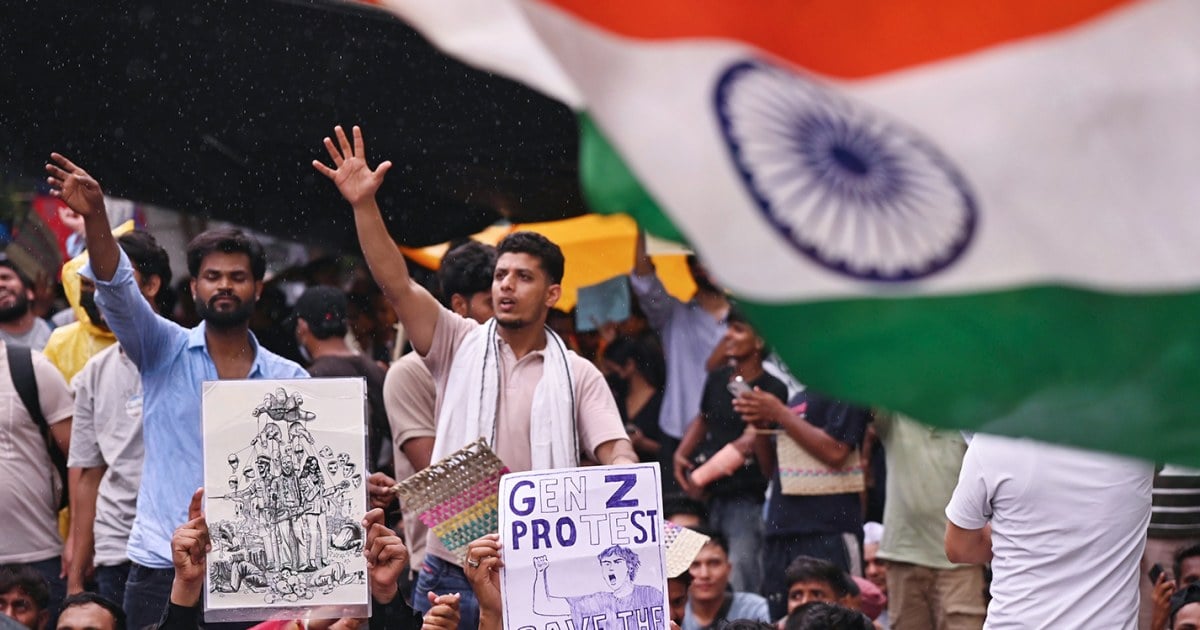
• The strike served as a catalyst for the "Cockroach" protests, which have spread across India and grown into a significant challenge for the government.
• These demonstrations highlight growing public unrest and a demand for systemic change or specific policy grievances led by Wangchuk.
Sonam Wangchuk halted strike amid concerns about ‘possible violence’ in India as protest movement urges demonstrations across country on Friday over police brutalityIndian “cockroach” activist Sonam Wangchuk ended a 26-day hunger strike on Friday over an exam paper scandal that has spiralled into a wideranging youth-led protest against Narendra Modi’s government, with protesters continuing to call for the education minister to resign.Wangchuk said on social media that he ended the hunger strike in Delhi in the presence of two federal ministers at the urging of scores of members of parliament, and after “a long negotiation on various conditions and in view of possible violence in the country”. He did not elaborate on the talks but promised to lay out details in a video soon. Continue reading...
• The article examines the historical impact of landmark hunger strikes in India, ranging from the revolutionary actions of Bhagat Singh to the contemporary protests of Sonam Wangchuk.
• It analyzes how these acts of self-sacrifice have been used as political tools to drive social reforms and influence national public movements.
• These events are highlighted as pivotal moments that changed the course of Indian history by challenging authority and demanding systemic change.
• Indian activist Sonam Wangchuk has been hospitalized after completing a 20-day hunger strike.
• Wangchuk initiated the fast to demand the resignation of India’s education minister, citing alleged irregularities in medical examinations.
• The protest highlights growing concerns over transparency and fairness within the national medical testing system.
• Engineer-turned-activist Sonam Wangchuk has led a hunger strike for 21 days to protest in Ladakh, supported by the Cockroach Janta Party (CJP).
• The movement has gained significant traction among Gen-Z protesters, evolving into a massive social media trend on Instagram despite lacking a traditional political structure.
• While some political commentators dismiss the protesters as naive rookies, the movement represents a shift in how grassroots activism is organized and amplified.
• Activist Sonam Wangchuk has announced he will end his indefinite hunger strike on July 20.
• The decision comes as his fast entered its 20th day, with the conclusion tied to his participation in a planned march to Parliament.
• This action underscores Wangchuk's commitment to his cause, though he lightheartedly remarked he would "come back as a ghost" if the march lacked sufficient participation.