• India and Japan signed a Memorandum of Cooperation (MoC) and other agreements focused on defense, technology, and investment to strengthen their strategic partnership.
• In international diplomacy, Salman Khurshid will represent the Congress party at the state funeral of Ayatollah Ali Khamenei in Iran.
• A massive overnight Russian attack on Kyiv resulted in at least 17 deaths and over 90 injuries, marking a significant escalation in violence.
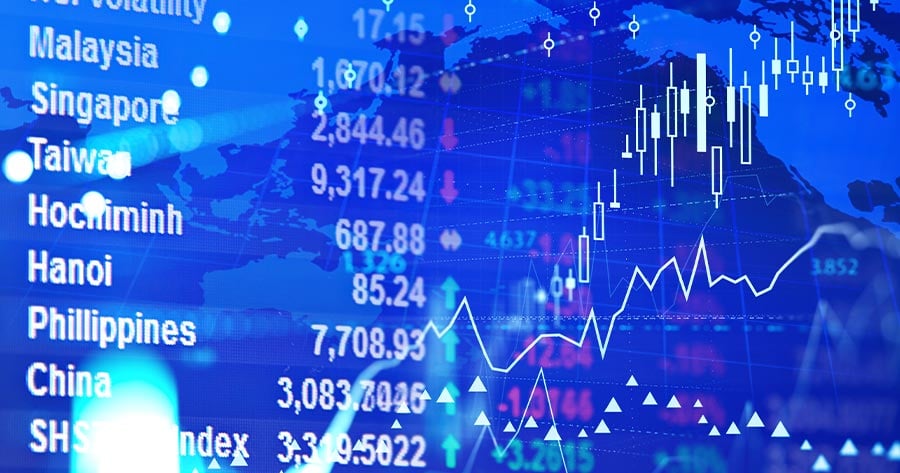
• Asia-Pacific stock markets showed mixed performance as investors monitored ongoing U.S.-Iran negotiations and anticipated upcoming U.S. employment data.
• Regional indices saw varied movements, with Australia's ASX 200 rising slightly to 8,827.00 and Shenzhen's SZI growing by 0.85% to 15,946.72.
• Conversely, markets in South Korea, Hong Kong, and Shanghai experienced declines, with Hong Kong's HSI contracting by 0.64% to 22,879.80.
• Asian stock markets showed mixed performance on June 30, with Japan's Nikkei 225 remaining volatile and the Topix falling 0.65%.
• South Korea's Kospi initially surged 1.17% at the open but reversed its gains to trade 1% lower, while the small-cap Kosdaq declined 0.41%.
• Other regional indices remained relatively stable, with Australia's S&P/ASX 200 trading largely unchanged and Hong Kong's Hang Seng index futures dipping below 23,026.68.
• The Indian stock market enters the week with the Sensex closing at 77,100.47 (up 0.39%) and the Nifty at 24,056 (up 0.18%).
• A primary focus is the ongoing negotiation of a trade pact between India and the US, highlighted by a recent two-day visit to New Delhi by representative Greer.
• The deal is critical for strengthening bilateral economic ties, though it faces hurdles as India seeks lower tariffs while the US demands greater market access for American products.
• Asian currencies remained steady as traders monitored the stability of a fragile ceasefire in Iran and prepared for a high-volume week of economic data.
• Investors are focusing on a dense regional calendar featuring China’s manufacturing activity, Japan’s Tankan business survey and PMI readings, and inflation data from Indonesia.
• Additional key reports are expected from South Korea regarding trade and industrial output, as well as India’s industrial production figures.
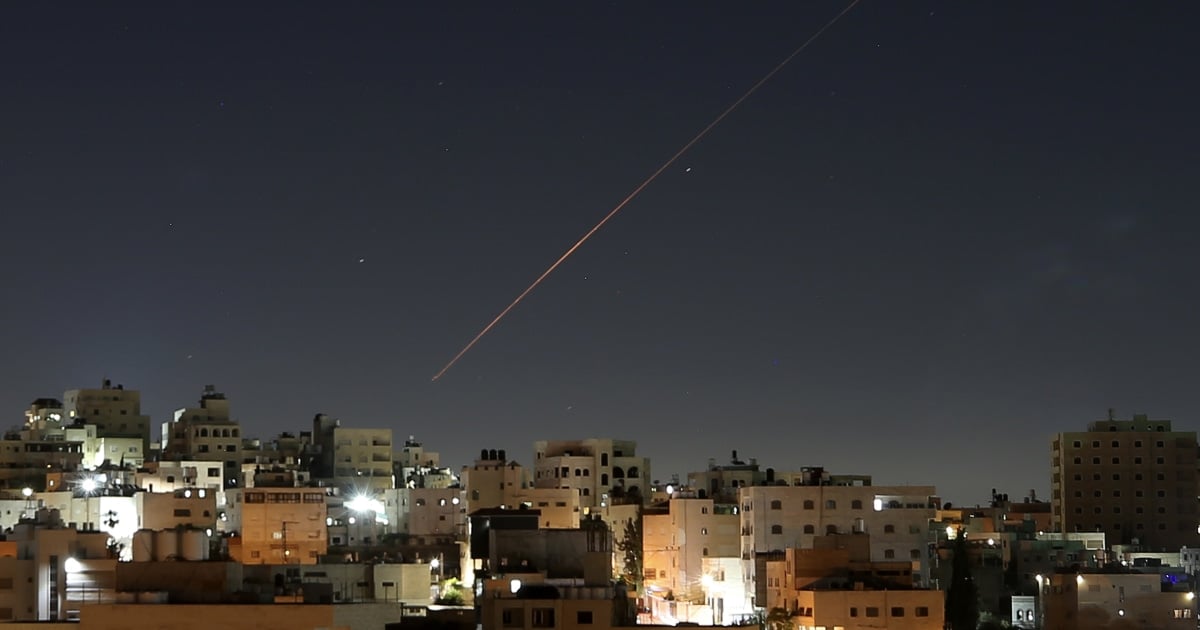
• Iran launched missiles and drones targeting U.S. military bases in Bahrain and Kuwait following recent U.S. strikes on Iran's southern coast.
• The attacks signal a breakdown of the ceasefire in the strategically critical Strait of Hormuz, escalating tensions between the two nations.
• Oman’s foreign ministry has officially condemned the violence, urging both sides to prioritize diplomacy and restraint to prevent further regional instability.
US president dismissed Iranian media reports agreement was close, despite earlier suggesting a deal could be signed this weekendMiddle East crisis – live updatesProspects for an immediate end to the war between Iran and the US remained uncertain on Friday amid a chaotic series of conflicting claims and counter-claims by US and Iranian officials about ongoing negotiationsDonald Trump seemed to distance himself from his earlier comments that suggested a preliminary agreement could be signed as soon as this weekend, with a series of angry social media posts describing the Iranians as “very dishonorable people to deal with”. Continue reading...
Iran says US attacks make ceasefire ‘practically meaningless’. Plus, Trump says ‘I love the inflation’ when asked about jump to 4.2%Good morning.Has the ceasefire collapsed yet?What is the status of negotiations? Talks to turn the ceasefire into a durable peace deal have stalled for weeks, with periodic flare-ups as both sides continued to launch limited strikes and trade blame for violating the truce.What do the two side want? Iran seeks the lifting of international sanctions, the unfreezing of billions of dollars in assets, and control over the strait of Hormuz. Trump has said any future peace deal must prevent Iran from developing a nuclear weapon, which Tehran denies it is seeking to do.This is a developing story. Follow our live coverage here.What did Gates say? “I support the release of all the Epstein files and sincerely hope that, through your efforts and those of others advocating on their behalf, the survivors of Epstein’s crimes can get the justice that they deserve.” Continue reading...
US launches second round of airstrikes on Iran, and Tehran responds by targeting Bahrain, Kuwait and JordanUS strikes Iran for second day, as ceasefire appears close to collapseWelcome to our live coverage of the conflict in the Middle East.The US has launched a second round of airstrikes, after Donald Trump warned that Tehran would “pay the price” for stalled negotiations, and Iran responded with strikes targeting Bahrain, Kuwait and Jordan.US Central Command said it had “completed” its latest round of airstrikes just before sunrise in Iran. It said the strikes targeted “Iranian military surveillance capabilities, communication systems and air defense sites,” and were carried out by the US air force, Marines and Navy.The sounds of explosions echoed around Tehran, the port city of Bandar Abbas and other southern areas along the strait of Hormuz.Iran responded by launching strikes on Bahrain, Kuwait and Jordan.Kuwait closed its airspace as its air defences fought off the attack. Kuwait’s directorate general of civil aviation said flights were being diverted to other airports, without elaborating.Iran’s Islamic Revolutionary Guard Corps said it had fired ballistic missiles at a US command centre in Jordan, according to state media.Iran’s UN envoy said the US should refrain from threats of force if it wants a deal.Israel early on Thursday warned residents in the north to seek shelter after the detection of suspected incoming fire from Lebanon.The international benchmark for crude oil traded above $93 a barrel on Wednesday, up more than 25% since the start of the war. Continue reading...
• Israel's air force launched strikes against targets in Iran following a series of escalating military exchanges between the two nations.
• Donald Trump has urged both sides to cease hostilities, calling for a return to peace and diplomacy to avoid further violence and destruction.
• The strikes occur while negotiators are reportedly working with international partners to secure a peaceful diplomatic solution to the ongoing conflict.
The arch-enemies’ exchange had the potential to derail the push for an end to the broader Middle East conflictMiddle East crisis – live updatesIsrael and Iran have returned to active war for the first time since a ceasefire was agreed two months ago in an exchange of rocket fire that threatened efforts to end the conflict.Donald Trump, who started the war in February alongside Israel but has since attempted to present himself as a mediator – told the two sides to stop shooting and said “final negotiations” on peace were proceeding. By late afternoon on Monday, the attacks had stopped. Continue reading...
• South Korea's Kospi index reached a record high on Monday, bolstered by a more than 3% surge in Samsung shares, which also hit an all-time high.
• The rally occurred despite mixed trading across Asia-Pacific markets as investors reacted to ongoing uncertainty regarding U.S.-Iran negotiations.
• President Trump signaled a cautious approach to ending the conflict, stating he was in "no hurry" to strike a deal after four months of tension.
President’s remarks indicate the two countries remain far apart over initial deal to end warAfter 88 days of near-total internet blackout in Iran, long-delayed messages, images and poems flooded phones and social media feeds at about 5pm on Tuesday, when still-limited connectivity flickered back to life.The first reactions, however, were not celebratory. Many new posts were threaded with scepticism, anxiety and anger.The Israeli military declared a new swathe of southern Lebanon a combat zone and said residents in the area should move north, warning it would act “with great force” against the Iran-backed Hezbollah in the zone. The statement on Wednesday appeared to signal a further escalation after more than 120 strikes hit Lebanon’s south and east on Tuesday, despite a ceasefire.The major Lebanese city of Tyre has come under constant Israeli bombardment, according to local media. The Israel Defense Forces (IDF) said it is hitting Hezbollah targets in the ancient coastal city in southern Lebanon, a day after issuing a warning forcing thousands of people to leave Tyre and surrounding areas. Lebanon’s official National News Agency reported two people were killed in Tyre in an Israeli drone strike on Thursday morning. Continue reading...
• U.S. stocks were subdued in choppy trading on May 27, with the Dow slightly higher while the S&P 500 and Nasdaq were little changed as investors waited for clarity on Middle East negotiations.
• The live market coverage said sector moves were mixed, with AI-linked and chip stocks continuing to outperform even as several large-cap technology names slipped.
• The moves matter because Wall Street is balancing earnings-driven stock selection against macro risks, including geopolitical uncertainty and interest-rate expectations.
• Asia-Pacific markets traded mixed on Wednesday as investors reacted to recent U.S. military actions in Iran and potential ceasefire talks.
• Stocks in Japan and South Korea initially hit record highs before paring gains as traders weighed geopolitical tensions against the possibility of a U.S.-Iran deal.
• Market sentiment was partially bolstered by strong performance in U.S. technology stocks, which pushed Wall Street indexes to record closing levels.
• The Sensex and Nifty are expected to experience volatility on May 27, 2026, driven by escalating tensions between the US and Iran.
• Nifty has slipped below its 50-day EMA but continues to test the upper band of the 23,200-23,850 breakout zone.
• Market activity shows selling pressure in Private Bank, Realty, and Consumer Durable indices, while Metal, FMCG, and Auto stocks saw selective buying.
• Asia-Pacific markets traded higher, with notable gains including South Korea's Kosdaq (over 3%), Kospi (0.52%), Hong Kong's Hang Seng (0.66%), and China's CSI 300 (0.78%).
• Investors are reacting to diplomatic efforts regarding a U.S.-Iran peace deal, though tensions remain as Tehran intends to keep its enriched uranium stockpile domestically.
• Economic data showed core inflation dropped to 1.4%, falling below both the previous March reading of 1.8% and the 1.7% forecast by Reuters economists.
Trump says he could strike Iran again as Tehran threatens ‘new fronts’ in war if an attack takes placeTrump threatens ‘a big hit’ if Tehran does not make deal soonWelcome to our live coverage of events in the Middle East.Donald Trump warned the US may strike Iran again – a day after he said he had held off a major assault in hopes of a peace deal – but Tehran’s army threatened to open “new fronts” if he went ahead.The US Senate has advanced a war-powers resolution that would end the Iran war unless Trump obtains Congress’ authorisation. The vote on a procedural measure to advance the resolution was 50 to 47, as four of Trump’s fellow Republicans voted with every Democrat but one in favour. Three Republicans missed the vote.The Israeli military launched a series of strikes across Lebanon, killing 19 people, according to the Lebanese health ministry. One strike, in the town of Deir Qanun al-Nahr in the Tyre district, killed 10 people including three children and three women, the ministry said.The Israeli army in turn said that it intercepted a drone fired from Lebanon. Israel and Lebanon’s central government have twice extended a US-brokered ceasefire, but Israel says it does not apply to its attacks on Hezbollah.Israeli authorities said 430 activists aboard a Gaza-bound aid flotilla were taken to Israel after their vessels were intercepted in international waters near Cyprus. Sailing from Turkey last week, the Global Sumud Flotilla is the latest in a string of attempts by activists to breach Israel’s blockade of the Palestinian territory, with the last convoy intercepted by Israeli forces last month.Russia’s deputy foreign minister, Sergei Ryabkov, said Moscow was ready to help with talks between the US and Iran to end the war, according to the Russian Tass news agency. His remarks came as the Russian president, Vladimir Putin, held talks with Chinese leader Xi Jinping in Beijing.The United Arab Emirates was rattled by a drone attack on its Barakah nuclear power plant last week. On Tuesday the UAE said it originated from Iraqi territory, where Iran backs groups accused of launching attacks on Gulf nations in the war. The UN Security Council on Tuesday condemned the attack. Russia, which often defends Iran, joined the other members.Two Chinese tankers laden with oil exited the strait of Hormuz on Wednesday, according to shipping data. Continue reading...
• President Trump arrived in Beijing for a two-day summit with Chinese leader Xi Jinping on May 14, 2026, amid geopolitical tensions including the ongoing Iran war that began in February and disputes over Taiwan's status.
• Xi warned Trump that mishandling Taiwan could lead to "an extremely dangerous situation," while Trump stated that Xi ruled out providing military equipment to Iran during their talks, calling it "a big statement."
• The summit focuses on trade demands, with Trump pressing Xi to "open" China to U.S. business, though breakthrough agreements appear unlikely as both sides prioritize stability over major concessions.
• President Trump and Chinese leader Xi Jinping held high-stakes talks in Beijing focusing on resolving escalating trade tensions, technology competition, and coordinating responses to Middle Eastern developments.
• The two leaders discussed tariff rollbacks, semiconductor supply chain restrictions, and potential joint initiatives on artificial intelligence regulation, with both nations seeking to avoid further economic deterioration.
• The summit marks a critical pivot point in US-China relations, with observers noting that agreements reached could reshape global trade dynamics and influence the trajectory of broader geopolitical competition.
US president says he and his Chinese counterpart have ‘known each other for a long time’ and Xi is ‘great leader’Trump in Beijing – latest updatesFive key issues for Xi-Trump summitThe US president, Donald Trump, has met China’s leader, Xi Jinping, for a momentous summit that will pack negotiations on global conflict, international trade and the future of artificial intelligence into just over 24 hours.Trump arrived at the Great Hall of the People, an imposing Mao-era building that borders the western edge of Tiananmen Square, on Thursday morning for an opening ceremony followed by an hour of face to face talks with Xi. Continue reading...
• US President Donald Trump arrived in Beijing on May 13, 2026, for a state visit and high-level talks with Chinese President Xi Jinping addressing major bilateral and global issues.
• Key agenda items include US-China trade disputes, rare earth minerals supply chains, Taiwan's political status, artificial intelligence competition, and the ongoing Iran conflict.
• The summit represents a critical diplomatic engagement aimed at managing US-China strategic competition and reducing military escalation risks.
Ahead of the crucial talks, security has been heightened in Beijing, with the US president set to meet Xi at the Great Hall of the PeopleThe Trump-Xi summit will span two days. It was originally scheduled for late March or early April but was delayed due to the Iran war.Now that Trump is in China, here are some of the hazards the US president faces. Continue reading...
It will be the first time a US president has visited China in nearly a decade, with the last visit being Trump in 2017Hello and welcome to our live coverage of US politics.Donald Trump is scheduled to travel to China this week to meet with Xi Jinping, China’s leader. It will be the first time a US president has visited China in nearly a decade, with the last visit being Trump in 2017. But given all that has happened so far in Trump’s second term – a trade war and then an actual war with Iran that has led to oil and gas prices skyrocketing worldwide – the mood of this visit is likely to be quite different. Continue reading...
• U.S. President Donald Trump arrives in Beijing on Wednesday for two-day talks with Chinese leader Xi Jinping, marking their first face-to-face meeting in over six months amid strained ties.
• Discussions will cover Iran, Taiwan tensions, artificial intelligence, nuclear weapons, and potential extension of a critical minerals deal, according to U.S. officials.
• The summit aims to stabilize relations between the world's two largest economies, strained by ongoing U.S.-Israeli war with Iran, trade disputes, and tariff threats from Trump's first term.
US military boasts blockade of the strait of Hormuz will incapacitate Iran’s economy; Trump says negotiations could return to PakistanUS-Iran peace talks could resume in next two days, Trump saysWelcome to the Guardian’s continuing coverage of the crisis in the Middle East.The US military has said American forces have completely halted economic trade going in and out of Iran by sea through a blockade.An estimated 90% of Iran’s economy is fueled by international trade by sea. In less than 36 hours since the blockade was implemented, U.S. forces have completely halted economic trade going into and out of Iran by sea.”Donald Trump has said that talks with Iran could resume in Pakistan over the next two days, according to an interview with the New York Post. “Something could be happening over the next two days, and we’re more inclined to go there,” Trump was quoted as saying.US secretary of state Marco Rubio said Israel-Lebanon talks in Washington on Tuesday were a “historic opportunity”. He said that while every complexity would not be resolved immediately, he hoped the parties would begin to move forward.Lebanon’s president expressed hope that direct talks would lead to an end to his country’s “suffering” after war erupted again between Israel and Hezbollah last month. “I hope that the meeting in Washington... will mark the beginning of the end of the suffering of the Lebanese people in general, and those in the south in particular,” president Joseph Aoun said in a statement, adding that “stability will not return to the south if Israel continues to occupy its lands”.Lebanon’s top envoy to the US said the high-level diplomatic engagement between her country and Israel was “constructive,” but urged an end to the ongoing conflict between Israel and Iran-backed Hezbollah militants that has displaced thousands of Lebanese. After participating in Tuesday’s talks with Rubio and Israel’s ambassador to the US, Nada Hamadeh Moawad said she had “underscored the need to preserve our territorial integrity and state sovereignty”.The US will not renew a 30-day waiver of sanctions on Iranian oil at sea that expires this week officials told Reuters, as the US imposes a blockade on shipments from Iranian ports.UK prime minister Keir Starmer and French president Emmanuel Macron will co-host a summit in Paris on Friday focused on efforts to reopen the strait of Hormuz, Downing Street said. A spokesperson said: “The summit will advance work towards a coordinated, independent, multinational plan to safeguard international shipping once the conflict ends.”Trump criticised Italian prime minister Giorgia Meloni, a political ally, in an interview published on Tuesday for her unwillingness to help in the Iran war. “I’m shocked at her. I thought she had courage, but I was wrong,” he told Italian daily Corriere della Sera.Foreign ministers from Saudi Arabia, Pakistan and Egypt will meet Turkey’s top diplomat this week for talks on regional matters, a ministry source told AFP on Tuesday. “This is the third meeting of the four countries to discuss regional affairs, not specifically Hormuz,” said the source, who wished to remain anonymous.Hezbollah said it targeted 13 northern Israeli towns with rockets shortly after the start of Lebanese-Israeli talks in Washington. In a statement, the group said it targeted Kiryat Shmona, Metula and 11 other towns “with simultaneous rocket salvos” at 6.15pm.US treasury secretary Scott Bessent has said the underlying US economy remains strong and that growth could still exceed 3% or 3.5% this year despite the impact of the US-Israel war on Iran. Earlier on Tuesday, the International Monetary Fund (IMF) cut its growth forecasts for 2026 based on the impact of the war and said any further escalation in the conflict could trigger a global recession. Bessent however cast cuts in global growth forecasts and higher inflation projections by the IMF and World Bank as an overreaction. Continue reading...
• The tech-heavy Nasdaq and Dow Jones are on the brink of correction territory, defined as a 10% decline from recent peaks, with investors growing concerned the Iran conflict may cause lasting market damage beyond typical episodes.
• All three major stock indexes closed Friday with their fourth consecutive weekly loss: the Dow fell 2.1%, Nasdaq dropped 2.1%, and the S&P 500 tumbled 1.9%, according to FactSet data.
• The "TACO trade" (Trump Always Chickens Out), where investors bet Trump will reverse course during market selloffs, is looking increasingly suspect as the conflict deepens, with analysts warning that longer-term resolution becomes harder the deeper the conflict progresses.