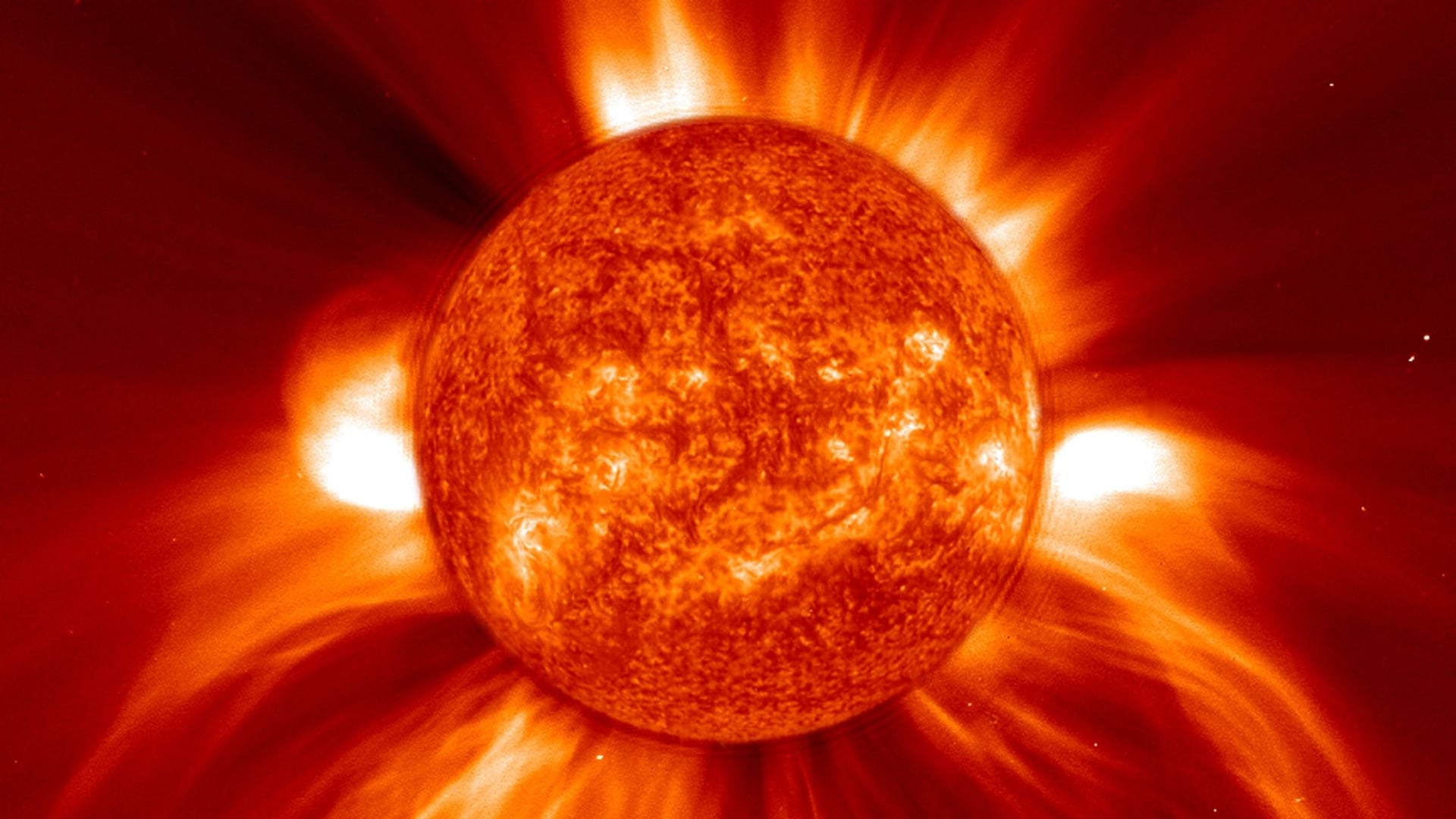
Figuring out what really counts as a galaxy could give us insights into dark matter and potentially shake up astrophysics, cosmology and particle physics, says columnist Chanda Prescod-Weinstein
Calls for Alexandra Căpitănescu’s Choke Me to be banned as campaigners say lyrics are ‘dangerous’ and ‘reckless’Romania’s Eurovision entry Choke Me has been labelled “dangerous” and “reckless” for appearing to glamorise sexual strangulation, an unsafe practice that can lead to brain injury and death.Campaigners against sexual violence said the entry, in which the words “choke me” are repeated 30 times during the three-minute song, was “playing fast and loose with young women’s lives”. Continue reading...
The US announced a 30-day easing of Russian oil sanctions on March 13, 2026, following a joint international release of record oil reserves that failed to curb barrel prices amid the Iran conflict. This move aims to alleviate rapidly rising energy costs for American consumers as global volatility persists. Despite the releases, oil prices remain elevated due to Iran's effective closure of the Strait of Hormuz, through which 20% of world traded oil passes. Analysts warn that prolonged war could exacerbate inflation and economic pressures in the US.
The United States announced a 30-day easing of sanctions on Russian oil on March 13, 2026, following a joint international release of record oil reserves that failed to lower barrel prices amid the Iran war. Global volatility from the conflict, now in its third week, exacerbates inflation pressures worldwide. This temporary measure aims to alleviate rapidly rising US fuel costs, though experts warn it may not suffice as Iran's Strait of Hormuz closure disrupts 20% of global oil trade.
The United States announced a 30-day easing of sanctions on Russian oil exports on March 13, 2026, aiming to alleviate skyrocketing fuel costs amid global supply disruptions from the Iran conflict. Despite a joint international release of record oil reserves this week, barrel prices remain elevated due to the Strait of Hormuz closure. The move seeks to stabilize markets affecting American consumers, where gasoline prices have surged 25% in two weeks. Energy Secretary cited 'extraordinary circumstances' in justifying the temporary relief, with monitoring for compliance.
Researchers at Texas A&M University have developed what they describe as the most challenging AI benchmark test to date, with results that contradict earlier expectations about artificial intelligence capabilities.[3] The comprehensive study involved a large team of scientists investigating how cutting-edge AI systems perform on extreme difficulty assessments as these models become increasingly sophisticated.[3] The findings suggest that current AI systems are achieving unexpected performance levels on this rigorous evaluation framework, providing important insights into the true capabilities and limitations of advanced machine learning models.[3]
A Colorectal Cancer Alliance survey finds only 50% of US adults know about at-home colorectal cancer screenings, contributing to it becoming the leading cancer killer for those under 50 with rising death rates. One-third of Americans, and nearly half under 45, report doctors dismissing stomach or bowel symptoms, while over 25% skip recommended screenings due to cost, fear, or lack of knowledge. More than 60% would screen if better informed of personal risk, prompting calls for awareness during National Colorectal Cancer Awareness Month. The nonprofit urges action to reverse trends where colorectal cancer deaths climb unlike most others.
Scientists at Texas A&M University created the most challenging AI test to date, involving over 50 collaborators, to evaluate advanced language models on complex reasoning tasks. Initial results showed even top AI systems struggling significantly, highlighting gaps in current capabilities despite acing simpler benchmarks. The benchmark, detailed in a peer-reviewed paper, pushes boundaries in AI safety and robustness research. Future iterations will incorporate multimodal challenges to further stress-test emerging models.