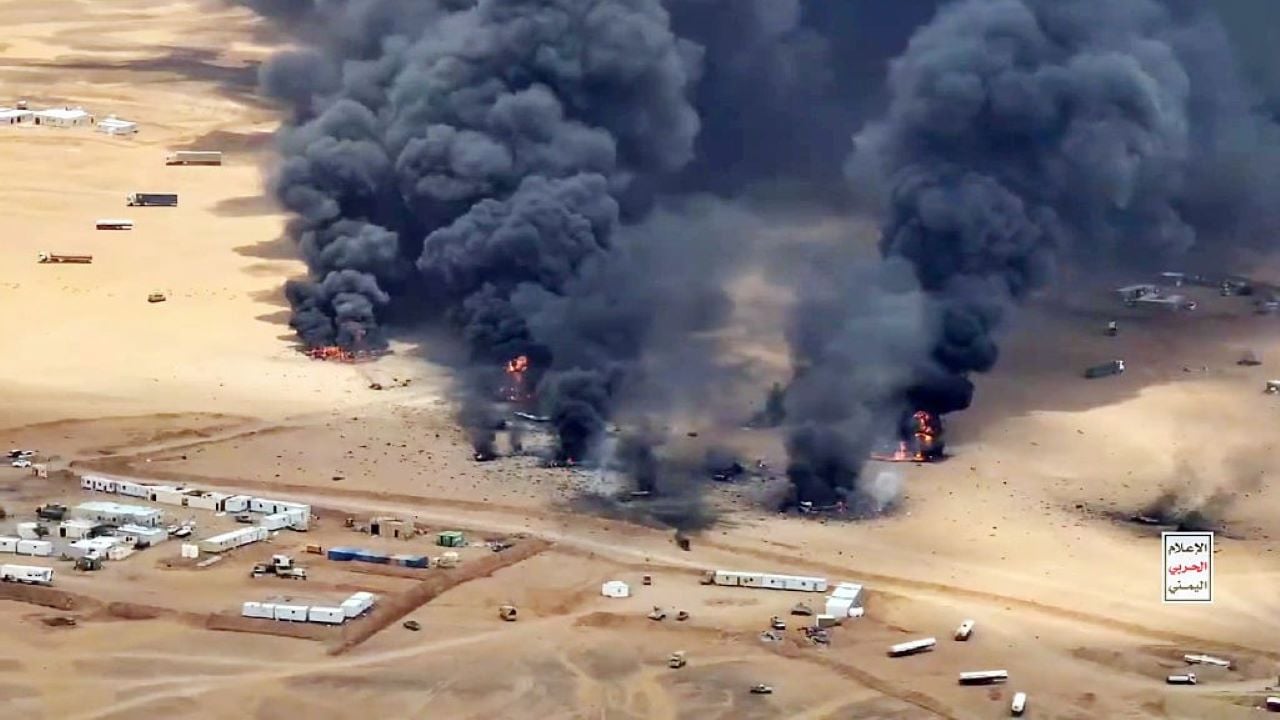
• US and Israeli forces conducted strikes Tuesday on major Iranian steel facilities, including the Mobarakeh Steel Company in Isfahan and the Khuzestan Steel Company, marking continued escalation of military operations.
• President Donald Trump stated American forces will withdraw from Iran within "two to three weeks," signaling a potential end to the ongoing military campaign that began last month.
• Iran reported at least 249 women and 216 children killed in US-Israeli attacks since the war's start, while Iranian Foreign Minister Abbas Araghchi rejected ceasefire proposals and demanded a complete end to hostilities.
• President Trump announced he is delaying threatened strikes on Iran's energy infrastructure, citing productive talks on ending the war and extending the deadline for Iran to reopen the Strait of Hormuz.
• Iranian leaders continue to deny any direct talks are taking place with U.S. officials, maintaining their public position on the dispute.
• The delay signals potential diplomatic progress while tensions remain high over regional shipping routes critical to global oil supplies.
• President Trump announced a 10-day pause in strikes on Iran's energy infrastructure through April 6, 2026, at 8:00 p.m. Eastern time, citing ongoing negotiations mediated by Pakistan under a 15-point framework.
• Trump disclosed that Iran sent ten oil tankers as a goodwill gesture, and Secretary of State Marco Rubio characterized Iran's clerical leadership as "religious fanatics" posing a global nuclear threat.
• Israel confirmed the killing of Iran's navy head responsible for Strait of Hormuz disruptions, while Iran launched emergency recruitment and lowered its draft age to 12, according to CBN News reporting.
• President Trump extended the strike deadline on Iran's energy sector while warning that failure to accept current negotiation terms would result in "far greater military consequences," according to White House statements.
• The White House confirmed ongoing negotiations with Iranian leadership despite military operations continuing at historic levels, with Iranian leadership described by Trump as "desperate to negotiate."
• Israel's military launched a wave of airstrikes targeting the heart of Tehran early on March 27, 2026, as confirmed by military statements, while smoke rose over Beirut.
• The strikes coincide with US President Donald Trump extending his deadline to bomb Iran's energy plants until April 6, 2026, after Iran's request, claiming talks are 'going very well' despite Tehran's denials.
• Trump referenced a 15-point US proposal to end the conflict, amid convulsing stock markets and Iran's insistence on no direct negotiations, heightening global tensions over the Strait of Hormuz closure.
US president says he is extending deadline for strait of Hormuz to reopen to 6 April; Houthis tell Lloyd’s List ‘no reason’ to prevent Saudi oil using Red Sea routeFull report: Trump extends deadline Analysis: Trump pitches peace plan but military buildups rarely veer to off-rampHello and welcome to our continuing live coverage of the US-Israel war on Iran and the consequences for the region, the world, and the global economy.Here are the latest developments:Donald Trump said he will extend – once again – his pause on his threat to attack Iran’s energy infrastructure for 10 days until 6 April, claiming that the request came from Tehran and that talks were going “very well”. The US president threatened last Saturday to would strike Iranian energy infrastructure if Tehran did not reopen the strait of Hormuz. Then, on Monday he postponed his threat for five days (until Friday), citing “very good and productive conversations” with Iran on ending the war (which Tehran dismissed as “fake news” designed to “manipulate” the oil markets). Now, he’s pushing that deadline back, again.The price of Brent crude also dropped following Trump’s latest announcement. Oil prices rose to their highest level this week, with Brent crude trading at roughly $108 a barrel after Trump’s cabinet meeting earlier on Thursday.Yemen’s Houthis have said there is no need to worry amid fears that if Donald Trump follows through on threats to seize Iran’s Kharg Island, Tehran may ask them to attack shipping in the Red Sea.A day after Tehran dismissed Trump’s 15-point ceasefire plan, the US president claimed that Iran was “begging to make a deal,” and that he wasn’t the one pushing for negotiations. Earlier, he told Tehran to “get serious soon” on negotiating a deal to end the war.Trump rejected reports that he was looking for an exit ramp, as oil prices soar and political pressure mounts to avoid the kind of drawn-out Middle East war he once spurned. “I read a story today that I’m desperate to make a deal,” Trump told reporters. “I’m the opposite of desperate. I don’t care.”A US proposal for ending nearly four weeks of fighting is “one-sided and unfair”, a senior Iranian official told Reuters on Thursday.However, Trump said Iran is allowing some oil tankers through strait of Hormuz as a sign of good faith for talks. He said that Iran allowed 10 oil tankers to pass through the strategic strait as a “present” to show it was serious about negotiations to end the war.The Pentagon is looking at sending up to 10,000 additional ground troops to the Middle East to give Trump more military options even as he weighs peace talks with Tehran, the Wall Street Journal is reporting, quoting defence department officials with knowledge of the planning.The Israel Defence Forces’ chief of staff has warned that the military will “collapse in on itself” as it faces increasing demands and a growing manpower shortage while fighting on multiple fronts, according to Israeli media reports.A Thai-flagged cargo ship that was hit by unknown projectiles in the strait of Hormuz earlier this month has run aground off Iran’s Qeshm Island, Iran’s Tasnim news agency said on Friday. Continue reading...
• Iranian strikes on US bases in the Middle East prompted thousands of American troops to relocate to hotels and office spaces throughout the region on March 26, 2026.
• The attacks represent an existential threat to Gulf states, which urged the UN to intervene amid escalating regional tensions.
• This displacement highlights vulnerabilities in US forward bases, forcing operational shifts and increased reliance on civilian infrastructure during ongoing conflict.
• White House Press Secretary Karoline Leavitt stated on March 25, 2026, that President Trump will hit Iran harder if Tehran does not accept military defeat.
• The US is closely tracking efforts to secure oil tanker passage through the Strait of Hormuz amid Iranian threats.
• This escalation threat underscores Trump's strategy to force Iran into capitulation, potentially prolonging the conflict without regime change.
• Iran's military dismissed US diplomatic overtures and launched intensified attacks on Israel and Gulf targets on March 25, with one Iranian drone striking Kuwait International Airport and igniting a fuel tank fire, while multiple drones were also intercepted in Saudi Arabia and Bahrain.
• Iran maintained its control over the Strait of Hormuz and allowed safe passage only to vessels not involved in "aggression," while continuing daily missile and drone attacks against Israel that Israeli forces said they intercepted with missile defense systems.
• Despite the military escalation, Iranian officials remained concerned about Israeli airstrikes that have reportedly killed senior Iranian officials, and Pakistan offered to mediate between the US and Iran as international parties sought de-escalation.
Iran Guards said they fired missiles at Israel and US forces in bases in Kuwait, Jordan and Bahrain; crude oil prices fall sharply in early tradingTrump’s rehashed 15-point Iran plan unlikely to appease TehranDisruptions to international fertiliser supplies caused by the closing of the strait of Hormuz will cause food scarcity and high prices, the World Trade Organisation’s deputy director general, Jean-Marie Paugam, told Agence France-Press.A third of the world’s fertilisers normally transit the strait, which has been virtually closed by Iran since the start of the war. Continue reading...