The average traditional funeral now costs £4,623 – up 1.3% since January – says report from Pure Cremation The war in Iran is pushing up the cost of living in the UK but it is also driving up the “cost of dying” as higher gas prices feed through to funerals.A new report says the average cost of a funeral in Britain is running ahead of inflation, with the war seemingly partly to blame as it has pushed up the price of gas used in crematoria. Continue reading...
• The American Heart Association released a warning that 60% of US women are projected to develop cardiovascular disease by 2050, reflecting trends in aging populations and risk factor prevalence.
• The projection underscores disparities in cardiovascular health outcomes between men and women and highlights the growing public health burden of heart disease.
• This forecast emphasizes the need for enhanced prevention strategies, early intervention programs, and targeted health policy initiatives focused on women's cardiovascular health.
• The International Monetary Fund's Executive Board concluded its 2026 Article IV Consultation on April 2, stating there is "little room to cut interest rates in 2026" despite moderating inflation expectations.
• The IMF projects U.S. GDP growth will reach 2.4% in 2026, up from 2.0% in 2025, while the federal funds rate is forecast to decline only from 3.6% to 3.4% — representing barely a single rate cut for the entire year.
• Inflation is on track to hit the 2% target by early 2027, but the IMF warns that growth will peak this year and slowly decay toward 1.8%, while U.S. debt continues climbing annually.
• The US-Israeli war on Iran, initiated February 28, 2026, with strikes on leadership and nuclear facilities, has led to Iran's Strait of Hormuz closure, rivaling 1970s oil crises.
• Supreme Leader Ali Khamenei's killing sparked Iranian strikes on Israel and US bases, disrupting 20% of global oil transit and surging prices by 40%.
• US markets face inflation risks, with experts warning of recession if chokepoint remains closed beyond two weeks.
• The United Nations reported on April 4, 2026, that 25 million Sudanese face famine risk due to ongoing civil war blocking aid routes in Darfur and Khartoum.
• US Ambassador Linda Thomas-Greenfield announced $300 million in emergency food assistance during a Security Council session, bringing total US aid to $1.2 billion since 2023.
• Conflict between Sudanese Armed Forces and Rapid Support Forces has displaced 8.5 million, making it the world's largest humanitarian crisis, per UN estimates.
As Israel expands its invasion of southern Lebanon, people are having to bury their dead in temporary gravesIn Lebanon, the dead are usually given one last glimpse of their home town before they are laid to rest. Hoisted high above the heads of the living, their casket is slowly marched through the streets where they grew up.It is the hands of their loved ones that guide them into their final resting place, already dug, and gently sprinkle dirt on their body. Continue reading...
Lack of regulation for specialist classes leaves UK fitness enthusiasts at risk, say professional bodiesThe boom in reformer pilates has created a “wild west” of studios where poor regulation has resulted in inexperienced teachers and a rise in injuries, professional standards bodies have warned.Pilates is not formally or legally regulated, and as its popularity has surged, industry experts say, so too has the growth of packed reformer-based classes often led by instructors with limited training. Continue reading...
Use of unmanned ground vehicles has grown exponentially since 2024 turning the war into a technological contestVictor Pavlov showed off Ukraine’s newest and most versatile weapon: a battery-powered land robot.The unmanned ground vehicles come in various shapes and sizes. One runs on caterpillar tracks and resembles a roofless milk float. Another has wheels and antennas. A third carries anti-tank mines. Since spring 2024 their use has grown exponentially. Continue reading...
Russian advances slowing, thinktank’s data shows; 14 killed in Ukraine in massive drone and missile salvo. What we know on day 1,501Russia’s army recorded almost no territorial gains on the frontline in Ukraine in March for the first time in two-and-a-half years, according to analysis of data from the Institute for the Study of War (ISW) conducted by Agence France-Presse. The Russian army has been slowing in its advances since late 2025 – because of Kyiv’s localised breakthroughs in the south-east of the country. Across the entire frontline, the Russian army seized only 23 sq km (8.9 sq miles) in March, losing territory in some areas, according to the analysis. This figure excludes infiltration operations conducted by Russian forces beyond the frontline, as well as advances claimed by the Russian side but neither confirmed nor denied by the ISW.The Russian army made 319 sq km of gains in January and 123 sq km in February, which was then the smallest advance since April 2024. Its advance in March was the smallest since September 2023. The ISW attributed the slowdown to Ukrainian counteroffensives, but also to “Russia’s ban on using Starlink terminals in Ukraine” and “the Kremlin’s efforts to restrict access to Telegram”. The messaging app – very popular among Russians, including those fighting on the front – has been barely usable in recent months due to blocks imposed by the authorities. As in February, Russia lost ground on the southern section of the frontline, between the Donetsk and Dnipropetrovsk regions.Russian strikes killed 14 people in Ukraine on Friday, officials said, as Moscow launched the latest in an increasing number of daytime barrages. Moscow has been firing aerial broadsides at Ukraine throughout its more than four-year invasion, mostly at night, but in recent weeks has stepped up daytime attacks. The Russian military used more than 500 drones and dozens of missiles in its salvo on Friday, according to the Ukrainian air force.Russia’s Baltic oil export hubs at Ust-Luga and Primorsk remain unable to handle shipments after a series of Ukrainian drone attacks, prompting the country’s refineries to find alternative routes for export, industry sources said on Friday. The attacks have damaged port infrastructure and continued through the last two weeks of March, with at least five strikes on Ust-Luga in the space of 10 days. Sources said the export restrictions, along with disruptions at large refineries, could lead to a decrease in oil production in Russia. Traders said refineries had been unable to deliver diesel fuel to Primorsk for export since 22 March, leaving refineries in European Russia and Siberia without their most viable export route. Traders said refineries were having to consider more expensive rail transport routes to other export terminals.Zelenskyy has called on lawmakers to pass key legislation next week to avert a funding crisis, help Ukraine fight the war against Russia, and enact key reforms required for EU accession. Due to lagging reforms and slow legislative progress in late 2025 and early this year, Ukraine missed deadlines to unlock billions from its key lenders, economists said. With the need for external financing standing at $52bn this year – equivalent to about a quarter of annual economic output – the budget situation is desperate. “I have a list of key draft laws that are critical for securing funding,” the Ukrainian president said in remarks released on Friday. They range from strengthening the court system to reforming energy sector procedures. “I believe that members of parliament from all parties must understand the importance of these bills for Ukraine’s budget,” said Zelenskyy, who has a majority in parliament but its relations with his government have soured. Continue reading...
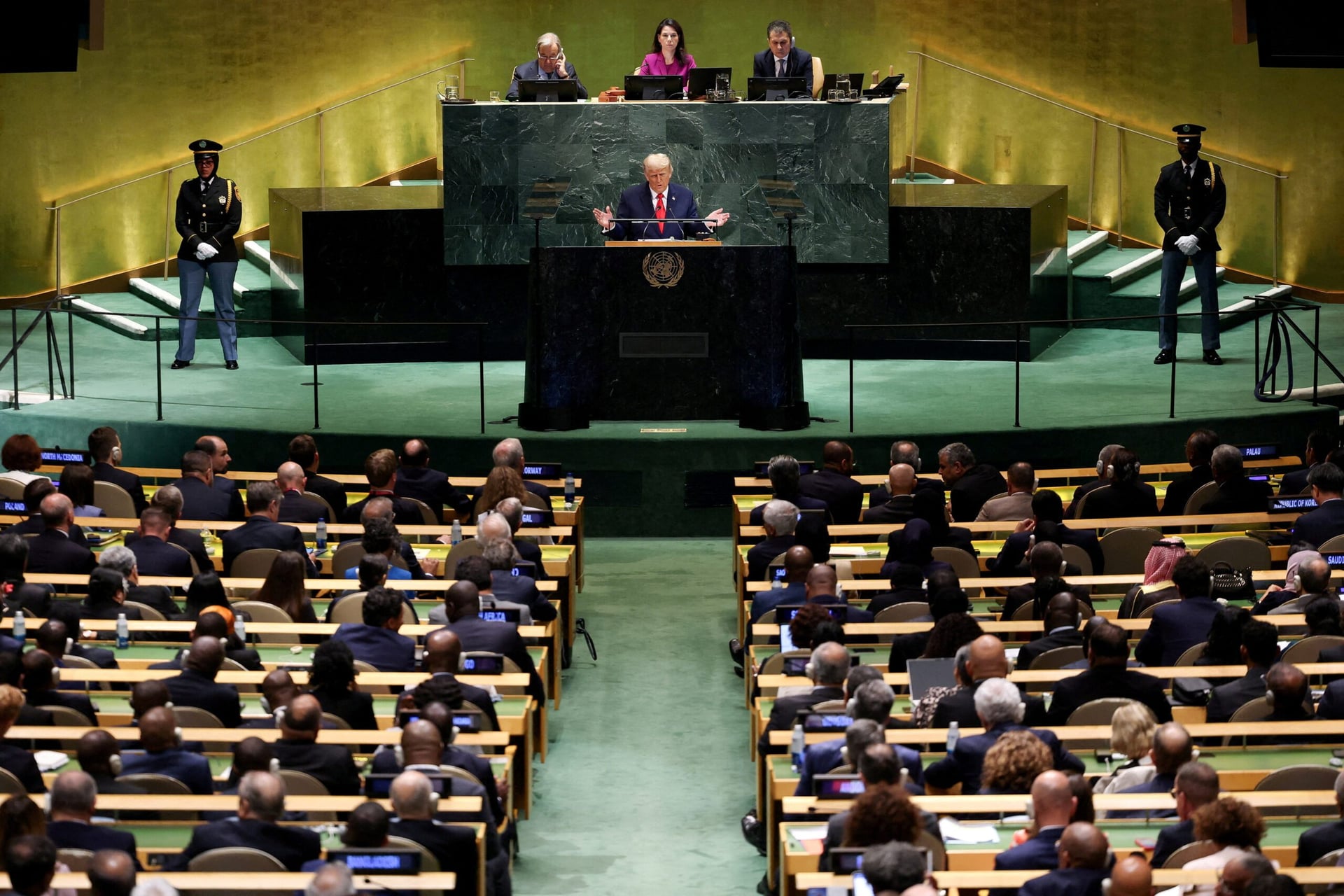
• President Trump stated US objectives in the Iran conflict are nearly achieved yet simultaneously threatened even more intense strikes in the weeks ahead, creating confusion about American strategy.
• With no declared exit strategy and rising fears of Iranian retaliation, analysts question whether the military campaign is winding down or entering a more dangerous phase.
• UK-led talks planned for next week in London will include plans for possible military actions to clear the Strait of Hormuz, with the US not involved in these negotiations.