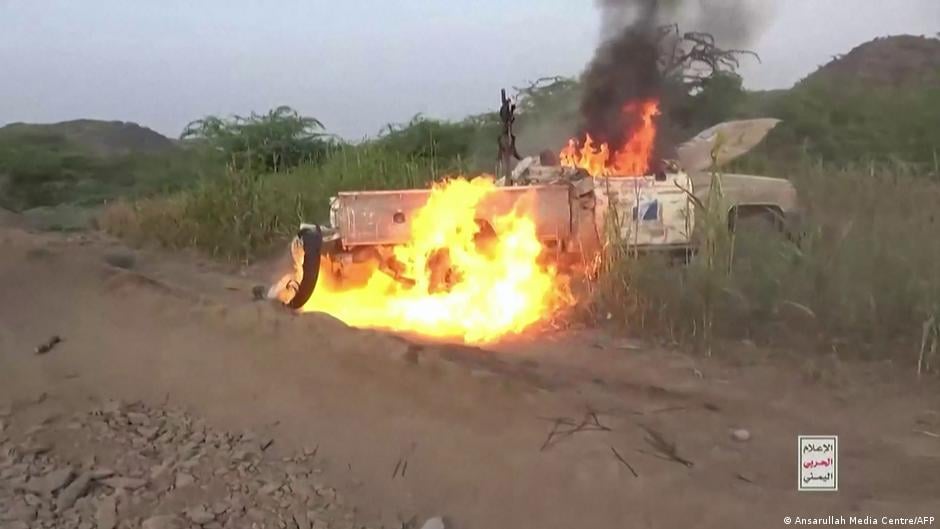
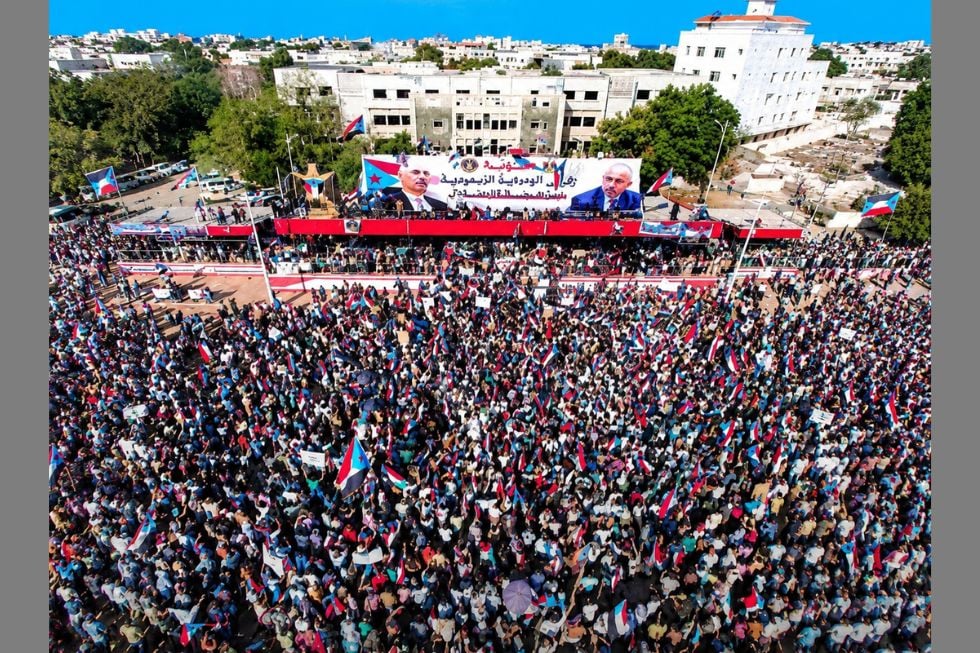
• Iran-backed Houthi rebels have claimed responsibility for deadly strikes targeting government military camps across two eastern provinces in Yemen.
• The attacks signal an escalation in hostilities following a tenuous 2022 truce between the Houthis and the Saudi-led coalition.
• This surge in violence is driven by persistent factional rivalries and Houthi efforts to breach a Saudi-led blockade that has worsened the regional humanitarian crisis.
• A new front of conflict is reopening in Yemen, driven by the broader regional war between the United States and Iran.
• While neither Saudi Arabia nor the Houthi rebels currently desire prolonged hostilities, both risk being trapped in an escalatory spiral.
• This development is critical because it threatens to destabilize the region further, making a peaceful exit strategy for the primary actors more difficult to achieve.
Yemeni sources say Saudi Arabia is preparing sea and possible land attack to break chokehold on oil exports through Red SeaSaudi Arabia is preparing for a major military offensive against the Houthis by sea and possibly by land in central Yemen, Yemeni sources believe, in a move to break the chokehold on its oil exports through the southern Red Sea.Saudi forces have been seen withdrawing from the east of Yemen in what could be preparation for a land offensive. At the same time, Riyadh is trying to organise a naval coalition to protect shipping from Houthi attacks in the Red Sea and the Bab al-Mandab strait. Continue reading...
• A new war in Yemen is looming, with signs indicating a re-eruption of conflict is imminent.
• Recent developments have strengthened anti-Houthi forces in the country, potentially altering the balance of power.
• The Houthis have shifted from rhetoric and mobilization to military action, escalating tensions.
• The Southern movement in Yemen is currently facing a critical internal struggle, with internal divisions posing a greater threat to their goals than external opposition.
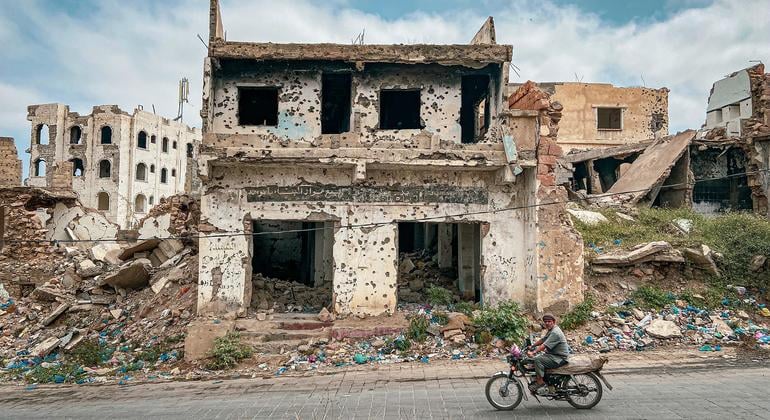
• This political instability occurs against a backdrop of severe humanitarian suffering, characterized by widespread displacement and significant human rights violations.
• The situation highlights the fragility of Southern aspirations as the movement struggles to maintain a unified front amidst a broader national conflict.
Conflict continues across the region as White House announces nuclear technology agreement. Plus, the artist who flattened a Tesla with a tankGood morning. The US has signed a landmark nuclear deal with Saudi Arabia that could allow the kingdom to enrich uranium in the future. The deal will be submitted to Congress for review, where it could face opposition among lawmakers who fear a lack of monitoring safeguards.In lengthy talks stretching over more than one administration, the US has feared that Riyadh would look elsewhere for nuclear technology if the US did not provide what it wanted. Saudi Arabia has long said that if it does not partner with the US, it could do so with China or Russia, which have different proliferation standards.Why is a uranium deal with Saudi Arabia controversial? The full details of the deal have yet to be released, but it comes as the US’s war with Iran is being fought in part to prevent Tehran enriching uranium domestically and make it near impossible for Iran to build a nuclear weapon. Saudi Arabia has in the past said it would need a nuclear weapon if Iran acquired one. Kenneth Roth has analysed why Trump would agree it right now.What are the latest developments in the war? The US military launched its 12th successive night of strikes, which have now widened to western and central Iran. In attacks lasting five hours, the US claims to have struck military targets including maritime capabilities, missile and drone storage facilities, coastal surveillance sites and air defense assets. Yemen’s Houthi militia also attacked two Saudi Arabian oil tankers, the Iran-aligned group said on Thursday, with a Saudi news agency later confirming one of the vessels was ablaze in the Red Sea. Continue reading...
• Yemen’s Houthi rebels claim to have attacked tankers in the Red Sea, asserting that the vessels violated their established blockade.
• The US military has launched its 12th consecutive night of strikes against Iranian-linked targets to degrade Tehran's ability to threaten shipping in the Strait of Hormuz.
• In a significant diplomatic shift, the US has signed a nuclear deal with Saudi Arabia to stabilize regional security.
US military says it is degradimg Tehran’s ability to threaten ships in strait of Hormuz; Houthis say tankers violated their blockade; US signs nuclear deal with Saudi ArabiaWelcome to our live coverage of the continuing crisis in the Middle East.The US military announced on Thursday evening it had began a 12th consecutive night of strikes against Iranian military targets at the direction of Donald Trump. Continue reading...
• The conflict in Yemen continues to be exacerbated by the Southern Transitional Council's (STC) renewed demands for an independent southern state and a surge in attacks by al-Qaeda in the Arabian Peninsula (AQAP).
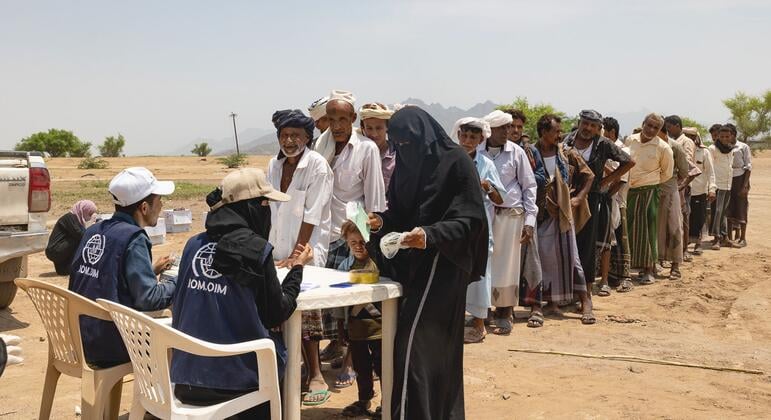
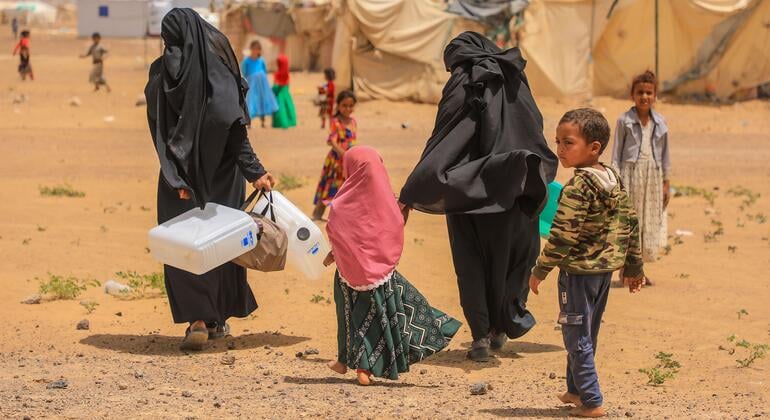
• A severe humanitarian crisis persists, with 21.6 million people requiring urgent aid, including 11 million children.
• Over 4.5 million individuals remain displaced, highlighting the devastating human cost of the prolonged instability.
Plane bringing Houthi delegation home from Tehran had to divert after Yemeni government bombed Sana’a airportMiddle East crisis live – latest updatesIranian flights to and from Yemen are an unacceptable violation of the country’s sovereignty, the vice-president in Yemen’s Saudi-backed, UN-recognised government has said.Abdullah al-Alimi said in an interview that the planes contained equipment for the Houthi movement, which he said had transformed from merely a domestic threat into a regional and international threat to global security and the global economy. Continue reading...
• Lt. Gen. Sagheer bin Aziz, Yemen’s chief of the General Staff, announced that the country's military leadership and decision-making processes have been unified.
• The initiative aims to consolidate all military formations under the official umbrella of the Ministry of Defense to streamline command.
• This restructuring follows a complex conflict starting in 2015 that lasted until 2022, resulting in tens of thousands of martyrs and wounded personnel.
• The UN's top humanitarian official has allocated $8 million to assist Burundi and South Sudan in preparing for the potential spread of Ebola.
• Despite increased laboratory capacity from the WHO and Africa CDC, the UN is urging donors to provide more funding to sustain life-saving humanitarian assistance.
• UNICEF issued a statement of condolence after an explosive device in the village of Raybi, Yemen, killed five children and injured seven others.
• International NGOs are warning of a collapsing humanitarian situation in Yemen four years after the United Nations truce.
• Geopolitical friction and tactical exploitation by disruptive actors are currently hindering regional stability and economic growth initiatives.
• The crisis is straining global resources, as NGOs are forced to focus exclusively on basic relief rather than long-term development.
• A federal judge blocked the Trump administration's attempt to terminate Temporary Protected Status (TPS) for Yemeni nationals, overturning an earlier injunction.
• The ruling cited concerns over the administration's procedures and protections for vulnerable refugee populations.
• The decision represents a legal setback for the administration's restrictive immigration policies.
• A federal judge issued a ruling blocking the Trump administration's attempt to terminate Temporary Protected Status (TPS) for Yemeni nationals, preventing immediate removal of beneficiaries from the program.
• The judicial decision came just days after the Supreme Court heard oral arguments in a related case examining the administration's authority over TPS designations.
• The ruling protects thousands of Yemeni nationals currently in the United States who depend on TPS for legal residency and work authorization.
War continues to escalate with Yemen’s Iran-backed Houthis confirming a second wave of attacks on Israel since they joined the war on SaturdayRead the full reportHello and welcome to our live coverage of events in the Middle East as the war enters its second month.The war only continues to escalate as Yemen’s Iran-backed Houthis confirmed a second wave of attacks on Israel since joining the conflict on Saturday. They have vowed to continue strikes in the coming days, posing a threat not just to worsening regional security but also global trade.In a televised speech, Houthi military spokesperson, Yahya Saree, said the Iran-backed group had launched a “barrage of cruise missiles and drones” in a second attack on Israel, targeting key military sites. He vowed the Houthis would continue military operations in the coming days until Israel “ceases its attacks and aggression”.The entry of the Houthis, poses a direct threat to the Bab al-Mandab strait at the southern end of the Red Sea, a second major choke point in the supply chain of energy supplies and other trade in and out of the Middle East. With Iran’s near total closure of the strait of Hormuz, a shutdown of the Bab al-Mandab, located between Yemen and the Horn of Africa, would amplify the already grave impact of the war on the global economy, and could also reignite a Saudi-Yemen conflict.The Pentagon is preparing plans for weeks of ground operations in Iran – potentially including raids on Kharg Island and coastal sites near the strait of Hormuz – though President Donald Trump has not yet approved any deployment, the Washington Post is reporting. Any ground operation would stop short of a full-scale invasion, instead involving raids by special operations forces and conventional infantry troops, the Post said, citing unnamed officials.Exiled Iranian Crown Prince Reza Pahlavi has told one of the US’s biggest annual gatherings of conservatives that he is ready to lead a new Iranian government and would call on the country’s citizens to rise up when the “right moment arrives”, AP reports. Pahlavi is the son of the shah, a monarch deposed in 1979 when the Islamic theocracy came to power.Iran’s Revolutionary Guard threatened to target US universities in the Middle East after saying US-Israeli strikes had deliberately targeted two Iranian universities. “If the US government wants its universities in the region to be free from retaliation... it must condemn the bombing of the universities in an official statement by 12 noon on Monday, March 30, Tehran time,” said the statement published by Iranian media.Pakistan has said it would host a meeting of Middle Eastern powers on Monday in an effort to find a regional approach to ending the conflict. But the talks, which bring together the foreign ministers of Saudi Arabia, Turkey and Egypt, did not appear to include any of the warring parties, casting further doubt on persistent US claims of diplomatic progress.Israeli attacks killed three journalists in a targeted strike on their car in southern Lebanon, which the Lebanese president condemned as a “blatant war crime”. The strike killed Ali Shoeib, from Hezbollah-owned al-Manar TV, Fatima Ftouni and her brother and cameraman Mohammed Ftouni from pro-Hezbollah outlet al-Mayadeen.Tedros Adhanom Ghebreyesus, the director general of the World Health Organisation, called for an end to attacks on medical staff after nine paramedics were killed in southern Lebanon on Saturday.The Israeli military bombarded Tehran with a “wide-scale wave of strikes”, damaging residential areas, civilian infrastructure, and research and educational buildings. The IDF also said it had hit Iran’s headquarters for naval weaponry.Iran has allowed 20 oil tankers from Pakistan to pass through the strait of Hormuz. Ishaq Dar, Pakistan’s deputy prime minister, said two ships would cross per day. The country has been playing a key mediatory role in the conflict. Continue reading...