• 원유 가격이 배럴당 90달러를 상회하며 압박을 가함에 따라, Sensex와 Nifty 지수가 장중 변동성을 보이다 하락 마감했습니다.
• 4월 외국인 투자자 자금 유출이 15,000억 루피로 가속화되며 은행 및 에너지 섹터의 하락세를 심화시켰습니다.
• 전반적인 위험 회피 심리 속에서 Maruti Suzuki와 ITC 같은 자동차 및 FMCG 주식들이 제한적인 지지선을 형성했습니다.
• 시장 전문가들은 지정학적 긴장과 원유 가격 변동성으로 인한 최근의 시장 조정 이후, 펀더멘털이 탄탄한 가치주를 매력적인 투자 기회로 평가하고 있습니다.
• 분석가들은 원칙 있는 투자자들에게 공포에 휩싸인 매도 대신 저평가된 우량 기업에 집중할 것을 권고하며, 현재의 시장 약세가 장기적인 부의 창출을 위한 잠재적 진입 시점이 될 수 있다고 보고 있습니다.
• 선별된 턴어라운드 종목과 NBFC 섹터가 시장 회복의 잠재적 수혜자로 주목받고 있으며, 기술적 지표보다는 펀더멘털의 강점에 기반한 포트폴리오 구성을 강조하고 있습니다.
• US stocks recently reached an all-time high even as geopolitical tensions between the US and Iran dominate headlines, suggesting investor confidence in economic fundamentals.
• The market surge occurs amid what analysts describe as a major market disruption cycle, with oil shocks and other disruptions rattling investors before receding.
• The disconnect between headline risks and market performance highlights investor focus on sustained economic growth and underlying corporate fundamentals over short-term geopolitical concerns.
• Global financial markets experienced significant volatility during April 12-18, 2026, driven by geopolitical tensions impacting commodity prices.
• Oil prices surged higher amid international tensions, affecting energy stocks and broader market sentiment across equities and bonds.
• India's retail investor base continues reshaping capital markets, contributing to shifts in the financial landscape alongside global macroeconomic pressures.
• Russian President Vladimir Putin issued a bombshell speech from the Kremlin warning against Western military intervention in Iran, marking a significant strategic pivot and directly challenging Trump administration foreign policy.
• The address has dramatically escalated geopolitical tensions and prompted immediate reactions from global capitals assessing implications for international security and the balance of power in the Middle East.
• Putin's declaration signals Russia's strategic commitment to the region amid the ongoing US-Iran crisis and fragile ceasefire negotiations.
• A US fighter jet was shot down over Iranian airspace, marking a significant escalation in military confrontations amid ongoing US-Iran hostilities that began on February 28, 2026.
• The incident occurred as tensions remain high following the killing of Iranian Supreme Leader Ali Khamenei and subsequent Iranian retaliatory strikes against Israel and US bases across the region.
• The downing of the aircraft raises concerns about potential further military escalations and complicates ongoing ceasefire negotiations between US and Iranian delegations.
• US stock futures edged higher on April 5, 2026, with S&P 500 futures up 0.2%, as investors reacted to reports of a push for a potential ceasefire in the Iran war.
• Brent crude oil dipped to near $108 a barrel, the dollar weakened, and 10-year Treasury yields hovered around 4.36%.
• Trading opened shadowed by Trump escalation threats, with several European and Asian markets closed for Easter holiday.
• Somalia announced plans for historic oil drilling operations, marking a significant economic development for the Horn of Africa nation.
• The initiative carries substantial geopolitical weight as it could reshape regional influence and resource control in East Africa.
• Industry analysts view the project as transformative for Somalia's economy and a potential catalyst for regional stability or tension.
• Recent geopolitical tensions are fundamentally altering maritime shipping routes for energy commodities worldwide.
• Energy shipping companies are implementing agile strategies to navigate heightened tensions and supply chain disruptions.
• The shift in maritime logistics has broader implications for global energy prices and international trade networks.
• Bitcoin and other cryptocurrencies experienced significant price fluctuations as geopolitical tensions surrounding the Iran conflict escalated, with investors reassessing risk exposure.
• Oil prices surged as geopolitical tensions related to the Iran war intensified, with the Strait of Hormuz blockade causing the largest global oil supply disruption since the 1970s energy crisis.
• The US dollar strengthened amid escalating geopolitical risk, reflecting investor flight to safe-haven assets as financial markets react to the conflict's economic impact on energy supplies and global trade.
• Taiwanese electronics manufacturer Foxconn reported strong first-quarter revenue growth, yet issued a cautious outlook for future quarters citing escalating geopolitical tensions as a primary risk factor.
• The company's performance reflects broader concerns among multinational corporations about supply chain disruptions and market volatility stemming from the Iran conflict and US-China relations.
• A US fighter jet was shot down over Iranian territory on April 3, 2026, intensifying the US-Israeli war on Iran that began with airstrikes on February 28 targeting nuclear sites and leadership.
• The incident prompted immediate retaliatory concerns, with Bitcoin prices wavering amid rising geopolitical risk premiums affecting crypto markets globally.
• Iran's closure of the Strait of Hormuz has triggered the largest oil supply disruption since the 1970s, spiking energy prices and impacting US economy.
• The US-China technology rivalry is increasingly centered on quantum computing, with both nations treating the field as a strategic asset with profound economic and national security implications alongside AI and semiconductors.
• China has deployed an estimated US$16 billion in public funding—roughly four times current US government investment—embedding quantum computing into its Five-Year Plan as one of seven frontier technologies through a highly centralized, state-led approach.
• The US ecosystem remains decentralized, driven by over 40 companies, national laboratories, universities, and hyperscalers, with government support focused on funding, benchmarking, and validation rather than selecting national champions.
• Financial advisors are recommending patience for investors amid extreme market swings, noting that historical data shows staying invested typically outperforms reactive selling during crises—even during wartime.
• The S&P 500 has retreated to levels not seen since August 2025, with three major indexes all significantly below their recent peaks as geopolitical uncertainty continues to roil markets.
• Investment strategists emphasize that while current volatility is unsettling, panic-driven decisions often lock in losses and can result in missed opportunities for recovery.
• US S&P 500 futures hovered near flat Friday morning as investors balanced elevated borrowing costs, sticky inflation and Middle East tensions pushing energy prices.
• 10-year Treasury yield held at 4.41%, pressuring credit cards and business loans, while 30-year mortgage rates reached 6.38%, making home buying costlier.
• Spain's inflation at 3.3% underscores persistent living costs; interest-rate sensitive sectors like banks, real estate and small caps face tighter credit conditions.
• JPMorgan revised its 2026 S&P 500 year-end price target down to 7,200 from 7,500, citing rising oil prices and geopolitical tensions as key headwinds to earnings.
• The bank warned the index could slide to as low as 6,000 in the near term if current pressures intensify, with 6,000 to 6,200 identified as potential support levels if recession risks escalate.
• The S&P 500 closed Friday at 6,506.48, down 1.51%, marking its fourth consecutive weekly loss and lowest level in six months amid AI monetization doubts and Fed rate-cut expectations reversing.
• Wall Street experienced a sharp selloff on Wednesday, March 19, 2026, driven by intensifying geopolitical conflicts between the U.S.-Israel force and Iran, sending major indices to their lowest closes of the year.
• The Dow Jones Industrial Average fell 1.6% or 768.11 points to 46,225.15, with 28 of 30 components declining; the S&P 500 dropped 1.4% to 6,624.70; and the Nasdaq Composite slid 1.5% or 327.11 points to 22,152.42.
• The CBOE Volatility Index (VIX) surged 12.2% to 25.09, reflecting elevated market fear and uncertainty about Middle East implications for the U.S. economy.
• The S&P 500 declined 1.6% last week, marking its third consecutive weekly drop, with the Dow falling 2% and Nasdaq shedding 1.3% due to soaring oil prices and broad market selling.
• Surging oil prices from geopolitical tensions, including US-Iran escalation, drove the downturn, as investors brace for NVIDIA GTC AI event and FOMC rate decision this week (March 16-20, 2026).
• Markets now price only a 33% chance of a June rate cut, down from 57% last month, amid persistent inflation data; Thursday's jobless claims will gauge labor market health.
• The S&P 500 declined 1.6% for its third consecutive weekly loss, while the Dow Jones Industrial Average fell 2% and the NASDAQ shed 1.3% as geopolitical tensions and surging oil prices created broad selling pressure across all major indices.
• Investors face a critical week ahead with the NVIDIA GTC conference (the "AI Oscars") scheduled alongside the Federal Reserve's FOMC interest rate decision on Wednesday and jobless claims data on Thursday.
• Persistent inflation has dramatically shifted market expectations, with traders pricing in just a 33% probability of a June rate cut compared to 57% one month ago, reflecting heightened uncertainty about the Fed's monetary policy path.
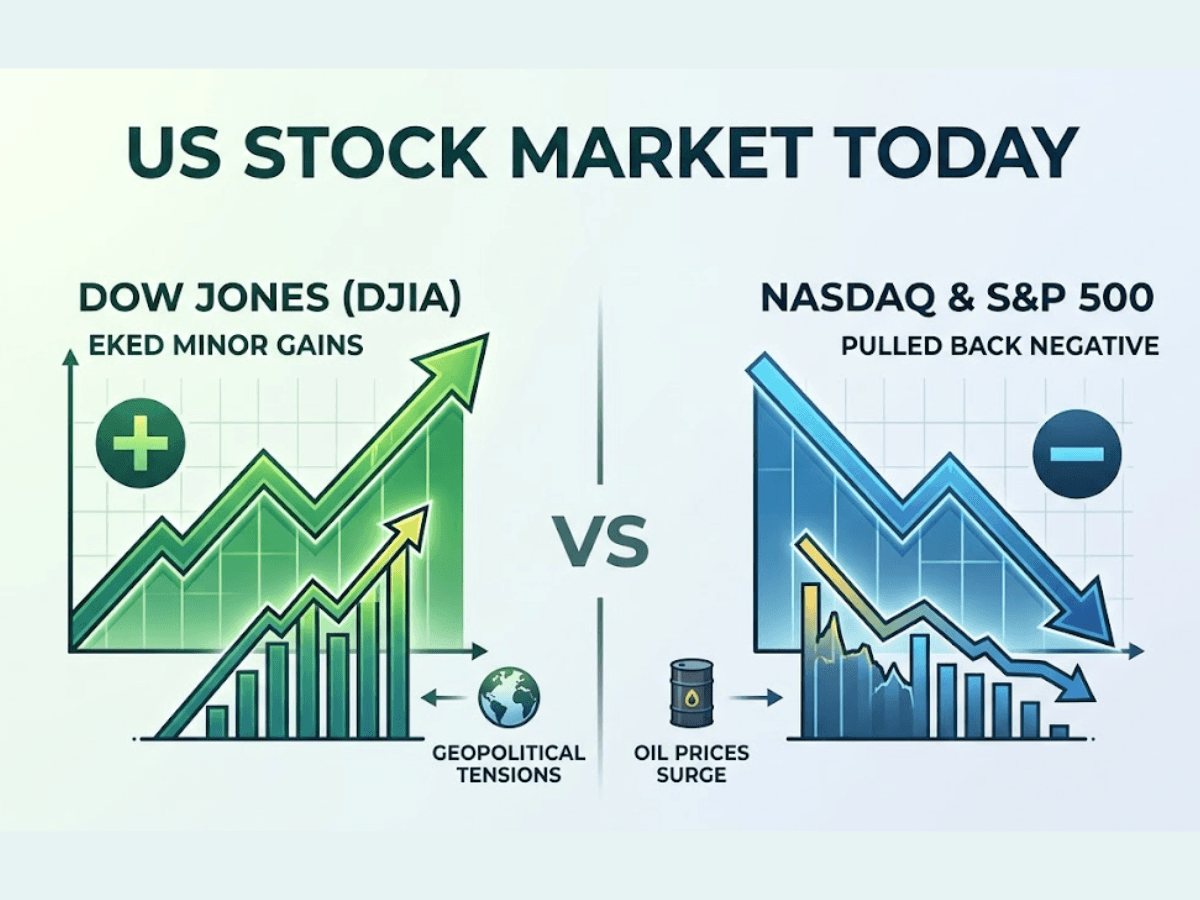
The US stock market displayed divergent performance on Friday, March 13, 2026, with the S&P 500 falling to 6,658 (down 14 points), the Nasdaq dropping 100 points to 22,211, while the Dow Jones held relatively steady near 46,702 amid rising geopolitical tensions and volatile oil prices. The VIX volatility index remained elevated at 26.49, signaling sustained market uncertainty, and the S&P 500 is tracking its first three-week losing streak in approximately one year, down roughly 1.1% for the week. Institutional investors and hedge funds reduced risk positions ahead of the weekend, with analysts attributing the decline to normal profit-taking after strong gains in AI and semiconductor stocks earlier in 2026. Key market watchers noted that smart money was likely to remain in defensive positions until clarity emerged regarding the Strait of Hormuz and potential ceasefire negotiations.