Major Indexes Test Long-Term Support as Market Weakness Broadens Beyond Tech

- Key stock indexes broke or are testing long-term support levels, with the Dow Jones closing below its 200-day moving average for the third consecutive day.
- Market weakness has shifted from selective rotation to broader deterioration, with participation narrowing and leadership concentrating in defensive and commodity-driven sectors.
- Technical analysts warn that previous orderly rotation patterns have given way to genuine breakdown, signaling potential for sustained market pressure if support levels fail.
Sources & Citations
1 sourceMore Stories
Sensex Today | Stock Market Live: Nifty below 24,300, Sensex sheds 610 pts; Tata stocks under pressure after Chandrasekaran resigns
• Indian benchmark indices extended their losses on Wednesday, with the Sensex dropping 615.12 points (0.79%) to 77,539.13 and the Nifty falling 196.85 points (0.80%) to 24,274.85. • The market downturn was significantly driven by pressure on Tata Group stocks following the resignation of N. Chandrasekaran.
Read original · moneycontrol.comStocks Supported by Renewed Middle East Optimism — TradingView News
• US stock indices showed mixed performance today, with the Dow Jones Industrial Average rising +0.32% while the Nasdaq 100 dipped -0.07% and the S&P 500 remained nearly flat at +0.04%. • Market sentiment was supported by comments from Donald Trump on Sunday, who indicated a preference for increasing economic pressure on Iran over launching further military strikes.
Read original · tradingview.comBrokerages Split on Korea Chip Stocks as SK hynix Targets Diverge by 2 Million Won - Seoul Economic Daily
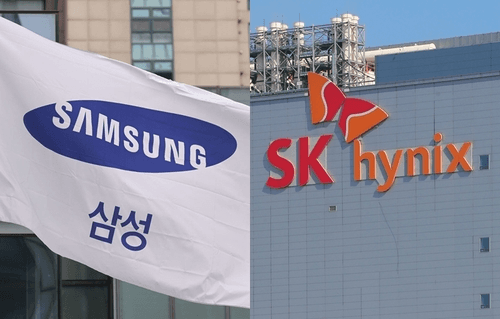
• Brokerages are lowering price targets for Samsung Electronics and SK hynix due to concerns that semiconductor earnings may peak earlier than expected. • SK hynix is seeing significant divergence in analyst valuations, with price targets ranging widely from 2.7 million to 4 million won.
Read original · en.sedaily.com Seoul Economic Daily
Monthly Market Insights: June
• Global markets experienced high volatility in June as traders feared that geopolitical conflicts and a potential Iranian closure of the Strait of Hormuz would spike oil prices and trigger global inflation. • Oil prices peaked between $75 and $78 per barrel before dropping below $65 following a ceasefire and OPEC+'s decision to increase production by 411,000 barrels per day starting in August.
Read original · vtmarkets.comStock Market Crash Highlights: Nifty, Sensex Resume Declines After One-Day Breather Amid Weekly F&O Expiry
• The Indian stock market resumed its downward trend, with the Nifty 50 falling 112.10 points (0.46%) to 24,471.70 and the Sensex dropping 388.19 points (0.49%) to 78,154.25. • This decline occurred following a brief one-day recovery and coincided with the weekly Futures and Options (F&O) expiry.
Read original · ndtvprofit.comAhead of Market: 10 things that will decide stock market action on Wednesday - The Economic Times
• Indian equities declined on Tuesday, with the Sensex falling 388 points and the Nifty dropping 112 points due to a weaker rupee and rising crude oil prices. • Market analysts have identified 24,400 as a critical support level for the Nifty as investors navigate heightened geopolitical risks.
Read original · economictimes.indiatimes.comThoughts for the day NEWS - by Len Watson - GIABHS.com
• Recent economic data highlights NFIB Small Business Optimism in the U.S. and updates on U.S. Existing Home Sales. • A significant mid-year revision showing a doubling of the growth midpoint suggests that AI-linked trade is currently offsetting major energy shocks.
Read original · thoughtsfortheday.substack.comStocks to watch today: Hyundai Motor, Vodafone, PNB and more in focus
• Investors are focusing on several key stocks today, including Hyundai Motor, Vodafone Idea, PNB, RVNL, MRF, Wipro, BSE, and Airtel. • Market analysts believe the bullish structure of the Indian equity market will remain intact despite recent volatility.
Read original · news9live.com News9live
Stock Market Today: Live Updates 11.08.2026
• Lumentum shares (LITE) experienced a 13% price swing on August 11, 2026, following an earnings report that highlighted AI-driven margins. • ASML Holding saw a 2.66% single-session gain and a 5.53% weekly increase, buoyed by a strong revenue report from Taiwan Semiconductor Manufacturing.
Read original · ts2.tech TS2
TS2Closing Bell: Nifty at 24,470, Sensex slips 380 pts; realty, metal drag, pharma shines
• The Indian stock market closed lower, with the Sensex slipping 380 points and the Nifty ending at 24,470. • Sectoral performance was mixed; Nifty Pharma rose 1% and IT gained 0.40%, while Realty, FMCG, and Metal indices each declined by 1%.
Read original · moneycontrol.comSouth Korea's Kospi Closes Up 0.73%, Samsung Electronics Rises Over 4%, SK Hynix Edges Higher
• South Korea's benchmark KOSPI index extended its rebound on August 11, closing up 0.73% at 6,345.53 points. • The market gain was driven by significant growth in major tech stocks, with Samsung Electronics rising over 4% and SK Hynix edging higher.
Read original · tradingkey.com Tradingkey
London Stock Exchange flags stronger trading activity as earnings lift market sentiment
• The London Stock Exchange (LSE) has reported a significant increase in trading volumes driven by strong corporate quarterly earnings. • Positive investor sentiment and favorable economic indicators are fueling cautious optimism across multiple market sectors.
Read original · tradersunion.com Traders Union