The Strawberry Moon rises June 29. Here's what to expect from June's full moon

- The "Strawberry Moon," the first full moon of the summer season, is scheduled to rise on June 29.
- Observers may notice a golden or orange glow and a "moon illusion," which makes the moon appear unusually large as it nears the horizon.
- This celestial event is significant as it marks a seasonal transition and provides a visually striking astronomical display for stargazers.
- Viewers are encouraged to look for the moon tonight to experience these specific atmospheric and optical effects.
Sources & Citations
1 sourceMore Stories
New issue: Our Next Giant Leap
• NASA announced plans in March to establish a permanent base on the Moon through a strategic series of events and documents titled “Ignition.” • The initiative signals a shift toward long-term lunar habitation rather than short-term exploration missions.
Read original · sciencefocus.com BBC Science Focus
Did Viking 1 find life on Mars 50 years ago? Here's why the debate continues
• Fifty years after the NASA Viking 1 lander touched down on Mars, scientists continue to debate whether the mission discovered evidence of extraterrestrial life. • A recent analysis suggests that Viking 1 likely found autotrophic microbial life, estimating a density of approximately 1,000 cells per gram of soil.
Read original · space.com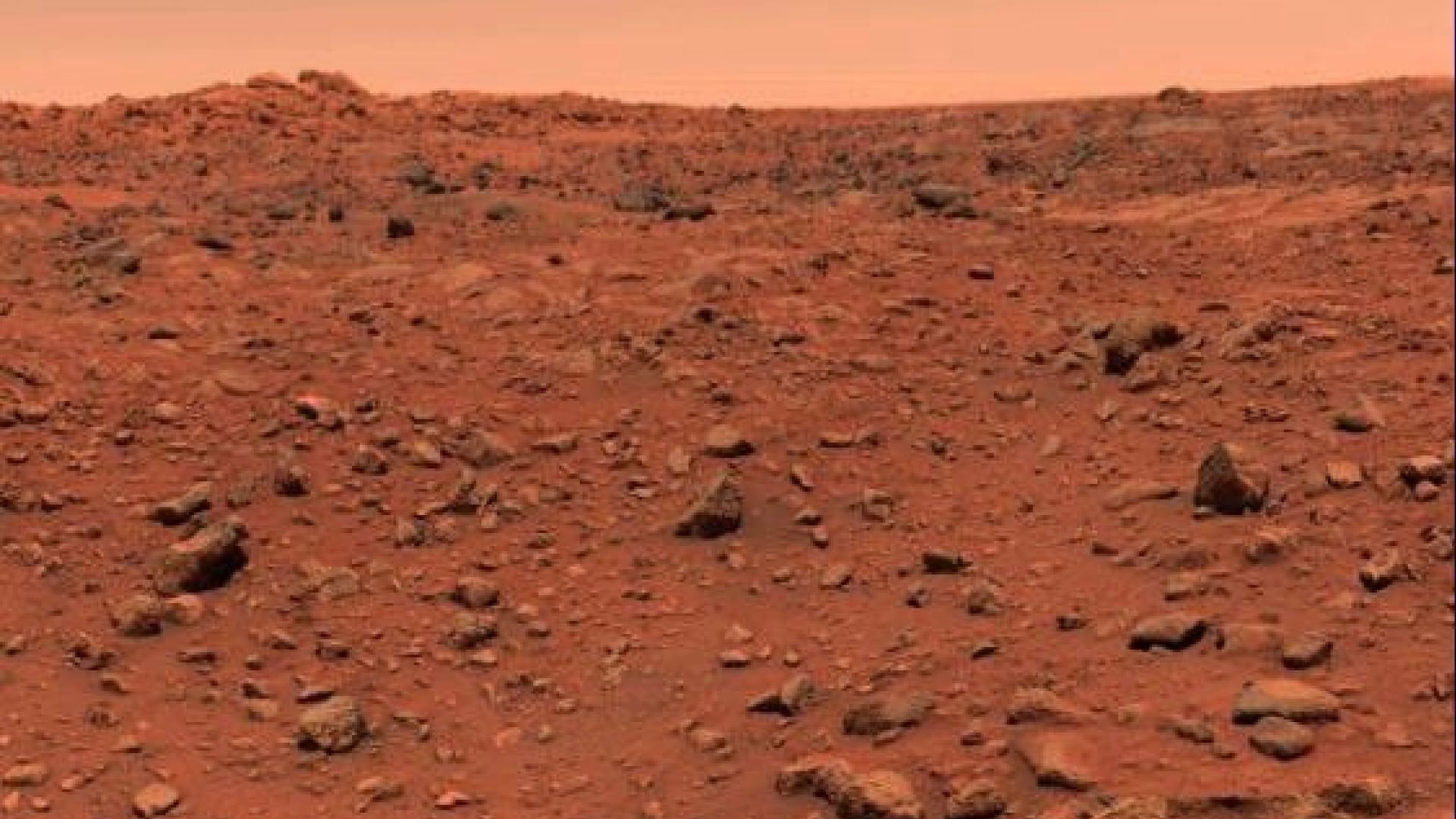 Space.com
Weekly Climate and Energy News Roundup #698 - Watts Up With That?
• A new report emphasizes the need for more studies applying multiple Event Attribution (EEA) approaches to the same climate event to improve the reliability of findings. • The text advocates for operational EEA programs to implement periodic peer reviews to increase confidence in attribution results and identify gaps in current research.
Read original · wattsupwiththat.com Watts Up With That?
Amendment 64: New Opportunity: A.15 Biosphere - NASA Science
• NASA has issued Amendment 64 for the A.15 Biosphere research area, which seeks to fund foundational knowledge on interactions within terrestrial and aquatic ecosystems. • The initiative focuses on understanding complex biological systems and their environmental drivers to improve Earth science modeling.
Read original · science.nasa.gov NASA Science
New NASA Earth Missions Gear Up to Start Science Flights - NASA Science
• NASA is preparing to launch the first of six new airborne science campaigns starting this summer. • These missions will utilize aircraft to study Earth's systems, environment, and climate patterns.
Read original · science.nasa.gov NASA Science
James Webb telescope hones in on origin of 'little red dots' at the beginning of time, thanks to their 'little blue companions'
• Astronomers using the James Webb Space Telescope (JWST) are investigating the origin of "little red dots," mysterious objects appearing frequently in surveys of the early universe. • Researchers discovered that these red dots are often paired with "little blue companions," providing a new clue to their nature.
Read original · livescience.com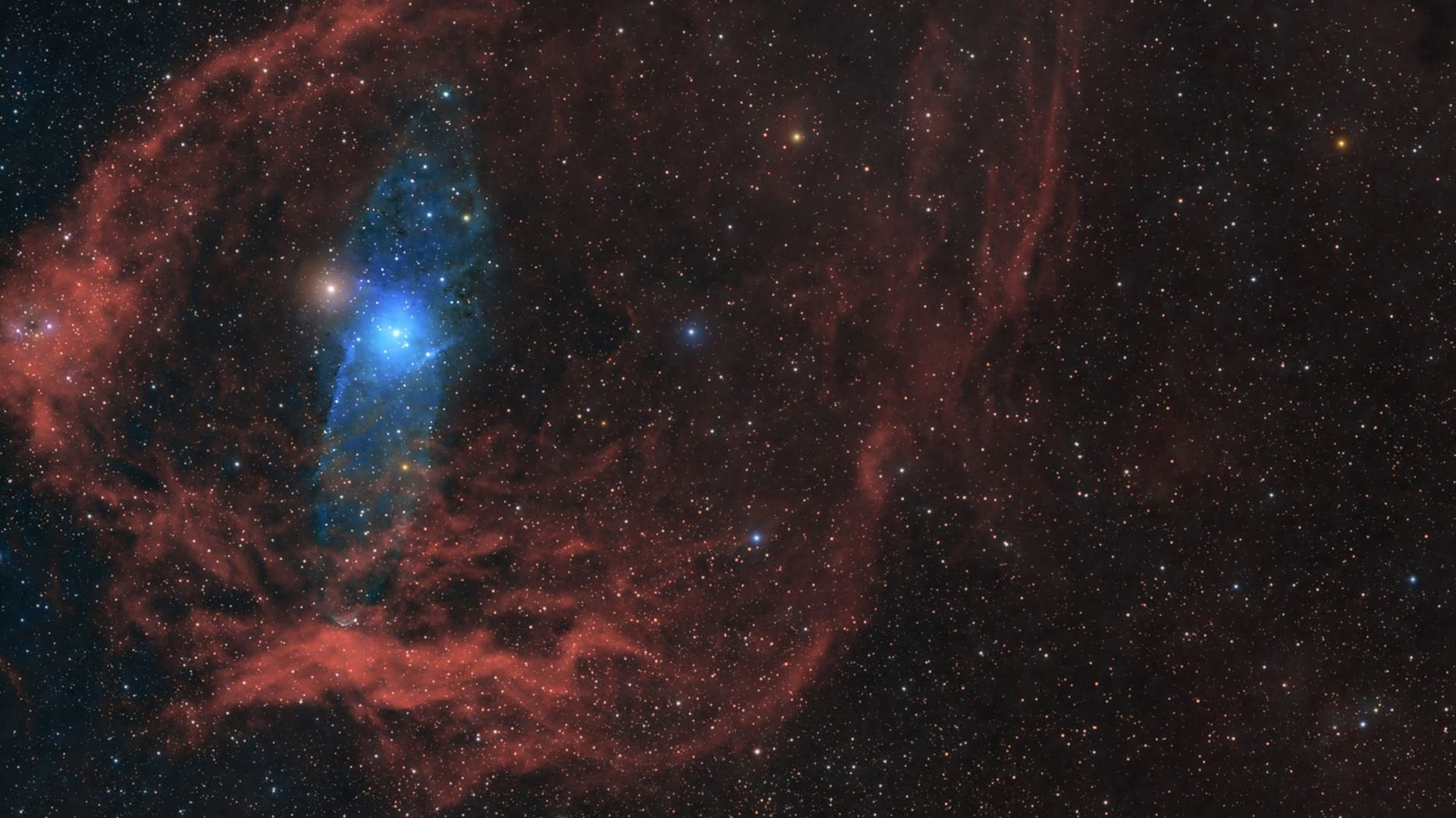 Live Science
An asteroid shattered near Jupiter’s gravitational gateway 800 million years ago; scientists say the debris may have bombarded Earth for 150 million years - The Times of India
• Researchers at the Southwest Research Institute discovered that a massive asteroid shattered near Jupiter's gravitational gateway approximately 800 million years ago. • The fragmentation event released a vast amount of rocky debris that likely bombarded Earth, the Moon, and Mars for an estimated 150 million years.
Read original · timesofindia.indiatimes.comWe’ve Barely Mapped the Observable Universe — but Human Curiosity Is Driving the Biggest Maps Ever Made
• NASA is utilizing the SPHEREx mission to conduct an all-sky spectral survey of the galaxy to better understand the origins of the universe. • The mission aims to collect extensive data on over 450 million galaxies and 100 million stars located within the Milky Way.
Read original · discovermagazine.comA planet 48 light-years away has 3 key ingredients scientists seek: Rock, an atmosphere and the right temperature, does it have life? - The Times of India
• Scientists have identified a potentially habitable planet located 48 light-years away that possesses three critical requirements for life: a rocky composition, an atmosphere, and a suitable temperature. • This discovery is being highlighted as one of the closest approximations humans have found to a planet capable of supporting biological life.
Read original · timesofindia.indiatimes.comNASA's Psyche mission delivers Mars flyby data, time-lapse video
• NASA's Psyche spacecraft successfully completed a flyby of Mars, capturing a significant trove of data and a time-lapse video of the encounter. • Mission scientists used the flyby to calibrate instruments under dynamic conditions and study the physics of planetary magnetism.
Read original · phys.org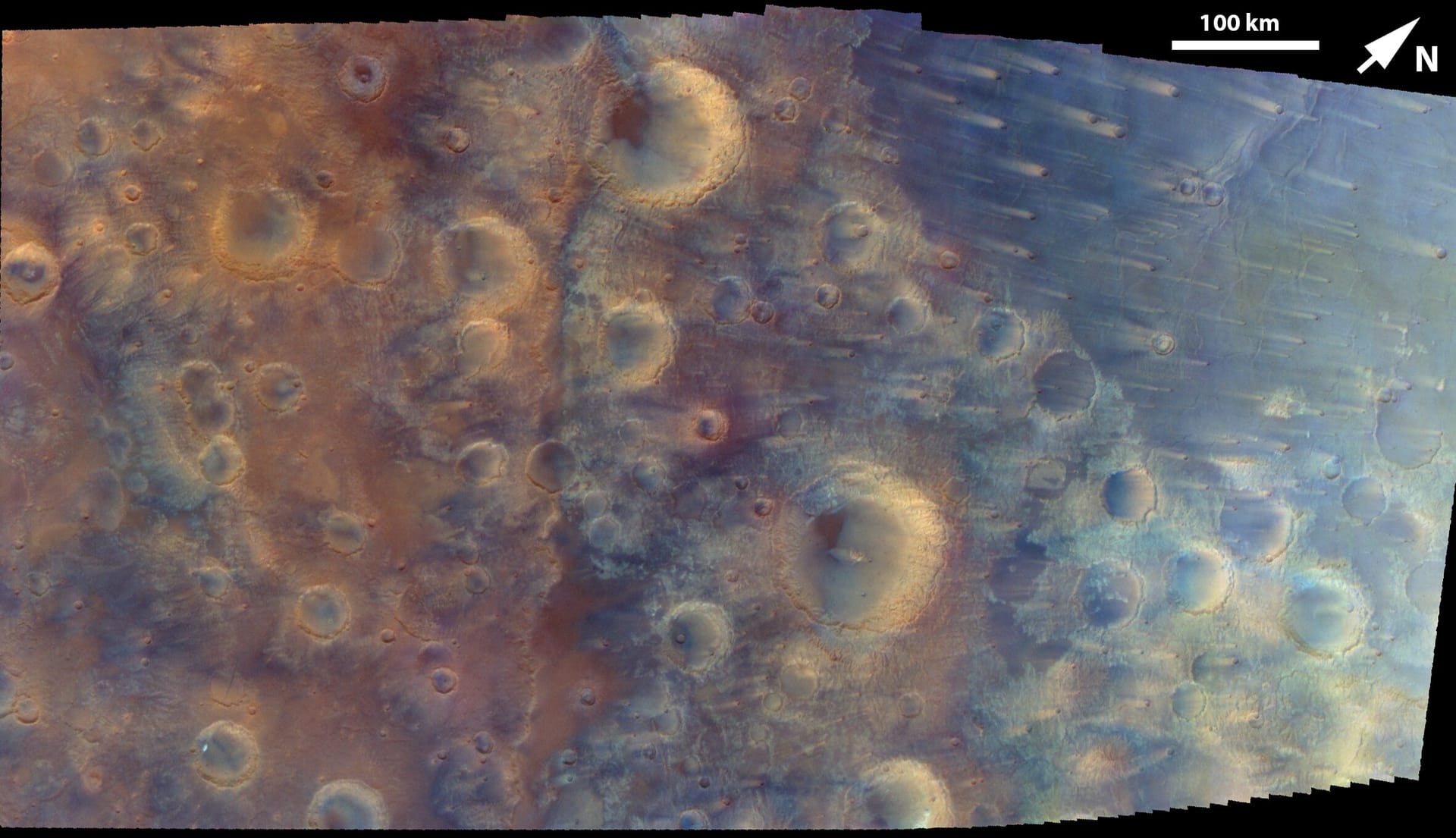 Phys.org
Life-friendly world? In first, atmosphere found on Earth-like planet in habitable zone
• Astronomers have discovered an atmosphere containing helium on LHS 1140b, a rocky planet located 48 light-years away. • The planet is situated within its star's habitable zone, suggesting the potential for liquid water to exist on its surface.
Read original · timesofisrael.comEarth's largest particle accelerator opens new window into the early universe just after the Big Bang: 'A culmination of a decades-long quest'
• Scientists using Earth's largest particle accelerator have observed a specific phenomenon within a hot, dense particle "soup" that mimics the conditions of the cosmos immediately following the Big Bang. • The discovery is the result of a decades-long quest to understand the fundamental state of matter that existed during the universe's earliest moments.
Read original · space.com Space.com