• President Trump announced on May 5 that military operations against Iran would be paused as negotiations advance toward a broader agreement, marking a significant shift in the months-long conflict initiated on February 28, 2026.
• The pause follows diplomatic engagement including a high-level Israel-Lebanon meeting on April 14 and a 10-day ceasefire between Israel and Hezbollah announced on April 16, signaling momentum in regional peace talks.
• The operational pause suggests the Trump administration believes negotiated settlement is achievable despite initial military intervention, though specific terms of the proposed Iran deal remain undisclosed.
Diplomatic efforts continuing despite fighting in and around contested strait of Hormuz in recent daysMiddle East crisis – live updatesThe US secretary of state, Marco Rubio, has said that Washington is expecting a response from Iran on Friday to its proposals for an interim deal to end the conflict in the Middle East, as Iran accused the US of breaching the increasingly fragile ceasefire announced last month.In recent days there have been the biggest flare-ups in fighting in and around the contested strait of Hormuz since the informal truce began. The rise in violence followed Donald Trump’s announcement – then rapid pause – of a new naval mission aimed at opening the strategic waterway. Continue reading...
• President Trump stated on Wednesday he is 'cautiously optimistic' about a potential U.S.-Iran deal following 'very good talks over the last 24 hours,' potentially involving Iran surrendering uranium, lifting U.S. sanctions, and reopening the Strait of Hormuz.
• Trump issued a one-week ultimatum on X, warning 'if they don't agree, the bombing starts' at a 'much higher level and intensity than before.'
• Iran is reviewing the U.S. peace proposal, as reported in ongoing diplomatic efforts amid claims the U.S. has already won the war with Iran.
The US and Iran have offered conflicting messages over the likelihood of a deal being reached imminentlyMorning and welcome to the Guardian’s continuing coverage of the crisis in the Middle East.The US and Iran have offered conflicting messages over the state of negotiations to end the war, with Donald Trump signalling the talks were “very good” and a deal “very possible”.News of a possible deal followed Trump’s abrupt U-turn on a US military operation to guide ships out of the strait of Hormuz, dubbed “Project Freedom”. Trump said the decision to pause the mission on Tuesday – two days after it was launched – was to give peace a chance, but NBC reported that it was suspended after Saudi Arabia refused to allow the US military to use its bases and airspace to carry out the operation. US officials told the American broadcaster that Gulf allies were caught off guard by the sudden announcement of Project Freedom, and that it had angered the leadership in Saudi Arabia.The Iranian president, Masoud Pezeshkian, told his French counterpart, Emmanuel Macron, that the US’s behaviour had “deviated the path of diplomacy towards threats, pressure and sanctions” and that Tehran could not trust Washington. In a statement carried by the Iranian state-run Press TV, Pezeshkian said Iran had entered into dialogue with the US twice and “on both occasions, military aggression against Iran took place concurrently with the negotiations. Such behaviour is effectively like ‘stabbing from behind’”.Iran has denied any involvement in damage to a South Korean-operated vessel in the strait of Hormuz, which suffered an explosion and fire on Monday. Trump blamed the incident on an Iranian attack, while South Korea’s foreign ministry said the cause of the fire would only be confirmed after the vessel is inspected. The Iran embassy in Seoul issued a statement this morning rejecting the allegations, saying safe passage through the waterway requires strict adherence to Iranian regulations.The damage and destruction inflicted on US military sites across the Middle East during the war is far larger than what has been publicly acknowledged by the Trump administration or previously reported, according to analysis by the Washington Post. Reviewing satellite imagery, the newspaper found Iranian airstrikes have damaged or destroyed at least 228 US structures or pieces of equipment, including hangars, barracks, fuel depots, aircraft and key radar, communications and air defence equipment. The US Central Command declined to comment on the report.In Lebanon, where a ceasefire has demonstrably failed to stop the fighting between Israel and Hezbollah, three people were killed this morning in Israeli strikes on Nabatieh south of the country, according to the official Lebanese National News Agency. The Israeli military said one of its soldiers was seriously injured by an explosive-laden Hezbollah drone in southern Lebanon yesterday. It did not say where the attack took place.In Gaza, where another ceasefire appears to be fraying, an Israeli airstrike has killed Azzam Khalil al-Hayya, the son of Hamas political bureau leader and chief negotiator Khalil al-Hayya, according to senior Hamas official Basim Naim. Azzam succumbed to his injuries this morning after being struck in an Israeli attack last night, Reuters reported. He is the fourth son of Hamas’s exiled Gaza chief to have been killed in Israeli attacks. Continue reading...
• President Trump warned Iran on Wednesday of 'higher level' military strikes if it refuses a peace deal, while deeming direct talks in Pakistan 'too soon' amid reported negotiation progress to end the war.
• The U.S. paused the brief Project Freedom mission to guide ships through the Strait of Hormuz after Iranian attacks on vessels and U.S. Gulf allies resumed, marking the first in nearly a month.
• Secretary of State Marco Rubio accused Iran of holding the global economy hostage by threatening ships, laying sea mines, and imposing tolls on the vital waterway, calling the upcoming U.N. resolution a key test.
President issues fresh ultimatum despite US claims that progress has been made in stalled negotiations with TehranMiddle East crisis – live updatesThe US president, Donald Trump, has issued a fresh ultimatum, telling Iran to accept a deal to end the war in the Middle East or face a new wave of US bombing “at a much higher level and intensity than it was before”.The social media announcement on Wednesday was the latest in a rapid series of dramatic and often contradictory changes in policy and came amid reports the US was claiming progress in stalled negotiations between Tehran and Washington. Continue reading...
• Indian equity indices surged sharply on May 6, 2026, with Sensex gaining 940.73 points (1.22%) to close at 77,958.52 and Nifty rising 298.15 points (1.24%) to 24,330.95, driven by optimism over potential US-Iran peace negotiations and declining crude oil prices.
• Banking stocks led the rally following the Union Cabinet's approval of an emergency credit guarantee programme worth Rs 15,800 crore to support businesses facing liquidity stress, with Hero MotoCorp climbing 2.6% and Mahindra & Mahindra advancing 3.1% on strong quarterly earnings.
• Broader market indices also gained traction, with Nifty smallcap100 and midcap100 rising 0.9% and 1.1% respectively, though FMCG stocks declined amid easing geopolitical tensions in West Asia that had previously pushed Brent crude to $115 per barrel.
US president briefly pauses ‘Project Freedom’ operation escorting ships through strait of HormuzBusiness live – latest updatesOil prices have eased and stock markets rallied as Donald Trump touted “great progress” towards a “final agreement” with Iran, while momentum in AI-driven trading accelerated.The US president said he would briefly pause his “Project Freedom” operation escorting ships through the strait of Hormuz, which carries about a fifth of the global oil supplies and has been blockaded by Iran since late February, triggering an energy crisis. Continue reading...
US president pauses ‘Project Freedom’ to work on ‘final agreement’ with Tehran; stocks also ride high on AI euphoriaGood morning, and welcome to our rolling coverage of business, the financial markets and the world economy.Asian stock markets hit record highs, following in Wall Street’s footsteps, and oil prices retreated after Donald Trump hailed “great progress” towards a “final agreement” with Tehran.on the request of Pakistan and other Countries, the tremendous Military Success that we have had during the Campaign against the Country of Iran and, additionally, the fact that Great Progress has been made toward a Complete and Final Agreement with Representatives of Iran”.Investors bought and continue to add to positioning in the 2026 winners. There has been some buying in S&P 500 materials stocks, but it’s tech that continues to attract the bulk of flows, notably in Apple and the memory plays.9am BST: Eurozone services and composite PMIs for April9.30am BST: UK services and composite PMIs for April1.15pm BST: US ADP employment change for April Continue reading...
• President Trump announced Tuesday evening that he is pausing 'Project Freedom,' the operation to escort ships through the Strait of Hormuz, citing 'great progress' toward a complete agreement with Iran and requests from Pakistan and other countries.
• Trump stated the pause would last 'for a short period of time to see whether or not the Agreement can be finalized and signed,' while maintaining the US naval blockade of Iranian ports remains in effect.
• The move represents a significant shift in Trump's confrontational posture toward Iran after months of military escalation, though Secretary of State Marco Rubio continued criticizing Iran for effectively closing the strategic oil passageway.
Islamabad has reportedly switched to lower-profile role but believes peace can make progress without face-to-face meetingsPakistan is passing proposals between Iran and the US to keep talks alive behind the scenes and inch towards a peace agreement, officials and experts say.Pakistani officials say that they are conscious of the fact that at stake is not only regional peace, but the health of the global economy and the livelihoods of millions of the poorest people in the world – including in Pakistan, whose monthly energy import bill has almost tripled as a result of the war. Continue reading...
Washington facing long economic war or risky military action to reopen strait of Hormuz – which may now be more valuable to Iran than a nuclear weaponDonald Trump is learning first-hand about the perils of mission creep.The US-Israel war in Iran has just passed its eighth week – twice as long as the president predicted it would take when US warplanes launched their joint attack with Israeli forces to decapitate the Iranian leadership and paralyse its military. The military attacks were successful. The predictions about the political cause-and-effect to follow were not. Continue reading...
• U.S. stock futures fell 0.46% Monday morning as Iran declined to engage in peace talks with the Trump administration, escalating geopolitical tensions.
• Oil prices climbed to $95 per barrel, up from $86 three days prior, reflecting market concerns over potential supply disruptions from the Iran conflict.
• Despite the geopolitical headwinds, markets have shown resilience with strong corporate earnings growth at 17% annually offsetting valuation pressures.
FTSE 100 slides and UK gas prices up amid fears strait of Hormuz will be closed for extended periodBusiness live – latest updatesOil prices rose sharply and European stock markets fell on Monday, after the US seizure of an Iranian vessel hit hopes for a peace deal.Brent crude, the international benchmark for oil prices, rose by as much as 5% on Monday to $95.50 (£70.75) a barrel. Continue reading...
• US President Donald Trump warned Iran of 'no more Mr Nice Guy' and threatened new strikes if no deal is agreed by Wednesday, following stalled talks over nuclear issues and the Strait of Hormuz.
• Iran closed the Strait of Hormuz until the US lifts its blockade, with Revolutionary Guard navy confirming the move amid risks to global oil shipments; 13 US service members killed in related conflict.
• Negotiations in Islamabad saw US propose 20-year Iranian nuclear suspension, countered by Iran's 3-5 year halt offer; Tehran reports progress but fundamental gaps remain per speaker Mohammad Bagher Ghalibaf.
• President Trump signals he will not extend Iran's ceasefire deadline if a comprehensive deal is not reached by Wednesday, warning of renewed military action including 'dropping bombs' if negotiations fail.
• Trump declares the Strait of Hormuz now open due to a U.S. Navy blockade and pointedly rejects NATO's offer of assistance, highlighting America's unilateral stance in Middle East tensions.
• The escalating pressure on Iran represents a significant shift in Trump administration foreign policy and challenges traditional alliance structures in addressing regional security threats.
• President Trump expressed optimism that an Iran peace deal is 'looking very good,' signaling potential near-term resolution to the US-Iran conflict that has destabilized financial markets.
• Investors are actively weighing the likelihood and terms of a potential Iran truce as a key variable influencing near-term market direction and energy price trajectories.
• Geopolitical risk premiums embedded in oil prices and equity valuations could face significant repricing if a comprehensive ceasefire agreement is formally announced.
• S&P 500 futures rose 0.2% and the benchmark notched back-to-back record highs as growing speculation that a deal to end the US-Iran war is nearing prompts traders to take on more risk.
• The index is on course for a third week of gains exceeding 3%, with the S&P up nearly 8% month to date, marking a stunning reversal following mounting signs of US-Iran deescalation.
• The market rally reflects relief over potential resolution of the conflict that has roiled energy markets, with traders increasingly positioning for a ceasefire outcome.
• Donald Trump announced a major ceasefire between Israel and Lebanon while signaling progress toward a potential nuclear deal with Iran.
• The development represents a significant diplomatic initiative amid broader Middle East tensions and ongoing US-Iran negotiations.
• The ceasefire comes as regional dynamics continue to shift with multiple diplomatic channels active simultaneously.
US president will need to show heavy costs of war were worthwhile while Iran must choose between instant and delayed gratification Middle East crisis – live updatesIf talks between Iran and the US reconvene within the next few days in Islamabad, Donald Trump will have two major political hurdles to overcome – first showing that any deal he secures is better than the one signed by Barack Obama in 2015 and from which he withdraw in 2018, and secondly proving the deal is more favourable than the one on offer in Geneva in February before he launched his war.Otherwise he will have inflicted massive damage on the world economy when alternatives were available that were less costly in blood and treasure. He will also have to show that Iran has made no permanent gain by taking control of shipping passing through the strait of Hormuz. These are the yardsticks, or tests, around which his negotiating team will be keeping an anxious eye. Continue reading...
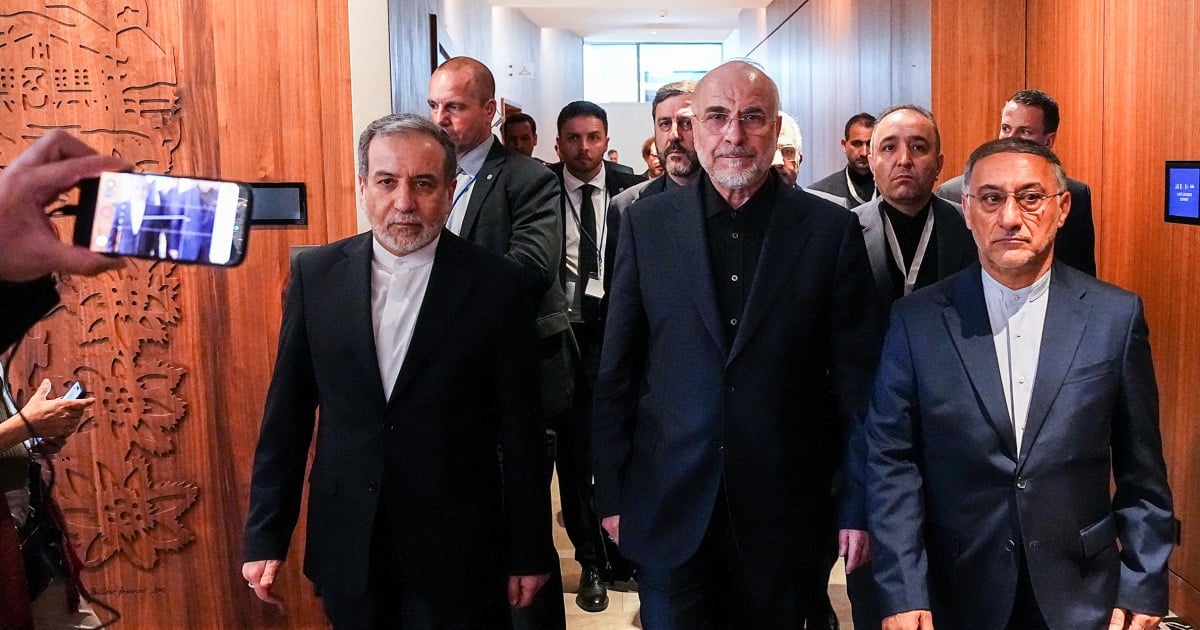
JD Vance leads American delegation while Iran’s negotiators headed up by Iran’s parliamentary speakerPeace talks between Iran and the US began in Islamabad this afternoon, with senior negotiators from both countries meeting face to face at the highest level for the first time since 1979, in the presence of mediators from Pakistan.Pakistani state TV said US and Iranian officials were “sitting directly at the same table” – which was later confirmed by the White House – and discussions were beginning in a positive atmosphere, despite fighting ongoing in Lebanon. Continue reading...
Foreign secretary to address City leaders in London as Israel intensifies bombing and Vance says Lebanon is not part of dealMiddle East crisis – live updatesLebanon must be included in the ceasefire agreement between the US and Iran, the British foreign secretary will say, as a two-week pause in the conflict hangs in the balance.Addressing an event at the Mansion House in London, Yvette Cooper is expected to say there “must be no return to conflict” after the ceasefire announced by the US president, Donald Trump, late on Tuesday. Continue reading...
President threatens in Truth Social post to annihilate Iran if government ignores deadline to reopen strait of HormuzUS politics live – latest updatesSign up for the Breaking News US newsletter emailDonald Trump on Tuesday morning threatened to completely annihilate the entirety of Iranian civilization should their government ignore his 8pm ET deadline to reopen the strait of Hormuz.“A whole civilization will die tonight, never to be brought back again,” he US president posted on Truth Social about the country with more than 90 million people. “I don’t want that to happen, but it probably will.” Continue reading...
Iran launches missiles and drones at Israel and Kuwait after US president says regime will face ‘all hell’Search for missing US crew member of downed fighter jet enters second dayIran has rejected Donald Trump’s demand that the regime cut a deal in 48 hours or face “all hell”.On Saturday, the US president posted on social media: “Remember when I gave Iran ten days to MAKE A DEAL or OPEN UP THE HORMUZ STRAIT,” referring to an ultimatum issued on 26 March.The Israeli prime minister, Benjamin Netanyahu, confirmed that Israel attacked Iran’s petrochemical plants after reports from Iranian media saying at least five people were killed in an attack on the Mahshahr petrochemical zone.US search and rescue efforts for the missing second crew member of the downed F-15E fighter jet continued into a second day as Iran came under heavy bombing. A pilot had been rescued on Friday after the F-15E Strike Eagle became the first US plane to be downed over Iran during the five-week-long war.American and Israeli fighter jets targeted multiple strategic and civilian sites inside Iran’s capital on Friday afternoon, including Shahid Beheshti University, one of the country’s leading academic institutions, Iranian state media reported.The death toll in Lebanon has reached 1,422 since the conflict with Israel began on 2 March, according to data from the Lebanese health ministry and reported by the Associated Press. In just the past 24 hours, Israeli strikes have killed 54 people and wounded 156.The Kuwaiti Ministry of Defense said on Saturday that its air defense forces successfully intercepted eight ballistic missiles and 19 drones over the last 24 hours. However, on Sunday a fire has erupted in the Shuwaikh oil sector complex that houses the oil ministry and Kuwait Petroleum Corporation headquarters, after a drone attack, and Kuwaiti state media reported that two power and water desalination plants sustained “significant material damage” after being attacked by Iranian drones.A Lebanese security source at the main crossing between Syria and Lebanon, said they were evacuating the crossing after Israel threatened to attack it. The Israeli military said on Saturday it would strike an area near the Masnaa crossing urging residents to evacuate immediately as it continued its attacks across Lebanon.Residents of southern Lebanon’s Kfar Hatta were told on social media by Israel to immediately leave the area, and warned that the Israeli military would soon act “with force” in the area. Continue reading...
US president warns Iran after strike; UN vote on authorizing the use of ‘defensive’ force to protect shipping in the strait of Hormuz delayedFull report: Trump warns Tehran ‘more to follow’ after strike destroys Iran’s largest bridge Continue reading...
• President Donald Trump stated on March 31 that the US military campaign against Iran could conclude within two to three weeks, saying 'We'll be leaving very soon' from the Oval Office.
• Trump emphasized no diplomatic deal with Tehran is required, insisting the goal is to render Iran unable to develop nuclear weapons and 'put into the stone ages' before withdrawal.
• The announcement signals an extension beyond the initial four-to-six week timeline amid reordered Middle East dynamics, disrupted global energy markets, and impacts on Trump's presidency.
• US President Donald Trump threatened Monday to destroy Iran's Kharg Island crude oil export hub, along with oil wells and power plants, unless Tehran quickly accepts a deal to end the US-Israeli war.
• The threat of potential US ground operations to seize Kharg Island is creating significant tremors through financial and energy markets, as well as raising concerns among neighbouring Gulf countries.
• Trump expressed hope about talks with a "more reasonable regime" in Tehran on his Truth Social network, an apparent reference to new leadership despite the month-long war failing to dislodge the Islamic Republic.
• President Donald Trump warned Monday via Truth Social that if Iran does not open the Strait of Hormuz and a deal is not reached "shortly," the US will "blow up and completely obliterate" Iran's electric generating plants, oil wells, and Kharg Island.
• US Secretary of State Marco Rubio said Washington is close to achieving its objectives in Iran "in a matter of weeks" and that Trump has "a number of options available" to prevent Iran from controlling the strategic waterway.
• The threat comes as 3,500 US Marines and sailors aboard the USS Tripoli arrive in the Middle East, joining over 50,000 American troops already in the region, with hundreds of Navy SEALs also deployed.
US president claims Iranian negotiators fear being killed by their own side; US military command claims to have damaged or destroyed over two-thirds of Iran’s missile, drone and naval production facilitiesIran rejects US ceasefire plan and submits its own amid push for talksAnalysis: Trump pitches Iran peace plan but military buildups rarely veer to off-rampChina’s foreign minister has said that a “glimmer of hope” for peace has emerged due to moves to stop the war in the Middle East, despite Tehran vowing to keep fighting.Wang Yi urged dialogue in separate calls with his Turkish and Egyptian counterparts, suggesting that both Tehran and Washington had shown signals they were willing to return to the negotiating table.Speaking of negotiations now is an admission of defeat.Prolonging this war would only result in further casualties and needless losses, leading to a further spillover of the conflict. Continue reading...
Jonathan Powell thought Tehran’s ‘surprising’ offer on its nuclear programme could prevent rush to war Middle East crisis – live updatesBritain’s national security adviser, Jonathan Powell, attended the final talks between the US and Iran and judged that the offer made by Tehran on its nuclear programme was significant enough to prevent a rush to war, the Guardian can reveal.Powell thought that progress had been made in Geneva and that the deal proposed by Iran was “surprising”, according to sources. Continue reading...