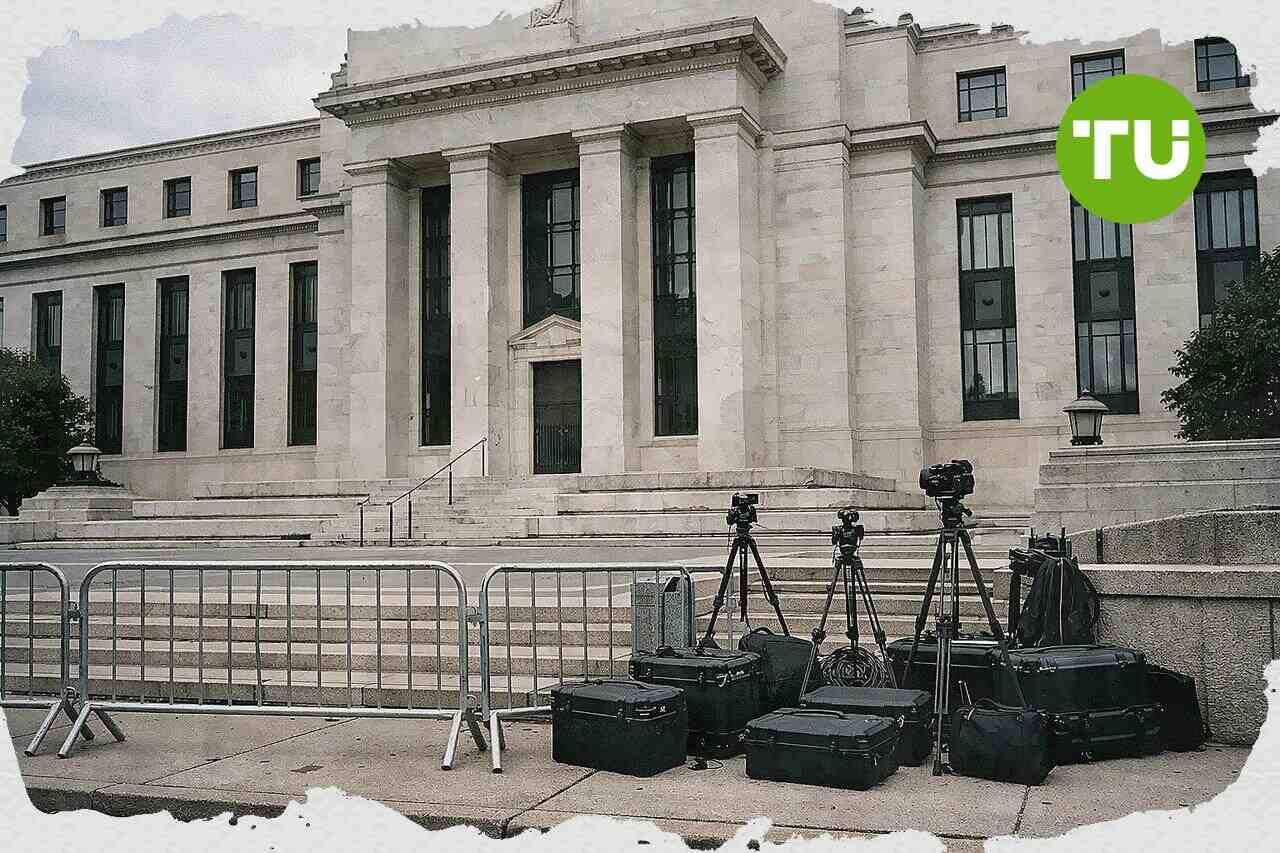
• The Federal Reserve voted to leave the benchmark federal funds rate unchanged at 3.5% to 3.75% on Wednesday, citing concerns about inflation rising amid the war in Iran.
• This marks the continuation of the Fed's pause in rate adjustments following three successive 25-basis-point cuts in September, October, and December 2025.
• Fed Chairman Jerome Powell is scheduled to hold a press conference at 2:30 p.m. ET to discuss the decision, marking what could be his final interest-rate announcement as Federal Reserve chair.
Club chief says ‘anodyne acknowledgements’ can be ‘overworked’. Follow today’s news liveGet our breaking news email, free app or daily news podcastGood morning and welcome to our live news blog. I’m Martin Farrer with the top overnight stories and then it will be Nick Visser with the main action.The RSL has announced it will review its guidance on welcome to country addresses at Anzac Day services after Indigenous leaders were booed at three dawn services on Saturday. Continue reading...
• The Federal Reserve released minutes from its April 16 policy meeting, revealing internal division over the appropriate timeline for interest rate cuts, with several governors questioning whether inflation has declined sufficiently to warrant near-term reductions.
• Hawks on the committee expressed concern that premature rate cuts could reignite price pressures, while doves argued that pausing at 5.5% risks unnecessarily constraining growth and employment, setting the stage for a contentious May 2 vote.
• Market reactions to the minutes were mixed, with bond futures pricing in only a 28% probability of a rate cut by July 2026, down from 35% before the release, while equity index futures declined 0.6% on expectation of extended higher rates.
• The Department of Justice dropped its criminal investigation into Federal Reserve Chair Powell regarding the agency's building expenditures, marking a significant development in federal oversight.
• The decision came amid broader discussions on Capitol Hill about federal accountability, with both Republican and Democratic representatives weighing in on the implications.
• The outcome reflects shifting priorities in federal investigations and debates over Fed governance and spending practices.
• The Department of Justice has dropped its investigation into Federal Reserve Chair Jerome Powell, marking a significant policy shift.
• The decision comes amid Trump's emergency economic orders, potentially easing tensions over Fed independence.
• This move is viewed as stabilizing financial markets but criticized by conservatives seeking accountability on monetary policy.
The hearing marks a key hurdle Kevin Warsh must overcome in order to succeed Jerome Powell when his term ends on 15 MayHello and welcome to the US politics live blog.President Donald Trump’s choice to lead the Federal Reserve will commit to protecting central bank independence on interest rates at a crucial confirmation hearing later today.Lori Chavez-DeRemer, Donald Trump’s labor secretary, resigned from her role with the administration. She said it was “an honor and a privilege to serve” to serve and that she would take on a job in the private sector. The departure came after she became entangled in a string of political and personal controversies. Democrats celebrated, writing “this administration is imploding”.Chuck Schumer, the Senate minority leader, called for Kash Patel’s immediate resignation following a report from the Atlantic detailing the FBI director’s alleged excessive drinking and absences. Patel has sued the magazine for defamation with his attorneys calling the article a “sweeping, malicious, and defamatory hit piece”.Donald Trump signed memorandums related to coal supply chains, natural gas and grid infrastructure on Monday. The president invoked the Defense Production Act in the energy-related memos, writing that increasing energy production is “essential to United States national defense”.The crowded field of Democratic candidates in the California’s governor’s race appears to be narrowing as Betty Yee — a former state controller— announced Monday she planned to end her campaign. Meanwhile, the California Democratic party chair Rusty Hicks continued to urge candidates trailing in the polls to exit the race. Continue reading...
• President Donald Trump is backing Kevin Warsh as his preferred candidate for Federal Reserve chair, intensifying pressure on current Fed Chair Jerome Powell amid ongoing policy disagreements.
• Republican Senator Kevin Cramer discussed the timeline for the CLARITY Act and Trump's strategy to reshape Federal Reserve leadership during an appearance on 'Mornings with Maria.'
Kevin Warsh, seeking to replace Fed chair, Jerome Powell, had to file financial disclosures for Senate approvalKevin Warsh, the former Federal Reserve governor chosen by Donald Trump to lead the central bank, has submitted financial disclosures that suggest he holds assets worth well over $100m.The document is required for his nomination to advance through the Senate, beginning with a yet-to-be-scheduled hearing. Continue reading...
• Kevin Warsh was nominated as the next Federal Reserve Chair, set to succeed Jerome Powell in May 2026.
• Warsh, a critic of the Fed’s quantitative easing policies, is viewed by markets as a steady hand amid economic uncertainties.
• The nomination comes as PCE inflation rose to 2.9% and core PCE to 3.0% year-on-year in March, aligning with consensus expectations.
• The U.S. has initiated measures to secure Venezuela's gold reserves as American geopolitical influence in the region intensifies.
• The effort reflects Washington's strategy to expand economic leverage and control over Venezuelan assets during the nation's ongoing political and economic crisis.
• The move signals escalating U.S. intervention in Venezuela's internal affairs with significant implications for regional power dynamics.
• The U.S. Energy Department announced plans Wednesday to loan an additional 10 million barrels of crude from the Strategic Petroleum Reserve as part of a 172 million-barrel drawdown.
• West Texas Intermediate crude prices exceeded $112 per barrel due to ongoing Iran conflict disruptions, prompting the reserve release to curb domestic fuel costs.
• Critics warn the extensive SPR drawdown heightens U.S. energy vulnerabilities during prolonged geopolitical tensions and supply chain risks through key chokepoints.
• The Federal Reserve maintained the federal funds rate unchanged at 3.5%–3.75% during its March 2026 meeting, marking the second consecutive session without adjustment.
• Policymakers cited solid economic expansion despite subdued job gains and elevated inflation above target levels.
• The decision reflects caution amid global volatility, including Middle East conflicts driving oil prices up over 40% and renewed US trade frictions.
• Congresswoman Dina Titus (D-NV) introduced HR 8167, the Diplomatic Reserve Corps Act of 2026, on March 31, authorizing a 1,000-member ready reserve for U.S. diplomatic efforts.
• Co-led by Rep. Michael Baumgartner (R-WA) and endorsed by the American Academy of Diplomacy, the bill addresses heightened demand periods for diplomacy.
• The reserve would enable rapid deployment of experienced personnel to support State Department operations globally.
Treasury department said Financial Times article about Scott Bessent’s views on Fed oversight was ‘manufactured’ The US treasury department demanded on Friday that the Financial Times (FT) retract a report on treasury secretary Scott Bessent’s views on the Federal Reserve, accusing the newspaper of publishing “false claims” in a formal complaint that was escalated to the news outlet’s parent company, Nikkei Inc.The email from treasury officials, addressed to senior editors at the FT and Nikkei, disputed multiple claims in the story and criticized the headline as misrepresenting the underlying reporting. Continue reading...
More use of two-way charging will earn money for owners and could avoid the need to expand North Sea oil drillingThe Iran war has sent petrol and diesel prices to their highest levels in years, sparked warnings of fuel rationing across Europe and triggered calls for Britain to drill more North Sea oil and gas. But analysis suggests the UK is looking for solutions in the wrong places – and that one of them is sitting on people’s driveways or parked in the street.If more drivers switched electric vehicles, Britain would sharply reduce its petrol and diesel consumption, with every car charged from the grid rather than the pump extending the country’s fuel reserves – and experts say the potential impact goes far beyond that. If more drivers switched to electric vehicles, Britain could sharply reduce its petrol and diesel consumption. Every car charged from the grid rather than the pump extends the country’s fuel reserves – and experts say the potential impact goes far beyond that. Continue reading...
Microglossum cyanobasis – or blue-based earthtongue – is only the second such specimen ever to be found in EuropeThe discovery of a rare, tongue-shaped fungus is being hailed as a sign of the crucial ecological value of England’s national nature reserves.Never before recorded in the UK, the blue-based earthtongue, also known as Microglossum cyanobasis, was found sprouting at the Kingley Vale national nature reserve in West Sussex. Continue reading...
PM Sanae Takaichi says about 80m barrels of stockpiled oil to be provided to refiners – equivalent to 45 days of domestic demand • Middle East crisis – live updatesJapan will begin the biggest-ever release of oil from its strategic reserves this week, the prime minister, Sanae Takaichi, has said, as the country braces for possible shortages caused by the US-Israel war on Iran.The government last week approved the release of 15 days’ worth of private-sector reserves, amid concern that the conflict in the Middle East will continue to hinder the flow of tanker traffic along the strait of Hormuz. Continue reading...
• Rising yields across US and international bond markets reflect growing inflation expectations stemming from the energy shock caused by the Iran-US conflict, with 10-year gilts rising 14 basis points.
• Market participants are increasingly betting on a Federal Reserve rate hike later this year as inflation anchoring concerns mount amid geopolitical disruptions to energy supplies.
• The bond market deterioration follows Friday's significant equity selloff and signals potential monetary policy tightening ahead, with the Fed focused on ensuring inflation expectations remain anchored despite external supply shocks.
• The U.S. Federal Reserve decided to hold interest rates steady on March 19, 2026, in its first move since oil prices spiked due to the Iran war.
• Officials cite inflationary pressures from energy disruptions but project stability if conflict de-escalates.
• The decision impacts American consumers facing higher gas prices, influencing mortgage and loan rates nationwide.
• The Federal Reserve's policy committee decided to hold the federal funds rate steady at 3.5% to 3.75% on March 18, 2026, citing elevated uncertainty about the economic outlook and the implications of Middle East developments for the U.S. economy.
• The Fed noted that while economic activity continues to expand at a solid pace, job gains have remained low and unemployment rates have shown little change, with inflation remaining somewhat elevated above the 2% target.
• The Committee signaled readiness to adjust monetary policy if risks emerge that could hinder maximum employment and price stability, indicating a cautious stance given current geopolitical and economic headwinds.
• The Federal Reserve opened a two-day monetary policy meeting this week with a rate decision expected Wednesday, as officials evaluate the impact of surging oil prices and Middle East conflict on inflation trajectories.
• Uncertainty around geopolitical fallout is deepening divisions within the central bank over the interest rate path forward; officials are widely expected to leave rates unchanged on Wednesday despite elevated crude prices.
• Rising oil and gasoline prices are weighing on earnings estimates and consumer spending forecasts, creating additional complexity for Fed policymakers balancing inflation and growth concerns.
Energy minister says it will take ‘some time’ for extra supply to reach regional areas. Follow today’s news liveGet our breaking news email, free app or daily news podcastThe energy minister, Chris Bowen, says it will take “some time” for the petrol and disesel released from Australia’s domestic stockpile to reach areas hit by shortages.On Friday, the Albanese government directed fuel companies to release nearly a fifth of reserve petrol and diesel supplies. Dozens of service stations across the country have run out of petrol as retailers struggle with customers panic-buying in response to skyrocketing prices from the Middle East conflict.There will be some time for it to flow through. There’s a very complicated supply chain.But it is going to have an impact. Some companies have said it will start to have an impact in coming days, to some degree. But there will be some time before it’s all released. Continue reading...
Head of world’s energy watchdog says it will take time for markets to recover from ongoing crisis in strait of HormuzThe world’s energy watchdog will consider releasing further emergency crude stocks into the global market to cool rising oil prices after warning that it will take time for markets to recover from the ongoing crisis in the strait of Hormuz.Fatih Birol, the head of the International Energy Agency, said its members continued to hold large reserves of emergency oil stocks even after agreeing to the biggest release of government crude in the history of the market, meaning more emergency oil reserves could still be released “as and if needed”. Continue reading...
• A federal judge on March 14, 2026, blocked subpoenas directed at the Federal Reserve by the Justice Department, hitting an institutional guardrail for the Trump administration.
• The ruling delays confirmation of Kevin Warsh as next Fed Chair, with Republican Senator Thom Tillis warning of prolonged process; DOJ plans to appeal.
• This occurs amid fading confidence in US trade policy and fiscal credibility, maintaining bearish USD views.
A federal judge on Friday threw out two Justice Department subpoenas targeting the Federal Reserve, ruling them improper in U.S. Attorney Jeanine Pirro's criminal investigation into Chair Jerome Powell. U.S. District Judge James Boasberg, in a 27-page opinion, stated the subpoenas' dominant purpose was to harass Powell amid President Trump's public attacks, handing a victory to the central bank. The decision underscores escalating tensions between the Trump administration and the Fed, potentially delaying probes into monetary policy decisions. Legal experts anticipate appeals as the case highlights executive-branch overreach concerns.
A federal judge on Friday threw out two Justice Department subpoenas issued to the Federal Reserve, ruling them improper in U.S. Attorney Jeanine Pirro's criminal investigation into Chair Jerome Powell. U.S. District Judge James Boasberg, an Obama appointee, stated in a 27-page opinion that the subpoenas' dominant purpose appeared to harass Powell into yielding to President Trump or resigning. The decision represents a significant setback for the Trump administration's efforts to pressure the independent central bank amid public attacks on Powell. Legal experts anticipate appeals, potentially escalating tensions between the executive branch and judicial oversight of monetary policy.
A judge rejected subpoenas targeting Fed Chair Jerome Powell on March 13, 2026, preventing potential disruptions during a tense market session as indexes fell. The decision came amid broader equity declines, with S&P 500 down 0.5% and Nasdaq off 0.67% in afternoon trading. This ruling stabilizes central bank communications at a critical juncture for monetary policy amid inflation pressures. Markets may now focus on upcoming PCE data releases without subpoena overhang.
A judge rejected a subpoena for Federal Reserve Chair Jerome Powell on March 13, 2026, blocking forced testimony amid ongoing investigations. The decision came during heightened market volatility from oil prices and geopolitical risks, stabilizing expectations for central bank independence. Markets reacted positively in S&P 500 futures, reducing uncertainty over Fed policy signals. This ruling may delay further probes into 2025-2026 rate decisions.