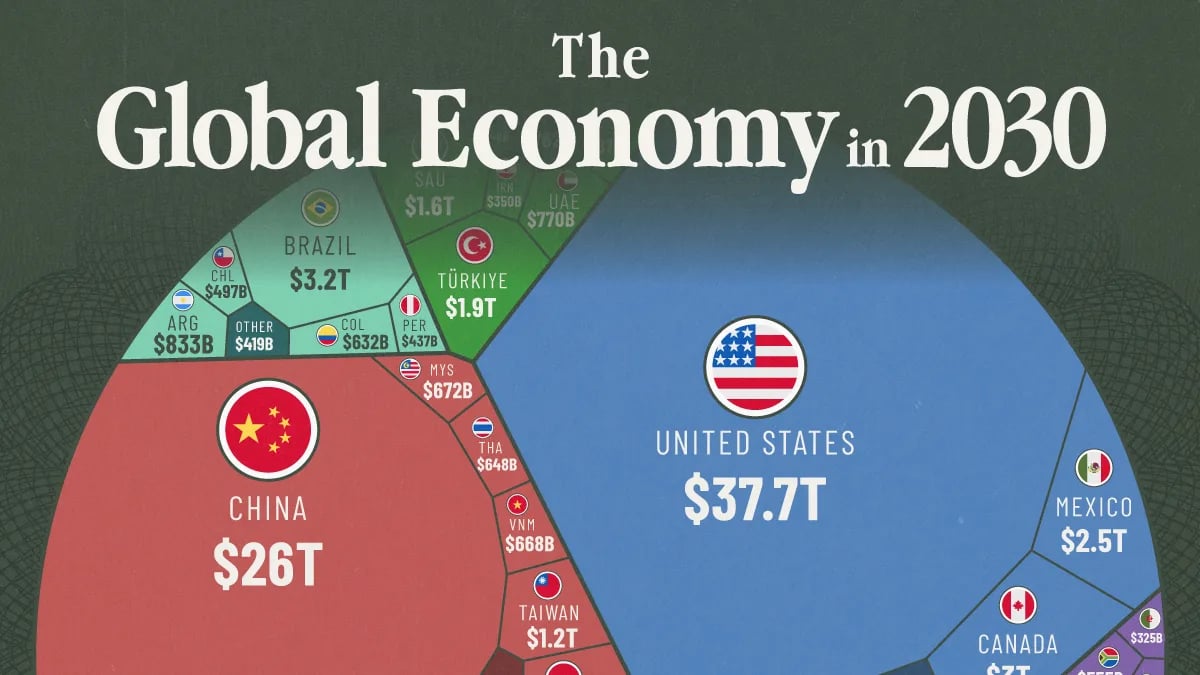
• 2025년 13.5조 달러 규모로 평가되는 Asia-Pacific의 국가 간 결제 시장은 QR 결제 및 디지털 도입에 힘입어 2033년까지 24조 달러로 급증할 것으로 전망됩니다.
• Thailand는 지역 경제 낙관론에서 2위를 차지하며, Southeast Asia 전역의 결제 거래량의 견고한 성장을 지원하고 있습니다.
• 이커머스 붐과 fintech 혁신에 의한 시장 확장은 Singapore, Malaysia, Indonesia 및 Vietnam의 무역 효율성을 제고하고 있습니다.
• 미국의 국가 부채는 백악관(White House)과 의회(Congress)의 지속적인 지출로 인해 2026년 5월 1일 기준 $38,967,833,861,543에 도달했습니다.
• 재정 압박과 지속적인 정부 지출 속에서 부채는 향후 30년 동안 두 배로 증가할 것으로 예상됩니다.
• 이러한 궤적은 미국 납세자들이 국가의 장기적인 재정 지속 가능성과 결부된 의무 증가에 직면함에 따라 중대한 거시 경제적 과제를 반영합니다.
• Meta released Llama 4 on April 20, 2026, a 2 trillion parameter multimodal AI model trained on 15 petabytes of US-centric data.
• The model outperforms GPT-4o on benchmarks like MMLU (92% score) and supports vision-language tasks for enterprise apps.
• Open-sourcing aims to spur US AI innovation, with downloads exceeding 500,000 in first hours via Hugging Face.
• Nvidia CEO Jensen Huang announced at GTC 2026 that demand for the company's products will reach $1 trillion through 2027, with fulfillment only possible by 2028.
• The revelation underscores explosive growth in AI hardware needs, driven by data center expansions and model training.
• Nvidia also released NemoClaw, an open-source stack enhancing privacy and security for the popular OpenClaw AI agent.
• SpaceX confidentially filed for a U.S. initial public offering on Wednesday, April 2, 2026, signaling major movement toward going public.
• The aerospace company is targeting a $1.75 trillion valuation in the IPO, reflecting investor confidence in the commercial space sector.
• The filing comes as Elon Musk's companies face increased market scrutiny, with analyst focus expected to intensify on SpaceX developments.
• Nvidia CEO Jensen Huang announced expectations of at least $1 trillion in demand for its Blackwell and Rubin AI systems through 2027, doubling from $500 billion projected through 2026.
• This projection signals over 100% annual sales growth for Nvidia amid booming data center demand.
• The forecast underscores AI's role in driving U.S. tech sector expansion and GDP growth, with analysts citing non-inflationary productivity gains.
• Forrester Research forecasts global technology spending will grow 7.8% in 2026 to $5.6 trillion, up from $5.2 trillion in 2025, driven primarily by continued AI investment across defense, financial services, healthcare, industry, and retail sectors.
• Computer equipment will see the highest growth at 16.8% due to rising AI server demand, with AI-specialized computers expected to capture more than 80% of computer equipment spending by 2030, up from 43% in 2024.
• Financial services and healthcare sectors will see robust technology spending in 2026, driven by investments in cybersecurity, cloud infrastructure, AI, data storage, and AI literacy training despite broader economic volatility.
• A Congressional Budget Office report released March 19, 2026, estimates laws from the 119th Congress's first session (Jan 2025-Jan 2026) will boost the 2025-2034 deficit by $3.5 trillion.
• The net effect stems from $1.1 trillion reduced outlays and $4.6 trillion decreased revenues, excluding interest costs on added borrowing.
• Findings highlight fiscal impacts of authorizing and appropriations legislation, informing ongoing budget debates.
• NVIDIA CEO Jensen Huang announced at GTC in San Jose a forecast of $1 trillion in sales from Blackwell and Rubin chips by late 2027, doubling the prior $500 billion estimate through 2026.
• The company unveiled a new inference system generating 700 million tokens per second, 350 times faster than the Hopper generation, to counter custom chips from competitors like Google.
• NVIDIA's DRIVE platform for robotaxis, valued at $1.2 trillion by Morgan Stanley, is adopted by Uber and BYD, with Uber's fleet launching in 2028; data center revenue hit $192 billion last year, up 66%.
• CMS actuaries forecast U.S. health spending at $5.3 trillion in 2024, outpacing economic growth to hit 20% of GDP by 2033.
• Projections highlight unsustainable trajectory for national health expenditures.
• Policymakers face pressure to address cost drivers in insurance, drugs, and services.