• Elon Musk announced that Tesla will utilize Intel's advanced 14A process technology for its Terafab chip manufacturing project at Giga Texas, representing a major partnership between the two companies.
• The complex will produce semiconductors for Tesla vehicles, Optimus robots, and AI data centers, with initial research fab construction already underway on the Giga Texas campus.
• This initiative signals Tesla's push toward vertical integration in chip production to support its expanding autonomous and AI capabilities.
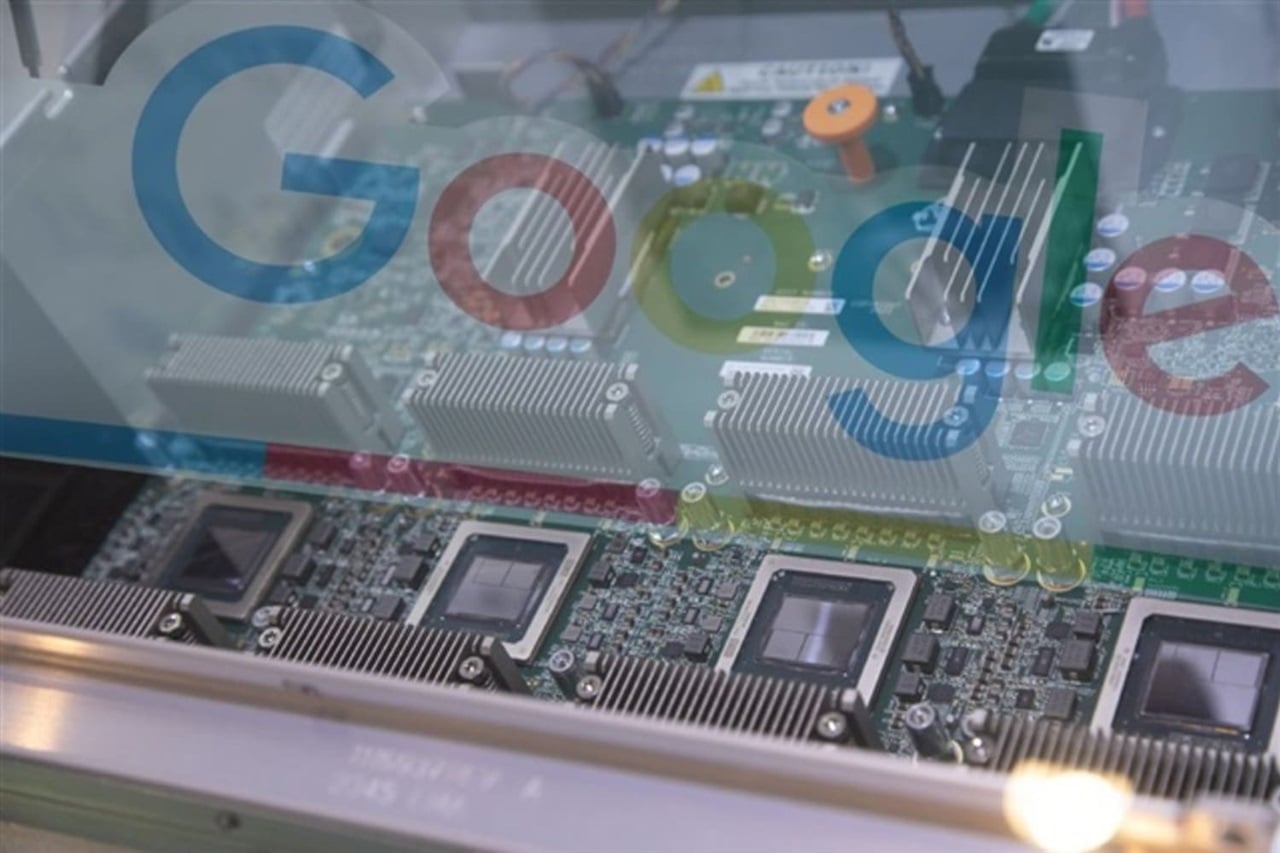
• Google unveiled a new quantum processor featuring 10,000 qubits on April 19, claiming achievement of quantum advantage for practical optimization problems with error rates reduced by 60% compared to previous generations.
• The chip, named Willow, successfully solved complex combinatorial optimization problems approximately one million times faster than classical supercomputers according to Google Quantum AI division testing.
• The breakthrough potentially accelerates commercialization of quantum computing for applications including drug discovery, financial modeling, and supply chain optimization, attracting increased competition from IBM and IonQ.
• Centers for Medicare and Medicaid Services published a proposed rule on Friday requiring health insurance companies and states to resolve non-urgent prior authorization requests for prescription drugs within 24 hours.
• The regulation mandates Medicaid and CHIP insurers, plus state administrators, to publicly disclose denial rates and respond faster to improve patient access.
• This addresses delays in medication approvals, potentially benefiting millions enrolled in these programs amid ongoing affordability challenges.
• Amazon Web Services (AWS) achieved a $15 billion annual run rate in AI revenue during Q1 2026, according to CEO Andy Jassy's annual shareholder letter.
• Amazon's internal chips business now generates over $20 billion per year, supporting AI infrastructure and custom silicon development.
• The figures underscore Amazon's aggressive push into AI and cloud computing dominance amid intensifying competition from Microsoft Azure and Google Cloud.
• Qualcomm launched Snapdragon X2 on April 9, 2026, promising 45 TOPS NPU performance for next-gen US AI laptops.
• Chip enables 40-hour battery life and native Copilot+ support, targeting Dell and HP OEMs.
• Challenges Intel/AMD dominance in $50B US PC market amid ARM shift.
• Cognichip raised $60 million to develop AI tools that design AI-powered chips, aiming to cut development costs by over 75%.
• The round supports innovation in semiconductor efficiency, vital for US AI hardware competitiveness.
• It addresses supply chain bottlenecks, promising faster chip production for data centers and edge computing.
• Arm debuted its first in-house AI chip, the AGI CPU, optimized for large-scale data center workloads.
• Early adopters Meta and OpenAI plan to deploy the chip for advanced AI training and inference.
• The launch advances Arm's push into AI hardware amid US-China chip tensions.
• ARM unveiled its first proprietary AGI CPU for AI data centers, shifting from licensing designs to manufacturing its own silicon.
• Early adopters include Meta, OpenAI, Cloudflare, and Cerebras, positioning ARM directly in the AI infrastructure market.
• This move underscores the intensifying competition in AI hardware, where control over end-to-end production is becoming critical for major players.
• Semiconductor design giant Arm revealed on March 25, 2026, it will market its own chips for the first time, aiming for $15 billion in annual sales.
• CEO Rene Haas discussed the move in exclusive interviews, marking a shift from licensing designs to direct competition in AI and data center markets.
• The announcement boosted SoftBank shares and highlights re-industrialization trends in U.S. tech supply chains amid AI demand.
• Broadcom announced supply chain bottlenecks across the tech sector, particularly at TSMC, due to skyrocketing demand for AI chips on March 24, 2026.
• The constraints affect networking, custom silicon, and data-center hardware critical for AI infrastructure beyond major model developers.
• This highlights the AI hardware race creating opportunities for startups to innovate in chip manufacturing tools amid industry-wide shortages.
• Elon Musk launched Terafab, a $20 billion-plus semiconductor fab in Austin, Texas, jointly developed by Tesla, SpaceX, and xAI to produce custom chips for EVs, Optimus robots, and AI computing.
• The facility targets terawatt-scale power output, addressing global chip shortages constraining Musk's AI and robotics timelines amid TSMC capacity limits.
• This vertical integration bolsters U.S. domestic manufacturing self-sufficiency amid geopolitical tensions and accelerates competition in AI hardware where compute is the key bottleneck.
• Tesla officially launched Terafab, a $20 billion AI chip manufacturing facility in Austin, Texas, marking a major expansion in US AI hardware production.
• The factory aims to produce advanced AI chips for Tesla's autonomous driving and robotics initiatives, reducing reliance on foreign suppliers.
• This development strengthens US domestic semiconductor capabilities amid global chip shortages and boosts Texas as a tech hub.
• US prosecutors in the Southern District of New York charged three individuals affiliated with Super Micro Computer, including co-founder Yih-Shyan Liaw, with smuggling Nvidia AI chips to China.
• The scheme involved illegally diverting billions in advanced semiconductors intended for US servers to unauthorized Chinese entities, violating export controls.
• This case highlights escalating US efforts to curb AI technology transfers amid national security concerns over China's military advancements.
• Samsung Electronics unveiled an $82 billion investment plan in chip manufacturing and AI technology while its union warned of potential labor action, signaling internal tensions over worker conditions amid expansion plans.
• The company expects to distribute approximately 9.8 trillion won (roughly $7.3 billion) in regular dividends for 2026, with additional returns possible if surplus funds remain available.
• Samsung's major capital commitment reflects intensifying competition in semiconductor and AI markets, particularly as global demand for chips and AI infrastructure accelerates.
• Elon Musk stated Tesla and SpaceX AI will continue large Nvidia chip purchases even as Tesla advances its AI5 chip, optimized for edge compute in Optimus and Robotaxi.
• Tesla's Terafab AI chip manufacturing facility is set to launch within seven days from March 14, potentially by March 21.
• Musk praised Nvidia CEO Jensen Huang, noting AI5's efficiency in half-reticle format could halve fab needs, with AI6 potentially matching dual AI5.
• NVIDIA CEO Jensen Huang announced at GTC in San Jose a forecast of $1 trillion in sales from Blackwell and Rubin chips by late 2027, doubling the prior $500 billion estimate through 2026.
• The company unveiled a new inference system generating 700 million tokens per second, 350 times faster than the Hopper generation, to counter custom chips from competitors like Google.
• NVIDIA's DRIVE platform for robotaxis, valued at $1.2 trillion by Morgan Stanley, is adopted by Uber and BYD, with Uber's fleet launching in 2028; data center revenue hit $192 billion last year, up 66%.
• Nvidia announced at GTC 2026 that it has locked in $1 trillion in orders for its Blackwell and Vera Rubin chips through 2027, far exceeding annual revenue and signaling massive AI infrastructure investment across the industry.
• Major hyperscalers including Amazon, Microsoft, and Google have significantly ramped up investments in AI data centers and infrastructure, competing to build massive language models and prepare for exponential growth in AI workloads.
• Blackwell chips have already begun shipping while Vera Rubin is positioned to deliver major boosts to AI training and inference performance, addressing the current AI infrastructure race among tech giants.
• Nvidia is projecting a trillion-dollar chip market while the AI industry shifts focus from training giant models to inference, robotics, and real-world deployment at GTC 2026 in San Jose.
• CEO Jensen Huang spotlighted new systems and platforms aimed at industrial use cases and physical AI applications, signaling that commercial viability increasingly depends on inference economics and enterprise adoption.
• The market shift reflects where spending is heading: training remains critical, but applied AI and infrastructure orchestration are becoming more investable than generic model-building pitches.
• Two key Democratic lawmakers have raised national security concerns about the Trump administration's approval for exports of Nvidia chips to China, warning that the move risks harming U.S. technological leadership.
• The legislators are calling for bipartisan legislation to prevent American technology from reaching Chinese hands and being used improperly, echoing broader concerns about technology transfer and competitive advantages in AI computing.
• Nvidia has pushed back against criticism of the Trump administration's export approval decision, defending the company's position on international trade and technology availability.
• Nvidia held its annual GTC technology conference on Monday, March 16, with CEO Jensen Huang delivering the keynote address amid broader market volatility tied to geopolitical tensions and oil price fluctuations.
• The event timing coincides with elevated uncertainty in tech stocks, as investors reassess earnings estimates downward and monitor the impact of elevated oil prices on corporate profitability and consumer spending.
• Tech sector performance remains sensitive to macroeconomic headwinds, including potential inflation from energy costs and Federal Reserve policy decisions expected this week.
• Nvidia CEO Jensen Huang is unveiling new chips and software at the GTC conference to solidify the company's position as the industry shifts from training giant foundation models to inference workloads that power real-world applications.
• The strategic pivot targets lower-cost, high-throughput AI deployments within enterprise workflows, autonomous systems, and product integrations rather than just headline-grabbing training clusters.
• Nvidia's next moves will shape the cost, speed, and competitive structure of the global AI software and infrastructure market as the industry enters a new phase of AI economics.
The US announced partial rollback of AI semiconductor export restrictions on March 13, 2026, targeting key technologies amid global competition. This move is poised to boost domestic chipmakers ahead of Nvidia's GTC event next week. Nvidia, HBM, and related AI plays face heightened focus with potential upside. Policy shift aims to balance national security and industry growth.
NVIDIA announced the Rubin platform, named after astronomer Vera Rubin, marking a shift from Blackwell with extreme co-design across six new chips targeting 1.6nm processes for massive computing power gains. First Rubin systems will launch in the second half of 2026 through AWS, Microsoft, and Google, with Microsoft integrating them into 'Fairwater' AI superfactories. This hardware leap supports edge-centric AI via specialized ASICs, enabling real-time insights, amid rising demand projected over $700 billion in global datacenter leases.
ByteDance is working with Aolani to deploy approximately 500 Nvidia Blackwell computing systems in Malaysia, comprising roughly 36,000 of Nvidia's most advanced B200 chips, according to reports citing people familiar with the matter. The hardware deployment is valued at more than $2.5 billion and represents a significant effort by the Chinese tech giant to access top-tier AI processors despite US export restrictions. ByteDance's AI portfolio includes Dola chatbot, Dreamina video creation tool, Gauth homework assistant, and Seedance video generation model, which has gained attention for its ability to convert written scripts into realistic short film scenes. The move underscores ongoing tensions around US-China tech competition and export controls on advanced semiconductor technology.
The US Commerce Department withdrew a planned rule on artificial-intelligence chip exports on Friday, marking the latest policy reversal by the Trump administration regarding technology trade controls. The withdrawal represents a significant shift in the administration's approach to regulating AI semiconductor exports, which had been a contentious issue affecting companies like Nvidia and other chipmakers. This decision follows earlier statements from administration officials indicating a more flexible stance on AI chip distribution policies compared to previous regulatory frameworks. The reversal signals potential changes in how the US will manage competition with foreign nations in advanced semiconductor and AI technology sectors.
Amazon Web Services began deploying AI chips from Groq alongside its Trainium2 processors in US data centers on March 13, 2026, to diversify inference capabilities. The move supports over 100,000 Inferentia chips already in use, aiming to cut AI training costs by 50% for customers. This hybrid strategy enhances AWS competitiveness against Nvidia amid chip shortages, boosting scalability for enterprise AI workloads. Expansion to additional regions is slated for April 2026.
Neuron-powered computer chips can now be easily programmed to play a first-person shooter game, bringing biological computers a step closer to useful applications
Datacentre investment boom is one of the biggest infrastructure gambles of this era, and Britain may be uniquely exposedStargate was to be the world’s biggest AI investment: a $500bn infrastructure project to “secure American leadership in AI”. Never shy of hyperbole, its key backer, the ChatGPT-maker OpenAI, promised “massive economic benefit for the entire world” with facilities to help people “use AI to elevate humanity”.Now, OpenAI appears to be dropping out of a part of the deal – the expansion of a flagship datacentre stretching across a swathe of land in Abilene, Texas, which has become one of the most visible manifestations of a frenzy of investment in the chips and power plants required to build and run AI. There has been a breakdown in negotiations over project financing, as well as the timeline of when the expanded capacity might come online. Continue reading...
The US Commerce Department withdrew a planned rule on Friday that would have required permits for exports of advanced AI chips from companies like Nvidia and AMD to global customers. The abandoned Trump administration proposal aimed to involve case-by-case reviews by the Commerce Department's licensing office, contingent on factors such as government agreements and end-user computing power needs. Commerce officials rejected returning to the prior administration's 'burdensome, overreaching and disastrous' AI diffusion framework. This decision eases restrictions on the semiconductor industry amid ongoing trade tensions.